
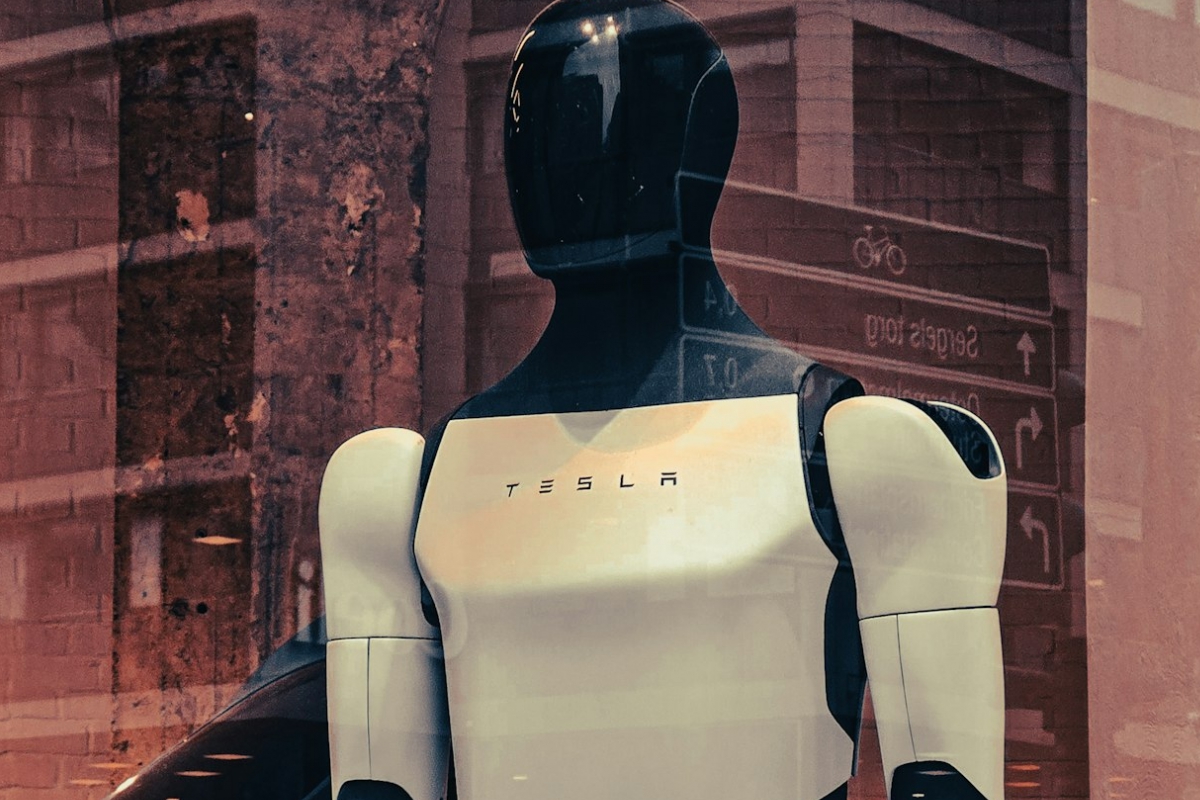
How to make a robot feel what it touches? Tesla patents 3D sensors for mechanical limbs
Giving robots senses like humans is a major challenge. However, it is necessary if the goal is to accurately simulate human actions. In this sense, our attention has been drawn to a patent application filed by Tesla in the United States that describes the design of a flexible touch surface designed to adapt to the fingers and palms of mechanical manipulators.
The document, registered under the code US 2026/0310299 A1 and officially published on October 8has come to light after a technical analysis published by the specialized publication Patentlyze.
The proposed architecture is based on a multilayer scheme composed of two flexible sheets with conductive areas, between which a compressible material is sandwiched. At the points where these conductive areas intersect, independent sensing nodes are generated that record the alterations caused by pressure on the surface. As detailed in the technical text, this principle can be implemented through capacitive or piezoresistive technologies, using substrates such as thermoplastic polyurethanehe PET wave polyimide.
Tesla is already thinking about how to mass manufacture these sensors
One of the most interesting aspects of the document is not only in sensory capture, but in the feasibility of producing these sensors. Instead of designing complex three-dimensional sensors from the beginning, the patent proposes printing the circuits on completely flat materials using screen printing, laser cutting and application of conductive paste. Subsequently, these two-dimensional pieces are subjected to a thermal deformation process that gives them volume.
In this way, the sensors can adapt to complex curved surfaces to record thrust and contact force accurately. In practice, this method opens the door to manufacturing tactile sensors using already consolidated industrial processes, which would reduce costs and assembly times compared to the artisanal methods usually used in laboratory prototypes.
Although the file does not directly mention OptimusTesla’s humanoid robot, does identify fingertips, palms, and the end effectors of mechanical arms as direct targets. This technology addresses an increasingly pressing need in the industry, namely allowing robotic hands to not only grasp an item, but to feel how firmly they are holding it to calibrate force based on material or weight.
On the other hand, the application does not include specific data on the resolution of the contact points, their minimum sensitivity or their resistance to mechanical fatigue. Of course, the record makes clear what Tesla’s objectives are. The company seeks to provide its robotic platforms with more advanced physical manipulation, waiting to see if the solution jumps from paper to its real prototypes.
