
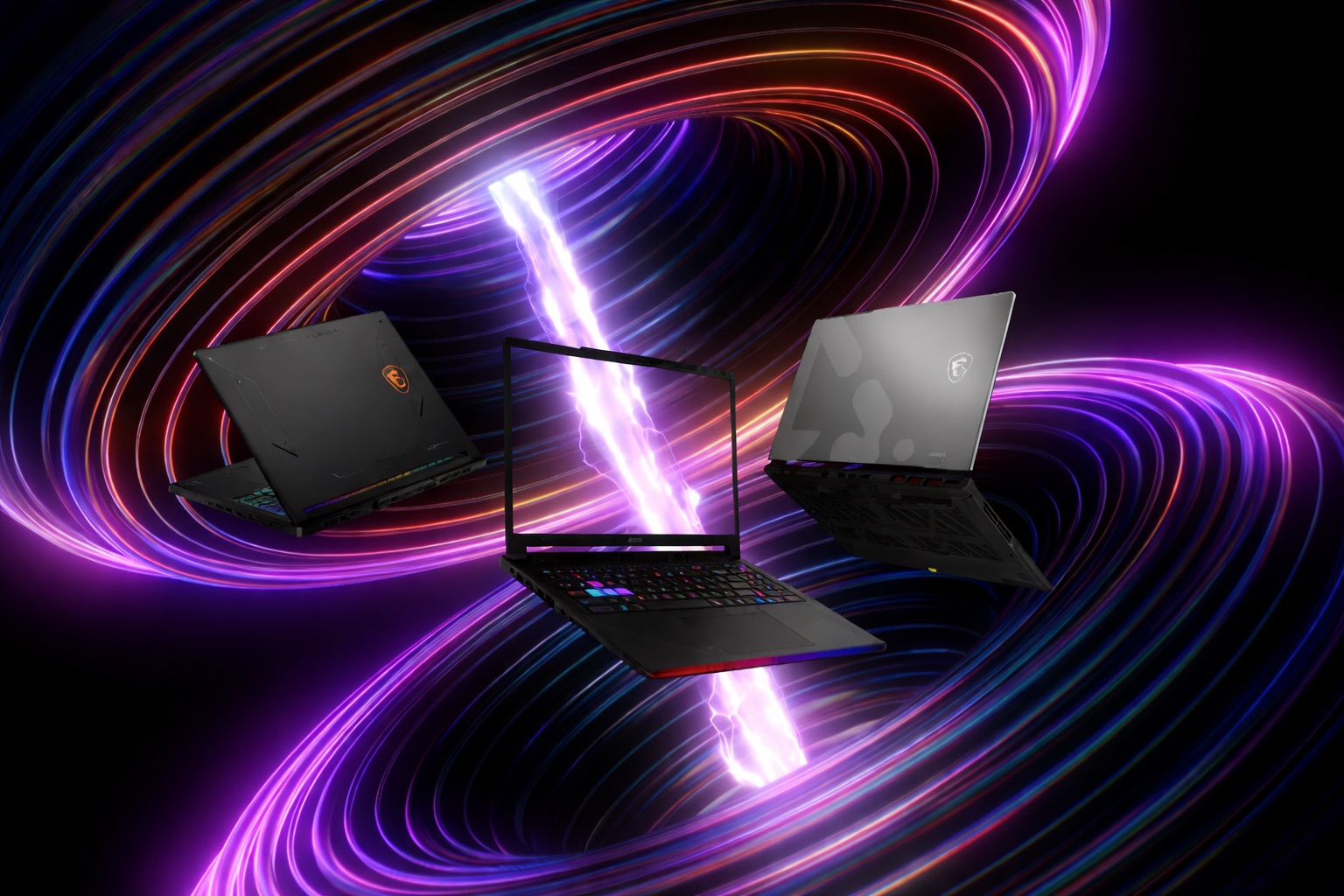
more power, better cooling and OLED screens
MSI has decided to start 2026 by making it clear that it does not want half measures in gaming laptops. Its new generation Raider and Crosshair arrives with a very specific idea: offer more sustained power, improve real cooling when the load is tight and, incidentally, polish design details that also weigh on a day-to-day basis, such as the placement of ports or noise under stress. It is not a small renovation nor a simple catalog refreshment. The brand has moved several important pieces at the same time.
The big headline is in the new Raider 16 Max and Raider 16which become the company’s spearhead within the 16-inch format. MSI talks about up to 300 W of combined power between CPU and GPU in certain models, a very aggressive figure for a laptop of this size and a fairly direct way of showing what the ambition of this range is.
In parallel, the Crosshair 16 Max and Crosshair 16 They seek to place themselves one step below, with a high-performance philosophy, but in a slimmer body and with a different balance between raw muscle and shape.
A generation designed to truly perform, not just to show off technical specifications
In high-end gaming laptops it is no longer enough to promise a powerful processor and a new GPU. The real test comes when both pieces work at the same time during long sessions, with accumulated heat, forced fans and skyrocketing consumption. That’s where MSI try to distance yourself from this new batchrelying on revised cooling and energy management designed to sustain performance without sudden drops.
In the case of the Raider, the firm combines the new processors Intel Core Ultra 200HX Plus with graphics NVIDIA GeForce RTX 50 Series Laptop GPUand it does so relying on a thermal redesign that includes Cooler Boost Trinity+ and Intra Flowtwo elements with which MSI pursues something that the user does notice right away: that the laptop does not collapse when it has been fully loaded for a while.
Raider and Crosshair do not play the same game
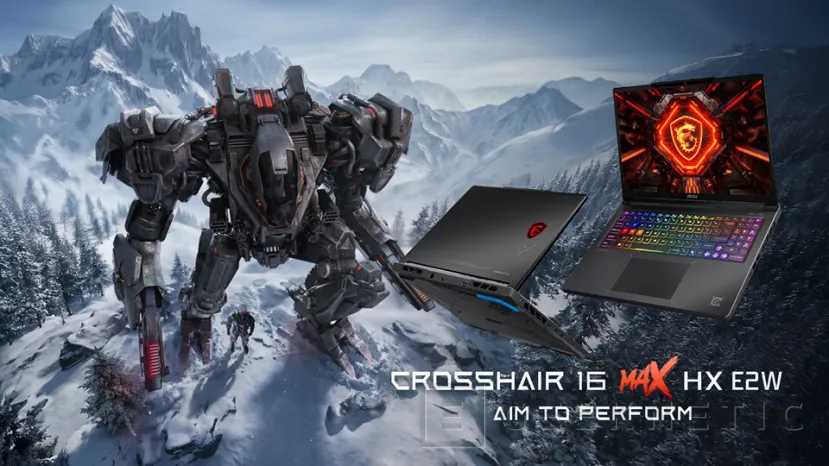
Although they share a gaming surname, Raider and Crosshair do not target exactly the same buyer. Raider seeks to seduce the user who wants the most possible inside a large, but still transportable laptop. It is a machine for those who do not want to think too much about concessions and want to get closer to the desktop without giving up the portable format. Details such as the rear I/Othat is, ports placed on the back to leave the desktop cleaner and avoid the usual chaos of cables coming out of the sides. It may seem like a minor change, but on teams of this level it ends up improving the real experience quite a bit.
Crosshair, on the other hand, seems to want to occupy that terrain where the user is still looking for a lot of powerbut you don’t necessarily want to carry such an extreme chassis. MSI talks about a 21.9mm thickness and up to 200W combined power in certain models, in addition to an increase in the performance of the 17.6% compared to the previous generation. It’s a pretty clear way to position this family: less radical than Raider, but still very serious for playing at a high level.
The panel is no longer a minor extra on a premium gaming laptop
Another relevant part of the ad is on the screen. MSI accompanies this jump in power with OLED options in various modelssomething that no longer serves only to sell more striking colors on the commercial sheet, but to reinforce two ideas that are very important in a high-end laptop: visual quality and premium product feel.
On the Raider, some models mount panels up to 2.5K at 240 Hz in OLEDwhile the Crosshair they can reach 2.5K at 165 Hz on OLED. These are figures that fit very well with the direction that the segment is taking: it is not enough to chase hertz, the quality of the panel, contrast and response in real scenarios also matters.
The interesting thing about this movement is not only that MSI renews its most powerful families, but how it does it. The brand has not limited itself to raising the technical specifications a little: it has wanted to build a clear message around sustained performance, physical redesign and improved user comfort.
That says a lot about the timing of the market. Premium gaming laptops no longer compete solely by having the flashiest GPU or newest processor. They also compete on how they distribute heat, how they sound, how they place the ports, what panel they mount and how much of that power can be maintained without compromising the experience. In that sense, MSI seems to have understood well where the fight is now.
MSI’s new gaming laptops
| Model | Processor | Operating system | Memory | Screen | Graphics | USB ports | video output | Connectivity | Battery | Dimensions |
|---|---|---|---|---|---|---|---|---|---|---|
| Crosshair 16 Max HX E2WGXK | Intel Core Ultra 9 290HX Plus Intel Core Ultra 9 275HX Intel Core Ultra 7 251HX |
Windows 11 Home Windows 11 Pro |
DDR5, 2 slots, up to 128GB | 16″ QHD+ (2560 x 1600), OLED, 165Hz, 100% DCI-P3, VESA DisplayHDR True Black 500, SGS Eye Care | NVIDIA GeForce RTX 5070 Laptop GPU 12GB GDDR7 | 1 x Thunderbolt 4 1 x USB 3.2 Gen2 Type-C 3 x USB 3.2 Gen2 Type-A |
1 x HDMI 2.1 (8K@60Hz / 4K@120Hz) 1 x Thunderbolt 4 1 x USB 3.2 Gen2 Type-C |
Gigabit Ethernet (up to 2.5 GbE) Intel WiFi 6E AX211 Bluetooth 5.3 |
4 cells, Li-Polymer, 80 Whr | 363 x 269.7 x 21.95-23.9mm |
| Crosshair 16 HX E14WGK / E14WFK / E14WEK | Intel Core i9 14900HX Intel Core i7 14650HX |
Windows 11 Home Windows 11 Pro |
DDR5, 2 slots, up to 96GB | 16″ QHD+ (2560 x 1600), 240Hz, 100% DCI-P3, IPS-Level panel | NVIDIA GeForce RTX 5070 Laptop GPU 8GB GDDR7 (E14WGK) NVIDIA GeForce RTX 5060 Laptop GPU 8GB GDDR7 (E14WFK) NVIDIA GeForce RTX 5050 Laptop GPU 8GB GDDR7 (E14WEK) |
2 x USB 3.2 Gen2 Type-C 3 x USB 3.2 Gen1 Type-A |
1 x HDMI 2.1 (8K@60Hz / 4K@120Hz) 2 x USB 3.2 Gen2 Type-C |
Gigabit Ethernet (up to 2.5 GbE) Intel WiFi 6E AX211 Bluetooth 5.3 |
4 cells, Li-Polymer, 80 Whr | 363 x 269.7 x 21.95-25.45mm |
