
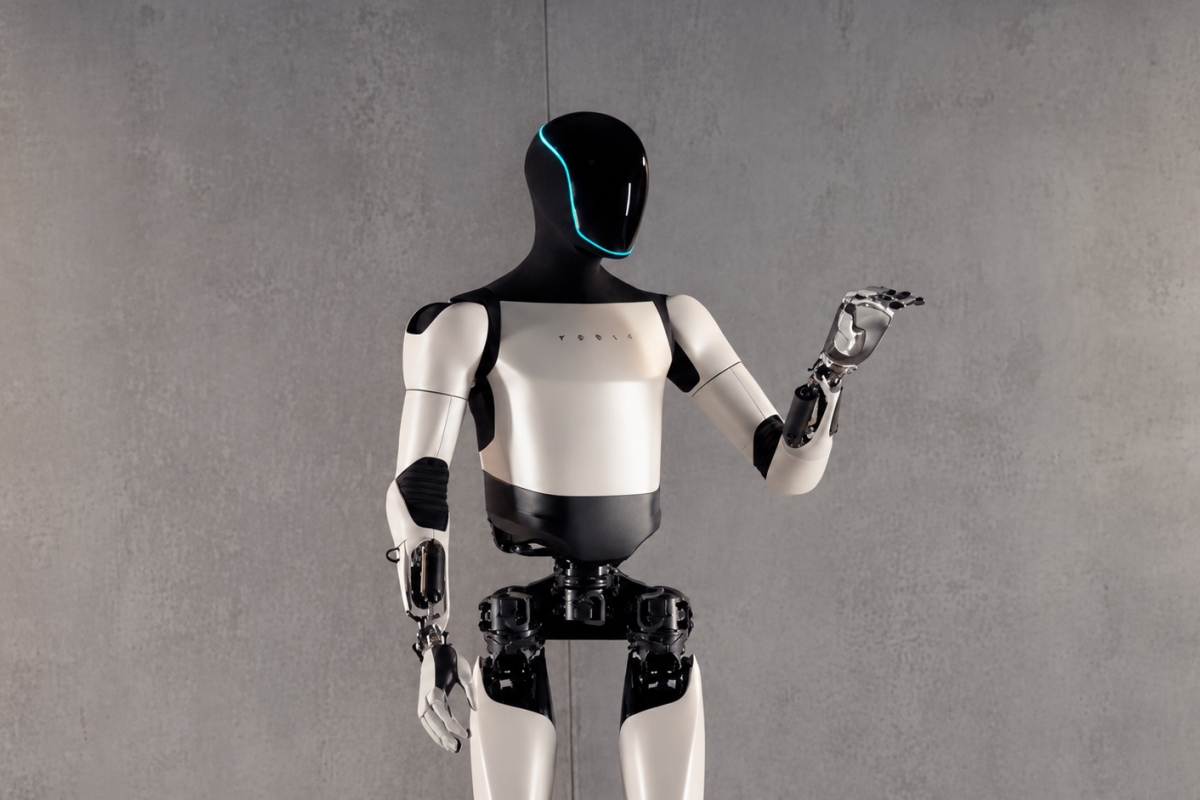
Tesla already makes its first production-quality Optimus, but places external deliveries in 2027
The first units of Optimus manufactured with a process suitable for a commercial product are already leaving the Fremont line, according to Tesla. The company places the project in an initial production phase and has not yet communicated a number of robots manufactured nor has it opened deliveries to customers.
The progress is contained in the third quarter update. In the subsequent conference, Elon Musk detailed how much work remains to increase production and kept the first deliveries to other companies as a goal towards the end of 2027.
Optimus enters initial manufacturing phase in Fremont
Tesla’s quarterly document states that the Optimus production has begun at its Fremont lines. He describes the units coming out of them as his first “production quality” robots. The expression refers to the manufacturing process and the condition of these units; It is not the same as saying that the product is finished or can be purchased now.
The company’s industrial capacity table classifies Optimus in California as “Early Ramp,” an early phase of ramping up production. Does not yet assign an annual installed capacity to the robot. Another facility for Optimus in Texas appears in the same table, but its status is “Construction.” The Texan factory is, therefore, under construction and should not be added to current production.
Tesla maintains that the process used in Fremont can be used to manufacture a commercial product. At the same time, he recognizes that both the hardware and the manufacturing itself will continue to change. That combination explains why the company can now talk about production-quality units while continuing to fine-tune essential components of the robot.
A line prepared to grow, without an announced cadence
Musk described the situation as early production on a high volume line. According to his statements, most of the equipment for a line with a target capacity of one million robots per year is already installed in Fremont. It is a reference to the capacity it intends to achieve, not to the number of units it manufactures today.
The manager calculated that reaching an annualized rate equivalent to about 20,000 units per week It could take at least a year, maybe more. That estimate depends on solving design problems, ensuring parts supply and stabilizing each manufacturing step. The company did not offer a firm date for reaching that pace.
During the same conference, the CFO Vaibhav Taneja confirmed that Tesla had begun construction of a plant in Austin with potential capacity greater than that in Fremont. Again, this is a future installation. There is no published data that allows us to add its possible production to Optimus’ current activity.
Hands and reliability continue to develop
Musk noted that Tesla is making robots, although the design of the hands is not yet final. This part concentrates one of the mechanical difficulties of the project: a humanoid intended to manipulate objects needs fingers and mechanisms capable of working with precision for a long time. The manager added that they still need to improve the safety, reliability and useful life of the set.
There is also work on the software. Tesla aims for Optimus to perform open-ended tasks, without relying on sequences prepared for a demonstration. That is why Musk proposed publishing a video over the next one or two months with behaviors not programmed in advance. It is an objective announced during the conference, not a test already available to evaluate its autonomy.
The company works simultaneously on the robot, the supply chain, the assembly line and artificial intelligence models. This simultaneity helps explain the early units: They serve to test the industrial process and generate data, although they do not yet incorporate all the features planned for robots that would reach customers.
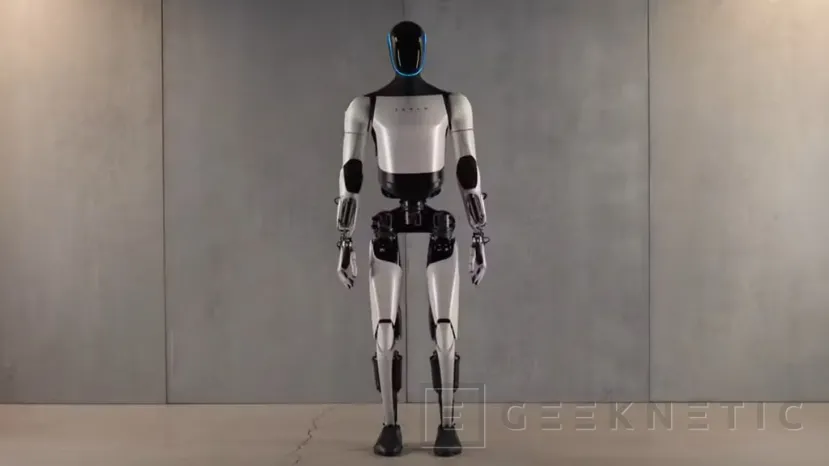
Tesla prepares an “Optimus Academy” to gather data
Musk said the company is building a Optimus Academy in which the robots would practice various tasks. He estimated that he would need on the order of 10,000 or 20,000 units to generate data at scale through that practice. This figure expresses a training need raised by the manager; It is not a production achieved nor a confirmed operational fleet.
Ashok Elluswamy, head of AI at Teslaexplained that learning would begin with examples of people and continue with practice with the robots themselves, both in simulation and in physical environments. Compared to cars, Tesla does not yet have a large fleet of humanoids that continuously produce data. You need to make robots while you develop the learning system they will use.
The commercial objective is still located towards the end of 2027. Musk spoke of then handing over Optimus to companies outside of Tesla if the issues of artificial intelligence, electromechanical design and reliability have been resolved by that date. No price, general reservations or a sales calendar for individuals were announced.
