
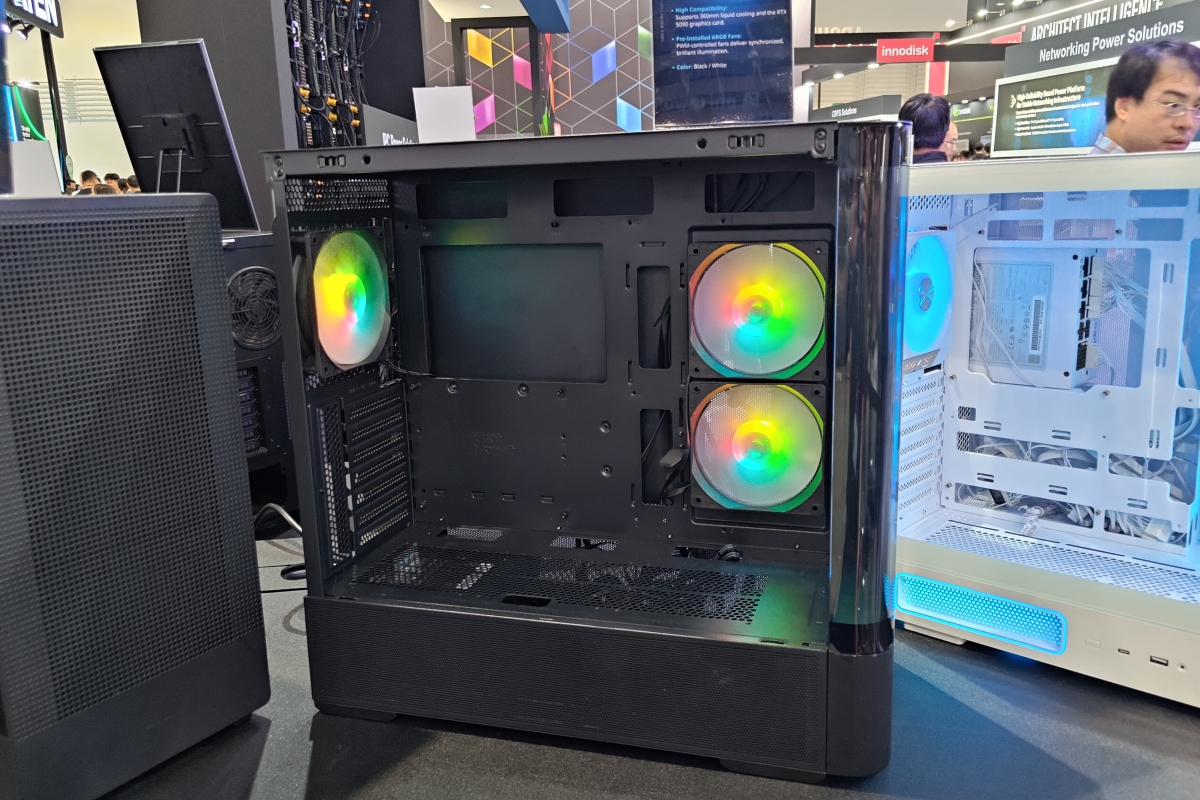
The FSP M381 and M581 combine curved glass, support for a 360 mm radiator and extra functions such as a rear fan with display
Taking advantage of Computex 2026, FSP has shown two curved glass ATX cases that share a base clearly designed to show the hardware, but that add different details to try to differentiate themselves.
The new ones M381 and M581 They are placed in the most attractive part of its chassis catalogue, although without giving up a minimum of thermal arguments and compatibility with high-end hardware.
| Specification | M381 | M581 |
|---|---|---|
| Format | ATX Curved Glass Chassis | ATX Curved Glass Chassis |
| Panel | Semi-curved panoramic glass | panoramic glass |
| Liquid cooling | Up to 360mm | Not detailed |
| GPU Compatibility | RTX 5090 | Not detailed |
| Fans | Pre-installed ARGB PWM | Adjustable side support + rear fan with display |
| special function | Emphasis on hardware exposure | Thermal lighting that changes from blue to red |
| Color | Black/white | Black/white |
The M381 is the most direct option to build a showcase PC
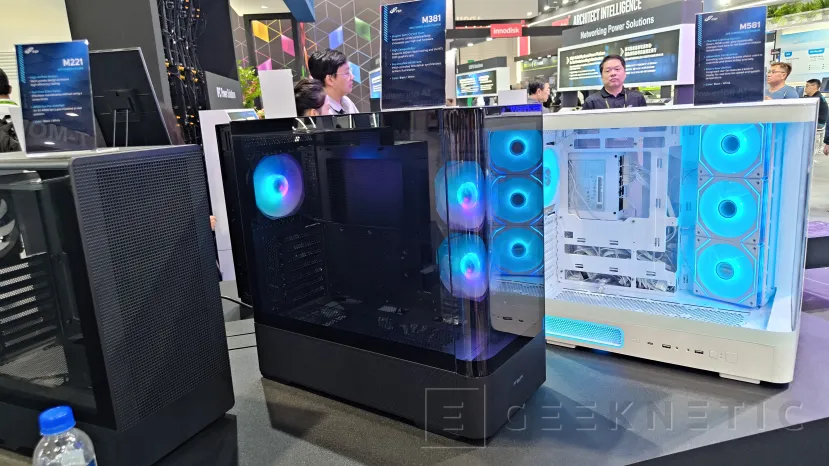
The M381 It is, of the two, the easier to read. FSP sells it as an ATX case with semi-curved panoramic glass, support for a 360mm and compatibility with a RTX 5090plus pre-installed ARGB PWM fans. In other words, a box clearly focused on setups where the interior has to look good and where the hardware also catches the eye.
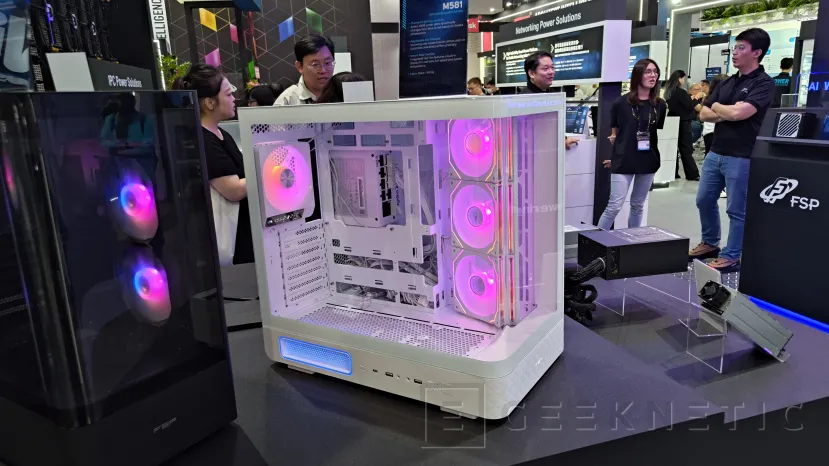
The M581however, adds several more peculiar elements. The first is an ARGB underside lighting system that dynamically changes from blue to red based on chassis temperature. The second, an adjustable side support to better orient the intake fan. And the third, a rear fan with a small integrated screen to show system speed and temperature in real time.
That makes the M581 the most experimental version of the duo. It does not seem to revolutionize the format, but it does introduce small functions that try to provide more information and a differentiating point to a category where panoramic glass has already become quite common. Between them, FSP covers two types of users. Both those who want an attractive and large box without further complications and those who also look for some extra detail in lighting and visual control of thermal behavior.
