
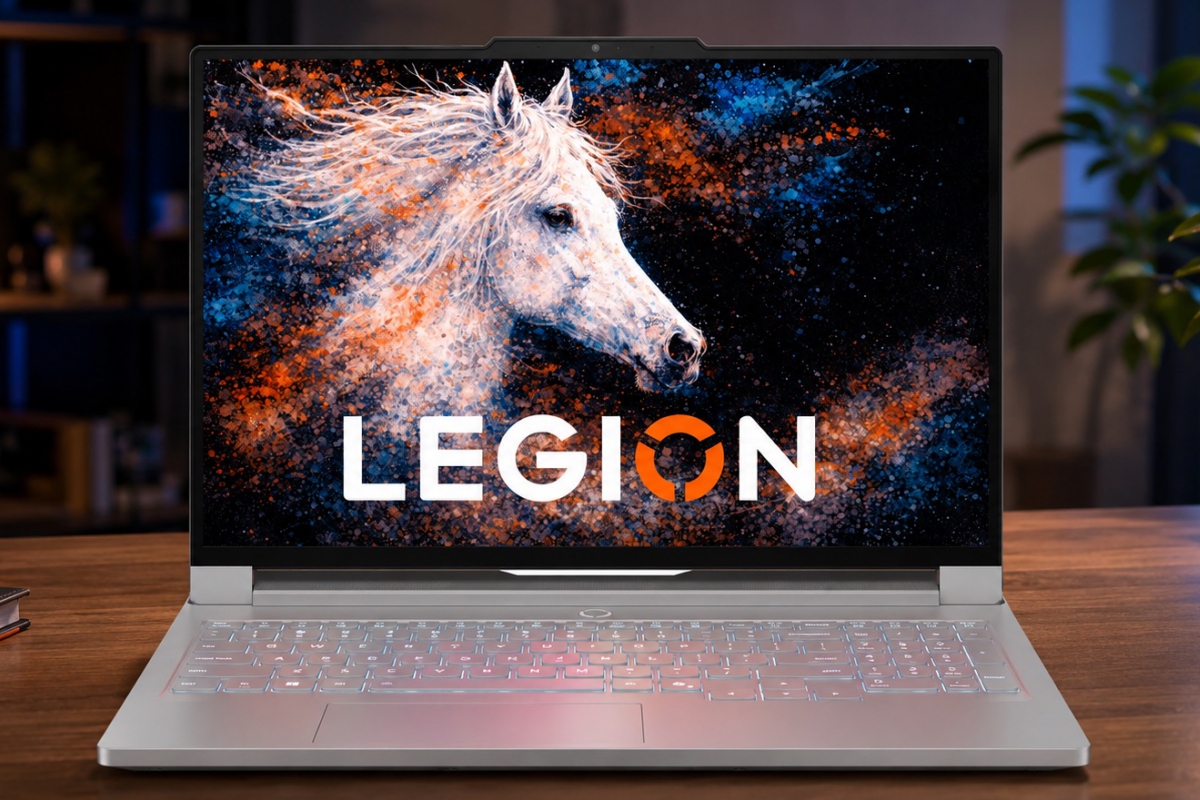
The Legion R9000P debuts a screen technology that has been developing in TCL laboratories for more than a decade
Lenovo has introduced the Legion R9000Pa gaming laptop that will go down in history for a reason that goes beyond its raw power. Its screen is the first inkjet OLED (IJP OLED) that reaches a commercial laptop, a technology developed by TCL CSOTa subsidiary of TCL Technology and one of the largest panel manufacturers worldwide.
Until now, this type of manufacturing technology had remained in the realm of prototypes and some medium-sized medical devices. With the Legion R9000P, TCL CSOT makes the leap to a mass consumer product, and it does so with the help of one of the largest gaming laptop manufacturers in the world.
A 16-inch screen designed for demanding gaming
The Legion R9000P panel measures 16 inches and comes with a refresh rate of 240 Hza figure designed so that games with more pace move without blurring or noticeable jerks.
Lenovo has opted for a Real RGB Stripe layout instead of triangular matrix that most OLED panels use. That change is not cosmetic: the traditional triangular layout tends to generate some blurring in the text and colored fringes on the edges of the letters, something that is especially annoying when using the laptop for work or browsing, not just for gaming. With the RGB Stripe from side to sidetext becomes sharper and images appear with better-defined color edges.
Added to this is coverage of more than 99% of DCI-P3 color spacea very wide range that covers practically everything an audiovisual creator or a designer who works with color needs. According to the data provided by TCL CSOT, that color performance remains stable at different brightness levelswhich in practice means that the color does not degrade or change appearance when the brightness of the screen is raised or lowered, something common in less calibrated panels.
What inkjet manufacturing really changes
The most relevant part of this launch is not so much in the specifications of the panel as in how it is manufactured. The technology IJP OLED replaces the traditional OLED screen manufacturing process, known as vacuum thermal evaporation (VTE)by an inkjet printing process that directly deposits the light-emitting organic material on the substrate.
That change of method eliminates the need for high-precision metal masks (known as FMM, fine metal masks) and very expensive evaporation equipment, two elements that make the traditional manufacturing of OLED panels significantly more expensive. By eliminating them, TCL CSOT achieves a simpler production process, with fewer intermediate steps and, in theory, with a lower final cost per panel manufactured.
From a technical point of view, this cost savings does not come at the cost of sacrificing the qualities that make OLED attractive compared to other display technologies. The Legion R9000P panel retains the high contrast and color performance expected from any OLED displaysomething that is not always easy to maintain when changing the manufacturing process of such a sensitive component.
More than a decade of development behind this release
TCL CSOT hasn’t gotten to this point overnight. The company has been working on the development of IJP OLED technology for more than ten yearswith successive technical improvements and updates to its specifications throughout that time.
The first major milestone of mass production came in November 2024when TCL CSOT’s Generation 5.5 production line (internally identified as t12), located in Wuhan, officially entered mass production and delivered its first product made with this technology. It was the first real step towards large-scale manufacturing of IJP OLED panels.
A year later, the company announced the construction of what would be the first line of production of generation 8.6 of IJP OLED in the world (with the internal name t8), a move that TCL CSOT describes as a historic milestone for the display industry. Higher generation lines allow working with larger substrates, which in practice translates into more panels per production batch and, again, a reduction in costs per unit.
TCL CSOT has signaled its intention to continue refining IJP OLED manufacturing processeswith the aim of improving production performance and expanding its catalog of panels to different sizes and uses. The company has also spoken of its willingness to collaborate with partners in both component manufacturing and final distribution, seeking to offer low-cost, high-performance and lower carbon footprint display solutions, an aspect increasingly present in the discourses of the panel industry.
For now There is no confirmation of price or availability date for the Legion R9000P outside of Chinanor data on whether this specific model will reach the European market. It has also not been confirmed whether other laptop manufacturers will have short-term access to TCL CSOT’s IJP OLED panels to integrate them into their own equipment.
