
TP-Link presents the Archer 8, its first WiFi 8 router with up to 33% more performance than WiFi 7
TP-Link has announced the Archer 8its first WiFi 8 router platform, built on the emerging IEEE 802.11bn specification with an explicit focus on connection reliability and stability. The device is scheduled to be arrival on the market in October 2026 and represents the first step of a broader range that the company has planned for the coming months under the new generation standard.
TP-Link’s proposal with the Archer 8 does not revolve around the theoretical maximum speed, but rather what happens in real conditions of use: homes with dozens of devices connected simultaneously, walls and floors in between, and users demanding constant performance for streaming, video calls or online games. These are exactly the scenarios where current WiFi networks tend to fail in ways that are not always well explained by the numbers on the brochures.
What WiFi 8 wants to solve
The proliferation of connected devices in the home has changed the type of problem a home router has to solve. Ten years ago, the challenge was speed. Today, in a house with dozens of smartphones, tablets, televisions, smart speakers, consoles and connected appliances, The most common problem is not maximum speed, but consistency: irregular speeds depending on the room, saturation when several devices compete for the connection at the same time, unstable roaming on mesh networks or latency spikes at just the most inopportune moment.
The IEEE 802.11bn standard, upon which WiFi 8 is built, specifically addresses these issues.. TP-Link has conducted controlled internal testing comparing early implementations of WiFi 8 versus WiFi 7 under simulated conditions of real home use, and the results presented are: Up to 33% greater performance thanks to improvements in modulation and coding that help maintain higher speeds over long distances; Up to 24% higher performance through unequal modulation technologies designed to improve consistency when signal quality varies between spatial streams; and up to 15% improvement between multiple access points in high interference environments, thanks to improved spatial reuse coordination.
There are two additional pieces of information that deserve attention.. In multi-floor environments, signal performance improvements can be up to 30% for single device connections, and 10% to 20% in environments with multiple active devices, thanks to advanced antenna architecture and AI-assisted optimization. Finally, an improvement of between 1 and 3 dB in reception sensitivity is recorded in the 5 GHz and 6 GHz bands through radio frequency optimization, which translates into more robust coverage in points of the home with weaker signals.
TP-Link insists that all of these results come from internal testing and that the goal is to demonstrate how WiFi 8 improves the actual user experience beyond the theoretical numbers, not just adding a higher number on the product box.
Design with premium finishes
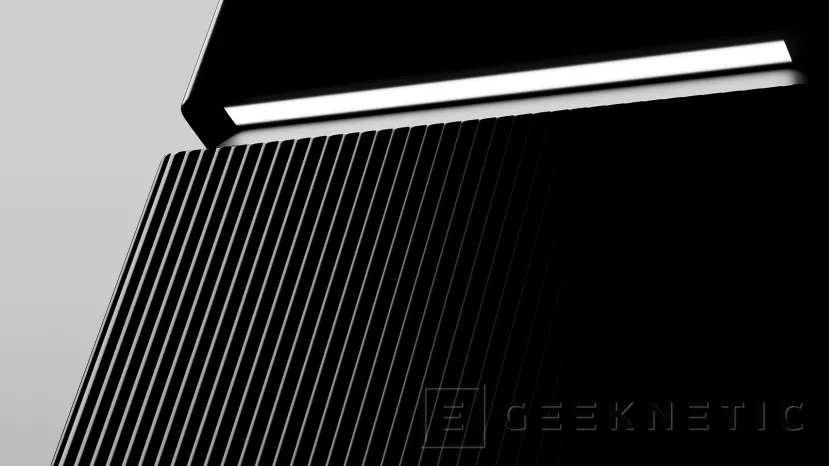
The Archer 8 also opts for a physical presence different from that of the usual routers. TP-Link describes the design as minimalist, with an architectural form balanced between clean aesthetics and performance-oriented engineering. Details include a micro-ribbed texture, precision contours and a soft-looking front emissive light that seeks to convey a modern and sophisticated feel. It’s not just cosmetic: behind the design is advanced thermal engineering, optimized antenna architecture and artificial intelligence-assisted network management integrated into the same platform.
The Archer 8 is not an isolated product. TP-Link presents it as the first step of a broader WiFi 8 ecosystem that will grow over the coming quarters. The planned roadmap includes Deco 8, a WiFi 8 mesh system, expected in the first quarter of 2027; the Roam 8, a WiFi 8 travel router, which would arrive in the second quarter of 2027; and a line of WiFi 8 repeaters and adapters also for the second quarter of 2027.
With this planning, TP-Link is positioned as one of the first manufacturers to publicly present a complete WiFi 8 implementation strategy for the home consumer, covering everything from the main router to accessories and solutions for the whole home.
Regional availability and final technical specifications for the Archer 8 will be announced at a later date, as the planned October 2026 launch date approaches. TP-Link has not yet provided information on pricing or the exact band configurations and maximum speeds of the device. We will have to wait for the company to complete the product details to get a complete picture of what the Archer 8 offers against the competition in the WiFi 8 router market.
