
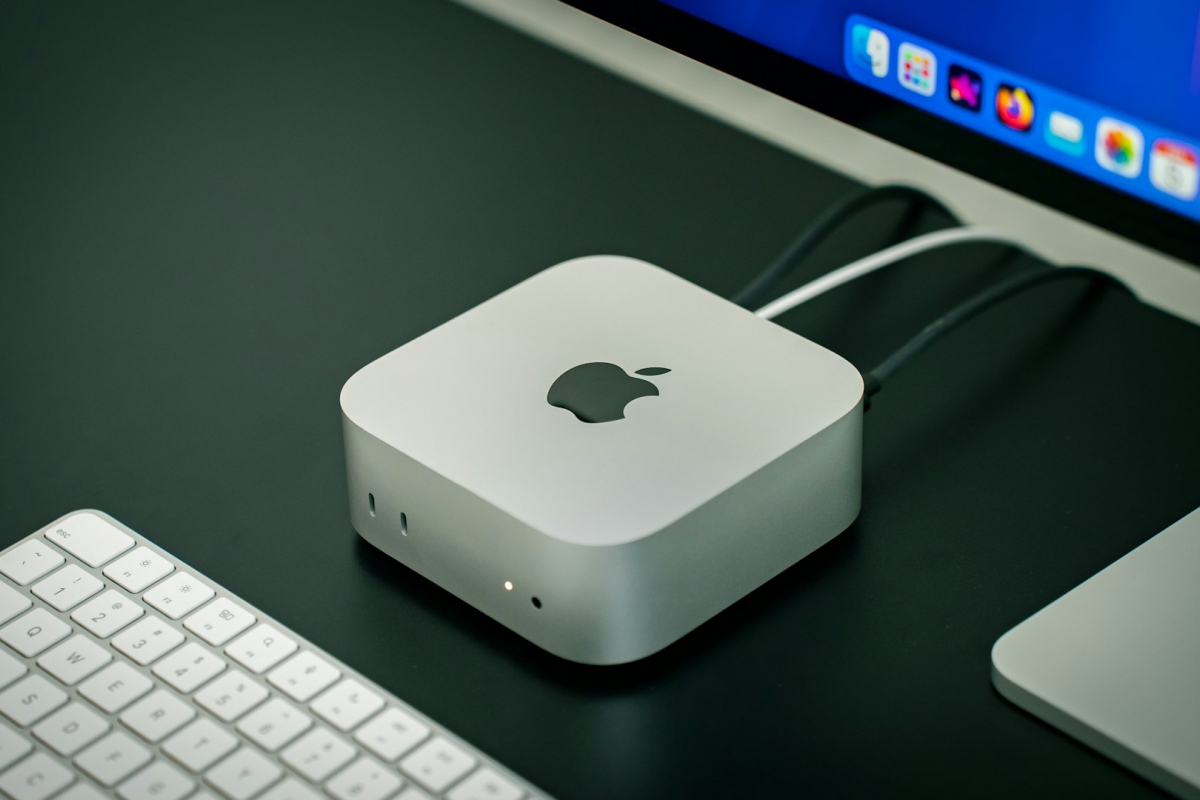
Why has OpenAI bought tens of thousands of Mac mini and Mac Studio? Apple Silicon and macOS have the answer
There is a shortage of Mac mini and Mac Studio. Obviously, the fact that there may soon be a renewal is one of the causes. But don’t think it’s the only one. In reality, the other reason is that the main artificial intelligence laboratories have begun to bet massively on these teams.
We have been able to find out thanks to a report from The Information. It explains that OpenAI has acquired tens of thousands of Mac mini and Mac Studio computers. For its part, Anthropic is leasing equivalent units through Amazon Web Services cloud infrastructure. All this interest is closely related to AI agents and tools like OpenClaw.
The adoption of these equipment does not imply the replacement of large GPU clusters dedicated to the base training of language models. As analyst Shay Boloor has detailed, Apple teams are destined for the reinforcement learning phase. In this process, AI agents interact with real graphical interfaces to learn how to control applications, execute clicks, and manage workflows.
Apple provides the environment and hardware
The interest of AI laboratories in Apple hardware is explained from two different points of view. The first thing to remember is that, for an AI to learn to use a computer as a human user would, it is crucial to have a real operating system on which to run thousands of simulations in parallel.
Deploying farms made up of thousands of Mac minis allows companies like OpenAI to launch massive trial and error events. In these sessions, the algorithms interact with visual elements and native macOS software without needing to emulate any system. And why not do it with Windows too?
The answer to that question lies in the hardware that Apple markets. While macOS might be a great system for AI to learn, so could Linux or Windows. The other side of the coin, the one that complements the software, is the unified memory architecture of Apple Silicon chips.
This allows for a much higher data transfer rate, which is conducive to model inference. This is how Apple equipment helps make these training sessions much faster and more effective.
Some buy, others rent
As we mentioned at the beginning, the strategy of the two main AI laboratories is very different. While OpenAI has opted for direct procurement of local hardware to build your own testing facilitiesAnthropic turns to EC2 Mac instances offered by Amazon Web Services. These instances use various Mac mini models ranging from models with x86 processors to those that already include Apple Silicon.
Be that as it may, it is interesting that consumer platforms, that is, computers that anyone could have at home, have been integrated into AI data centers. It is evidence of the diversification in infrastructure needs, especially if we take into account that the objective is for AI to replace human interaction with machines that we all use in our daily lives.
It’s true that heavy pre-training computing continues to rely on rack-based business accelerators. However, intensive inference tasks and some aspects of subsequent training demand solutions of all kinds, including consumer ones.
