
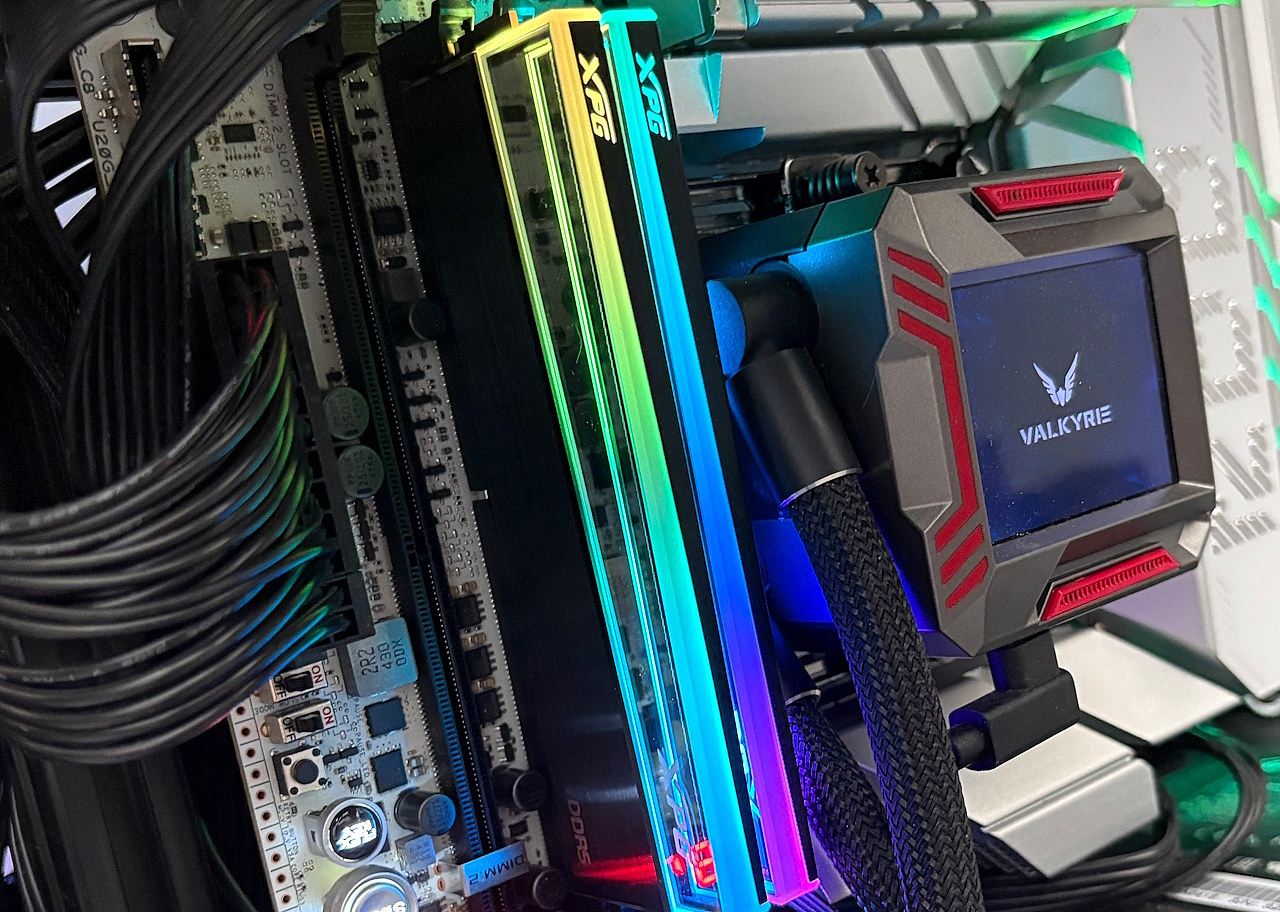
XPG NOVAKEY RGB DDR5 6000 C30 Review: Infinity Mirror design and up to 6800 MT/s without touching voltages
Introduction to the features of the XPG NOVAKEY RGB DDR5 6000 C30
XPG has been building a catalog for several years now that covers practically any component you may need to build a high-performance PC, from cases and cooling systems to peripherals and, of course, memory modules. In this same section we reviewed the
Today is the turn of the XPG NOVAKEY RGB DDR5the brand’s new flagship proposal, and they arrive with the same balance of features but with a completely renewed design, a higher quality PCB and a positioning that, in the current context of the price of RAM, we could place at a reasonable offer.
The configuration we have in the laboratory is two UDIMM modules of 16 GB each, making a total of 32 GB in dual channelwhich remains the ideal combination for most current desktop systems, both for gaming and for intensive productivity tasks or content editing. Speeds range from 5600 MT/s to 6400 MT/s depending on the different variants available, with latencies that reach CL30 in the tightest profile, which is the one we have been able to test. They are modules fully compatible with Intel XMP 3.0 and AMD EXPOwhich means that activating the high performance profile is as simple as accessing the BIOS and checking a box regardless of the processor we are going to use.
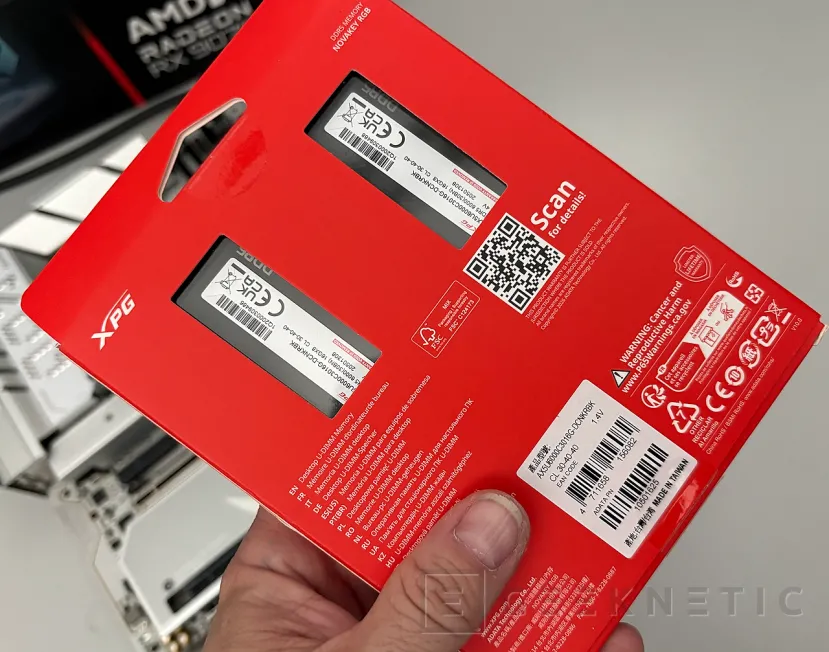
In terms of capacities, XPG offers these modules in configurations of 16 GB per module or in kits of two with 32 GB in total, which places the ceiling well below what the Lancer offered in its most generous variants. There are no 24 GB or 32 GB options per module here, which is a point to take into account for those who need very high densities. It is clear that the new market situation does not invite manufacturers to offer these sizes in ranges like this, it would not make much sense, really.
Technical characteristics of the XPG NOVAKEY RGB DDR5 6000 C30
- Format: Standard DDR5 UDIMM (288 pins)
- Analyzed capacity: 2×16 GB (32 GB in dual channel)
- Frequency: 6000 MT/s (3000 MHz effective)
- Latencies:
- C30 low profile EXPO (AMD)
- C30 low profile XMP 3.0 (Intel)
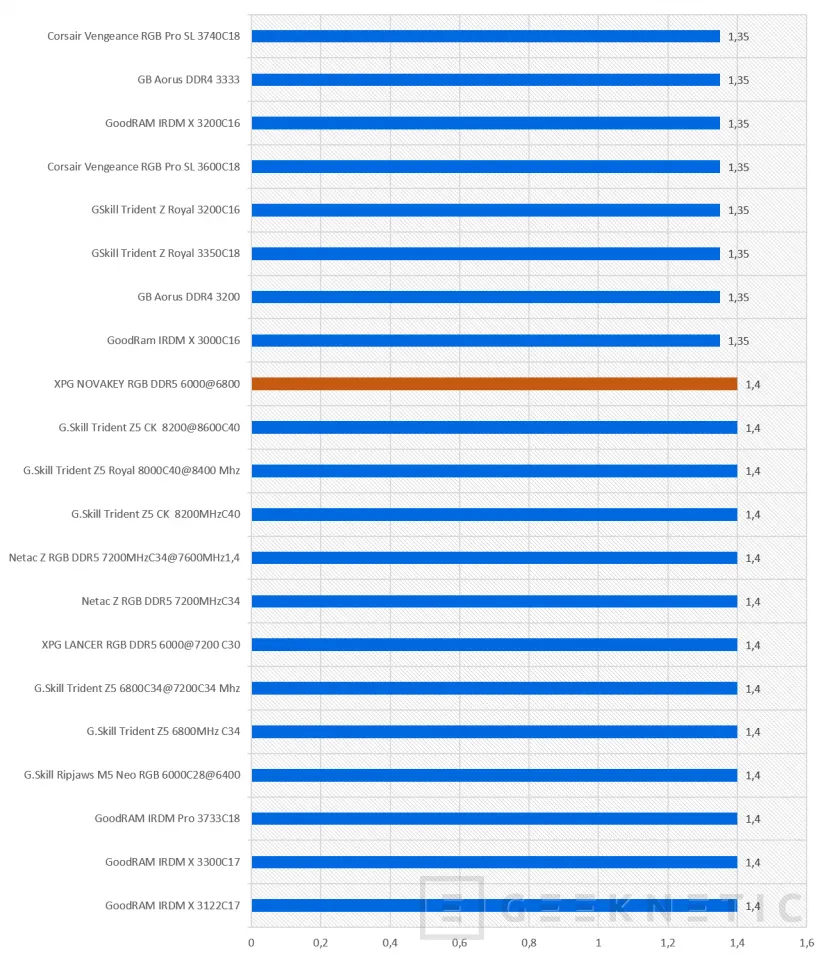
- Operating voltage: 1.40V
- Module height: 45 mm (compatible with most CPU coolers)
- Warranty: for life
- Lightning: Addressable RGB system (ARGB) with “Infinity Mirror” and compatibility via SMBus with most motherboards. XPG also offers its own lighting management software.
The Infinity Mirror design: when RGB lighting takes a leap in category
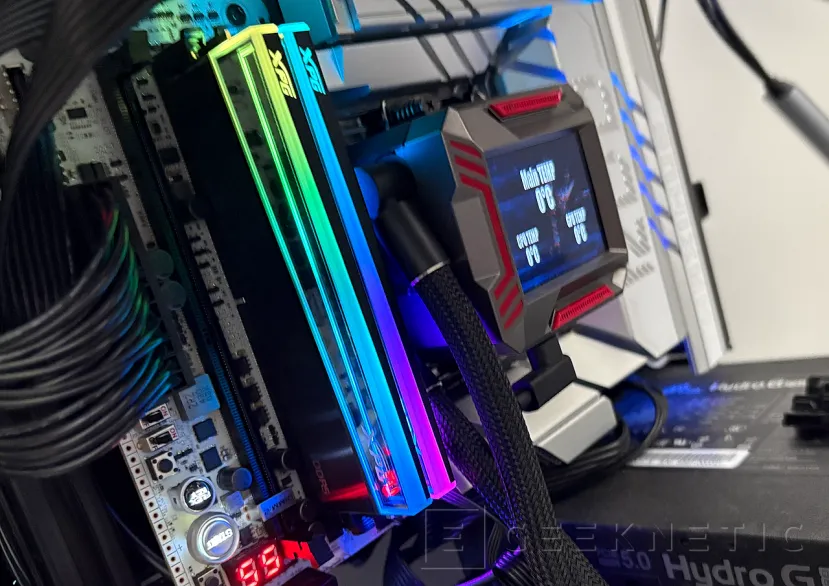
If there is something that absolutely distinguishes the NOVAKEY from the rest of the memories we have had in the laboratory, including the Lancer that we analyzed previously, it is its lighting system. XPG calls it Infinity Mirror. A design that we have seen lately in graphics, cases, liquid cooling and that enhances the lighting of the modules themselves as well as other illuminated components within the system.
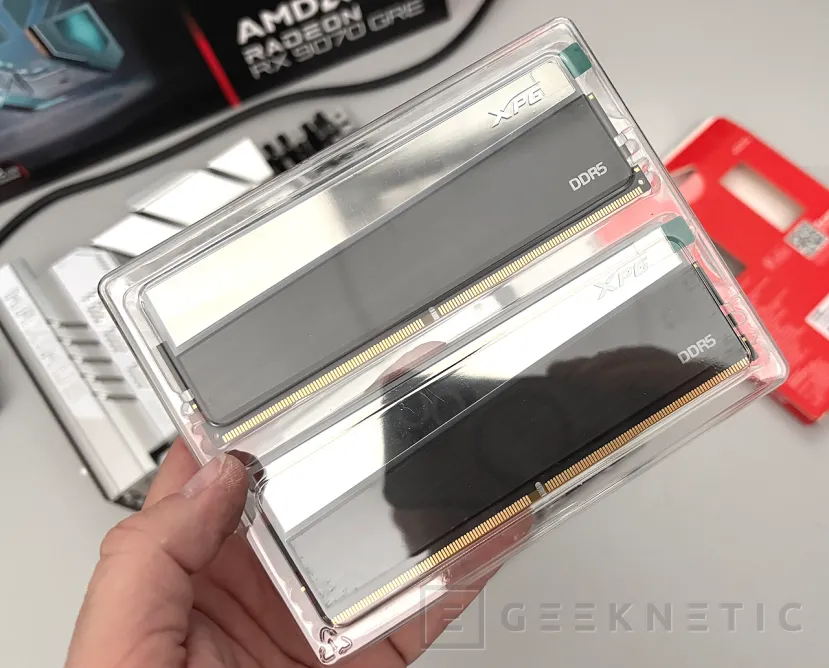
Compared to the Lancer’s three-dimensional diffusion system, which was already notable and managed to project the lighting laterally like a prism, the NOVAKEY effect represents an important qualitative leap. The Lancer impressed with its coverage of the entire ARGB spectrum and its diffuser on the sides of the module, but the Infinity Mirror of the NOVAKEY is a very different finish, in my opinion more elegant, which is appreciated because they are easier to adapt to all types of systems.
The heatsink also incorporates an environmental commitment. 50% of the aluminum used is recycled and 85% of the plastic is post-consumer PCR material. XPG also certifies the packaging under the FSC standard. An effort by the brand to make its products more sustainable, without abandoning the quality of the components used.
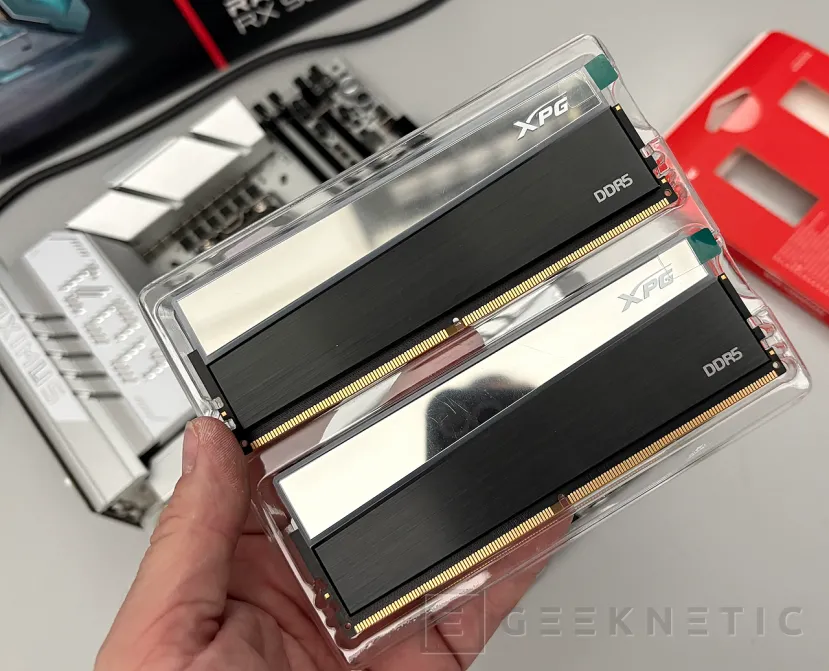
In terms of lighting compatibility, the NOVAKEY are fully compatible with the synchronization ecosystems of ASUS, ASRock, Gigabyte and MSI, in addition to XPG’s own software, XPG Prime. The format is the standard 288-pin U-DIMM for desktops, and the dimensions are the usual ones for modules with a heatsink, which should not pose any problem with the large CPU heatsinks on the current market.
Going into the technical details of the XPG NOVAKEY RGB DDR5 6000 C30
Behind its beautiful finishes and visual spectacle there is technical support that XPG has taken special care of in this series. The most significant change compared to the Lancer is the adoption of a 10-layer PCBa value that in consumer reports was until now reserved for very specific high-end products. More layers on the PCB mean better signal stability, less interference, and greater electrical stability in general, which directly translates into more solid performance both when operating at factory frequencies and if we venture into some overclocking.
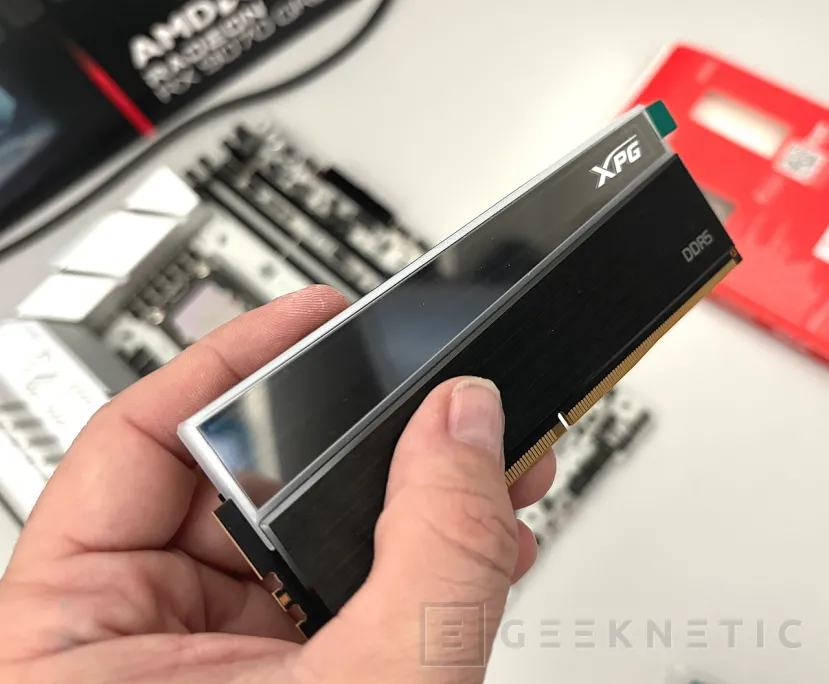
The integrated PMIC, already present in the Lancer, continues here fulfilling its function of precise voltage regulation, and is now combined with ECC on-die, the error correction system integrated into the memory chip itself (requirement of the DDR5 standard). This fix is not equivalent to the server-level ECC that we would have seen in configurations like Threadripper’s R-DIMMs, but it does provide an additional layer of data integrity that is especially relevant in heavy workloads such as high-resolution video editing, 3D rendering or local artificial intelligence tasks, which are precisely the user profile that XPG is targeting with these memories.
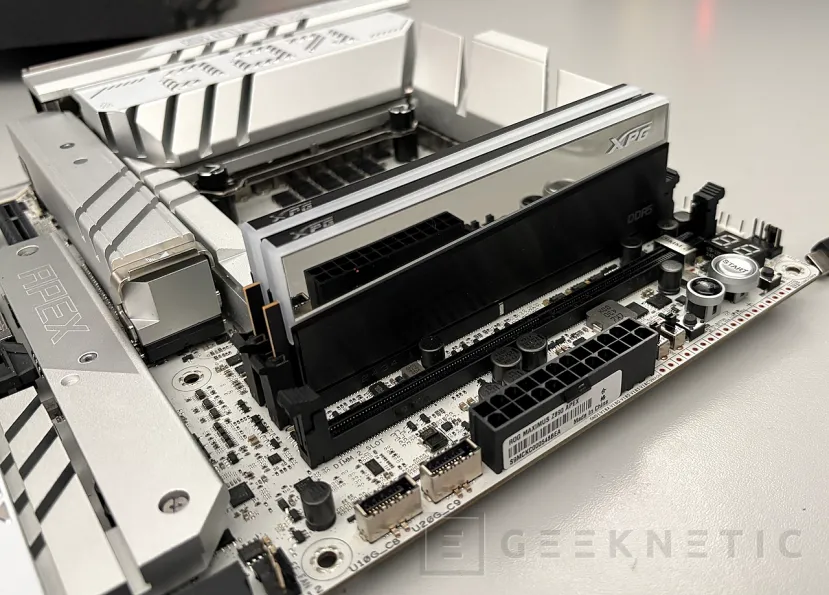
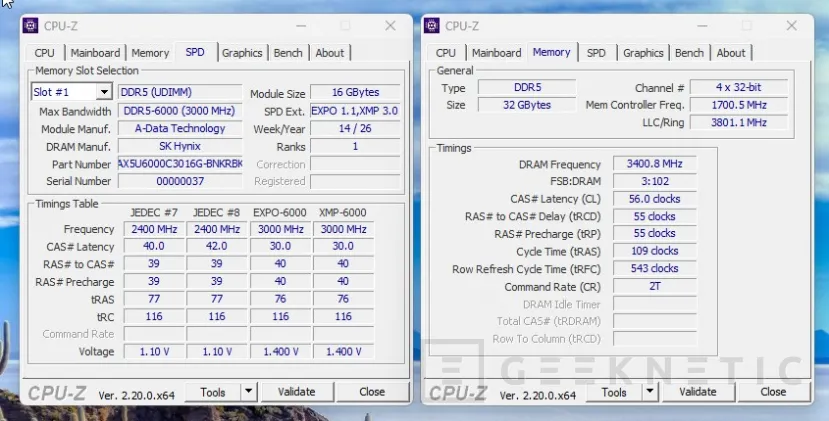
The work profile in our test unit is 6000 MT/s with CL30 latencies for AMD and Intelspecifically: 40-40-72. The operating voltage remains at reasonable values taking into account the speed, 1.4 V in the variant we have tested, which should translate into controlled working temperatures despite the greater load on the PCB compared to modules with fewer layers. Both XMP 3.0 and AMD EXPO profiles are available with the same speed and latency specifications.
The price of RAM in 2026: the elephant in the room
Talk about the XPG NOVAKEY Without addressing the current context of the memory market it is complicated. The recommended price of this 32 GB kit is 570 euros, a figure that just a year and a half ago would have been simply unthinkable for a consumer kit in this speed segment.
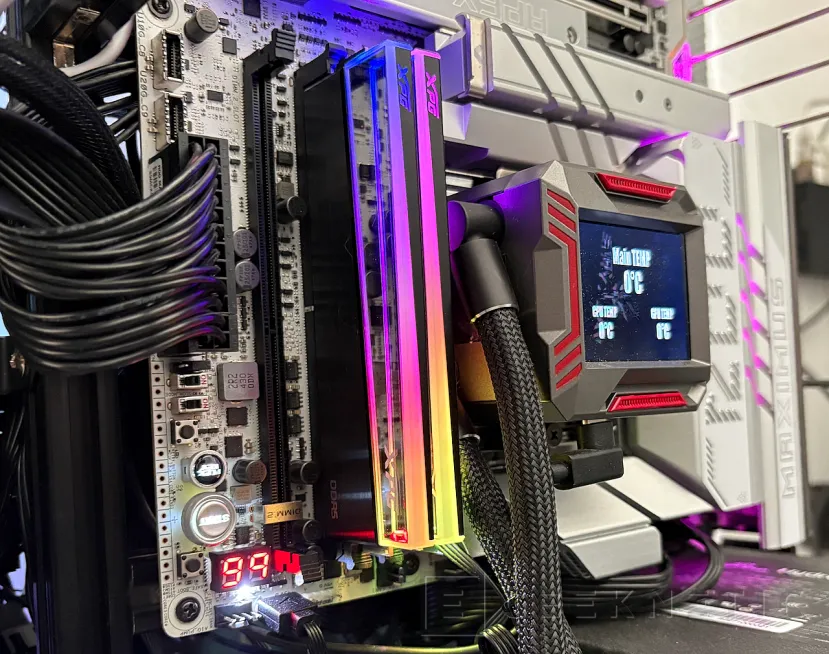
Does it make sense to buy now, or is it worth waiting? The honest answer is that the short-term outlook is not very rosy. Manufacturers don’t expect this to improve until at least 2030, although we also need to understand the interests of memory manufacturers in this regard.
Some analysts place price normalization between 2027 and 2028, others even think that we could see some correction this same 2026; Be that as it may, we are seeing how important final product manufacturers, such as Microsoft and Apple, have made significant increases in many of their products in the heat of the RAM memory situation. Others are even going to promote the use of previous generation memories as an escape route from the availability of DDR5 memory.
Platform Temperature, Performance and Potential
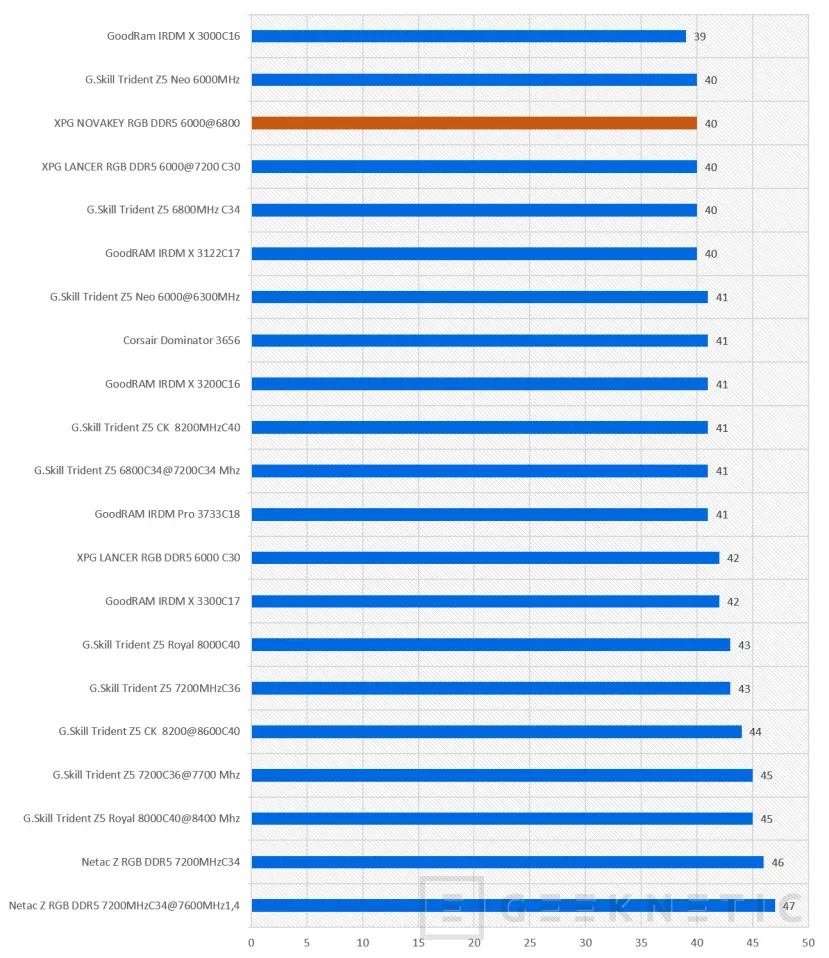
As far as temperature is concerned, the NOVAKEY heatsink does its job well. The values at rest are similar to those we recorded with the Lancer, remaining well below 40 degrees even under sustained load, which validates that the new design does not sacrifice thermal efficiency at all. The integrated PMIC and 10-layer PCB also contribute to more efficient power distribution, which in practice results in greater system stability under prolonged workloads.
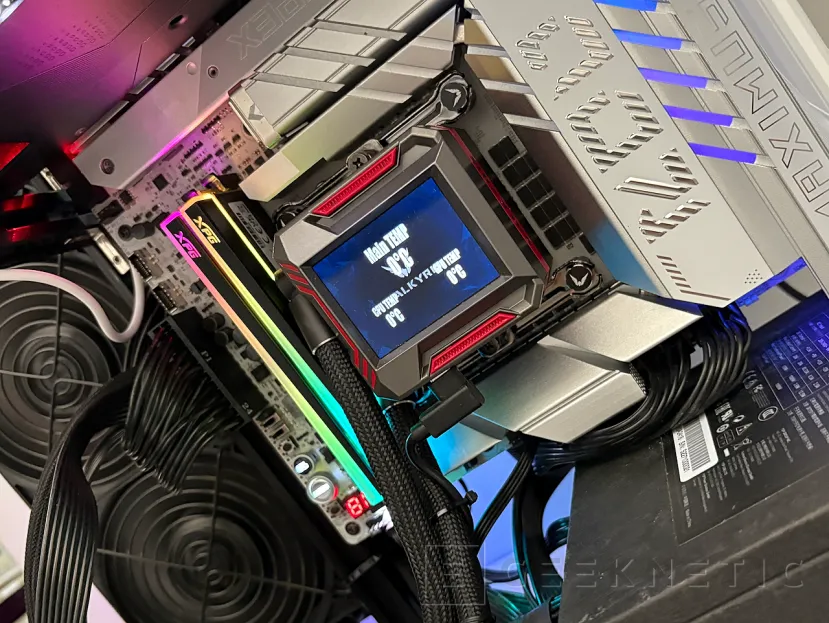
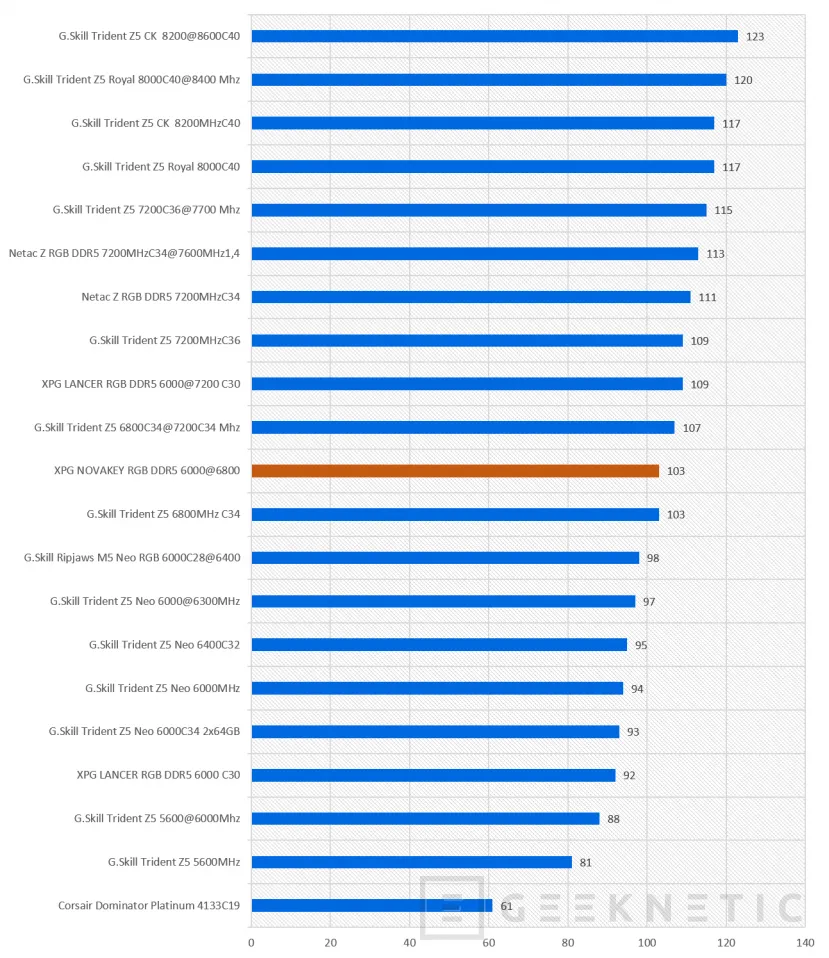
These memories have also pleasantly surprised us; without increasing voltages and without a critical increase in latencies we have managed to add 800 MT/s to its base speed, achieving a maximum frequency of 6800 MT/swhich is more than 10% more performance and which undoubtedly once again confirms the quality of memories that XPG uses in its modules.
Performance results
DDR4 testing machine:
- Processor: AMD Ryzen 3950X
- Source: Seasonic Connect 750w
- Hard drive: Samsung 980 Pro
- Cooling: CoolerMaster MasterLiquid FLUX PL360
DDR5 testing machine:
- Processor: AMD Ryzen 7 9800X3D
- Source: Seasonic Primer TX 1600
- Hard drive: GoodRAM IRDM PRO 2TB
- Cooling: Be Quiet! Pure Loop 2 FX
Voltage
Temperature
Reading bandwidth
Write bandwidth
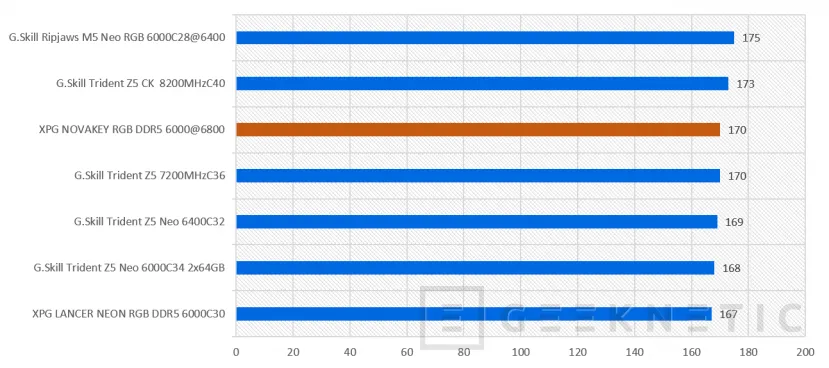
Cyberpunk 2077 1440p Radeon RX 7900 XTX
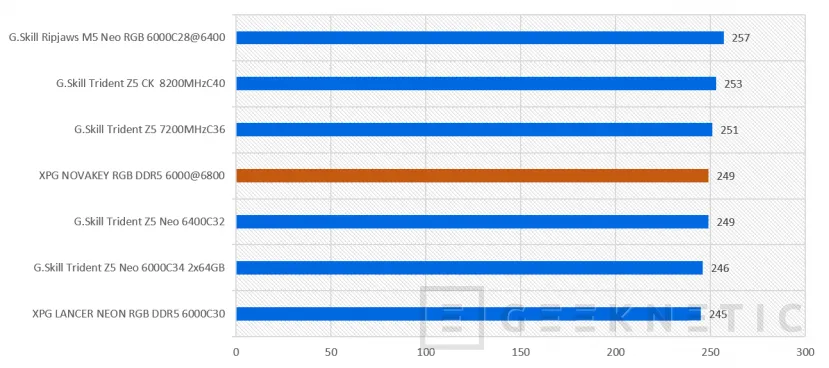
Doom Eternal 1440p Radeon RX 7900 XTX
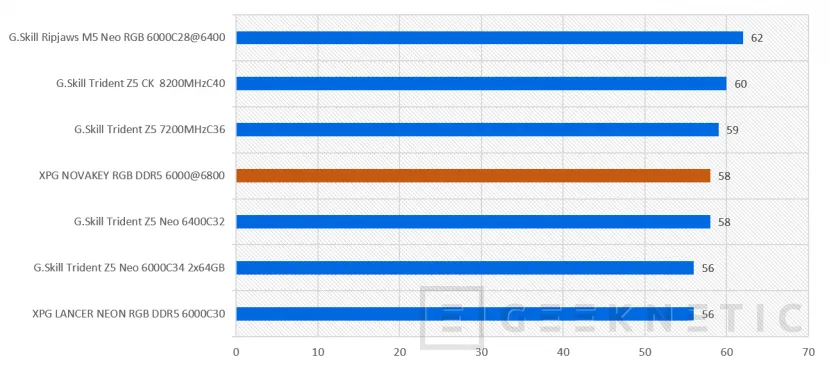
F1 24 1440p Radeon RX 7900 XTX
Analysis and conclusion
The XPG NOVAKEY RGB DDR5 They are, without a doubt, the memories with the most striking and innovative design that we have had in the laboratory. The Infinity Mirror effect makes them an integral part of the complete PC finish. It reflects the general lighting of the entire PC, enhancing its own RGB effects and those of adjacent components. Added to this is a higher quality construction with the 10-layer PCB, high-quality SK Hynix memories and the use of recycled materials, details that add value.
The price of 570 euros for the 32 GB kit is not very inviting, but this is the market and quality memories pivot, except for specific offers, with this capacity-latency-speed, on this same price.
Outside of the market context, XPG has built some modules with solid performance, quality construction, and notable overclocking results. Another notable creation of the brand.
