
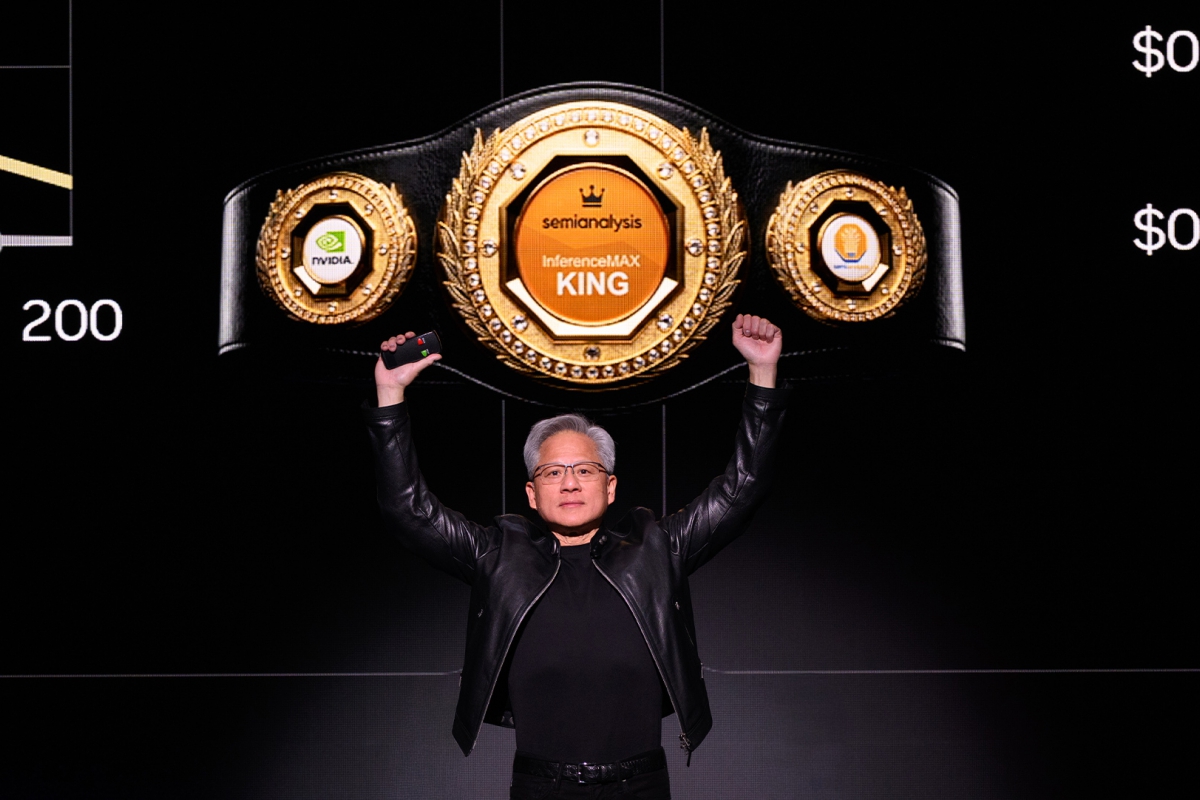
Jensen Huang champions the workplace impact of AI and presents DGX Spark for the home at GTC Berlin
During the GTC conference in Berlin, Jensen Huang, CEO of NVIDIA, spoke about various hot topics. The first has been the social and labor impact of AI. According to The Registerthe manager categorically rejected predictions about the end of human civilization during a question session. Huang called these warnings headline-grabbing fabrications and defended the need to project a constructive technological future instead of fueling fear-based discourses.
The manager also did not avoid the issue of employment, something that worries many people. He did so after learning that financial entities such as Barclays will cut 5,000 positions to rely on automation. Huang argued that technological transitions always displace certain tasks while generating new activities.
In this sense, he maintained that the infrastructure linked to data centers has already created about a million jobs in the United States, ranging from electricians and plumbers to network engineers and new startups.
Agent security with OpenShell
In the field of technical security, Huang highlighted the role of OpenShell. This is an isolated environment designed to limit the resources an AI agent can access during its execution. The company seeks to limit the permissions of each model to the specific task it must solve.
This containment layer responds to the need to prevent agents from interfering with external systems or executing unforeseen actions.
Should we pause AI development?
In another vein, when asked about the idea of slowing the advance of frontier models while risks are evaluated, Huang ruled out pausing general research. The manager pointed out that companies must act to avoid causing harm to society, but he drew a clear line between stopping a system that already causes tangible damage and paralyzing development as a precaution.
On the other hand, he defended that the productivity of AI lies precisely in allowing engineers to explore thousands of design alternatives under real physical constraints, a methodology that NVIDIA applies daily internally.
DGX Spark is a $4,000 computer that acts as a home robot
The meeting also served to show NVIDIA’s vision for the particular field with the presentation of the DGX Spark. It is a desktop computer with a price of 4,000 dollars that incorporates the processor N1X and 128GB memory.
Huang explained that this device is designed to connect to the home’s local network, just like a television, functioning as a shared resource for each family member to run their own agents. In practice, the manager defined this machine as the family robot of the home, dispensing with arms and legs to focus on software tasks.
As an example, he noted that his own agent located restaurants in Berlin and produced a brochure with menus and images. This launch comes backed by a record financial year, after closing its fiscal year 2026 with $215.9 billion in income and 120 billion dollars of net profit, to which is added the license of your software to $2,000 annually by GPU. Figures that, as The Registrer recalls, remind us that NVIDIA is a party very interested in ensuring that the AI fever does not stop.
