
The Galaxy S26 Ultra hides more changes than it seemed and its periscopic camera explains why
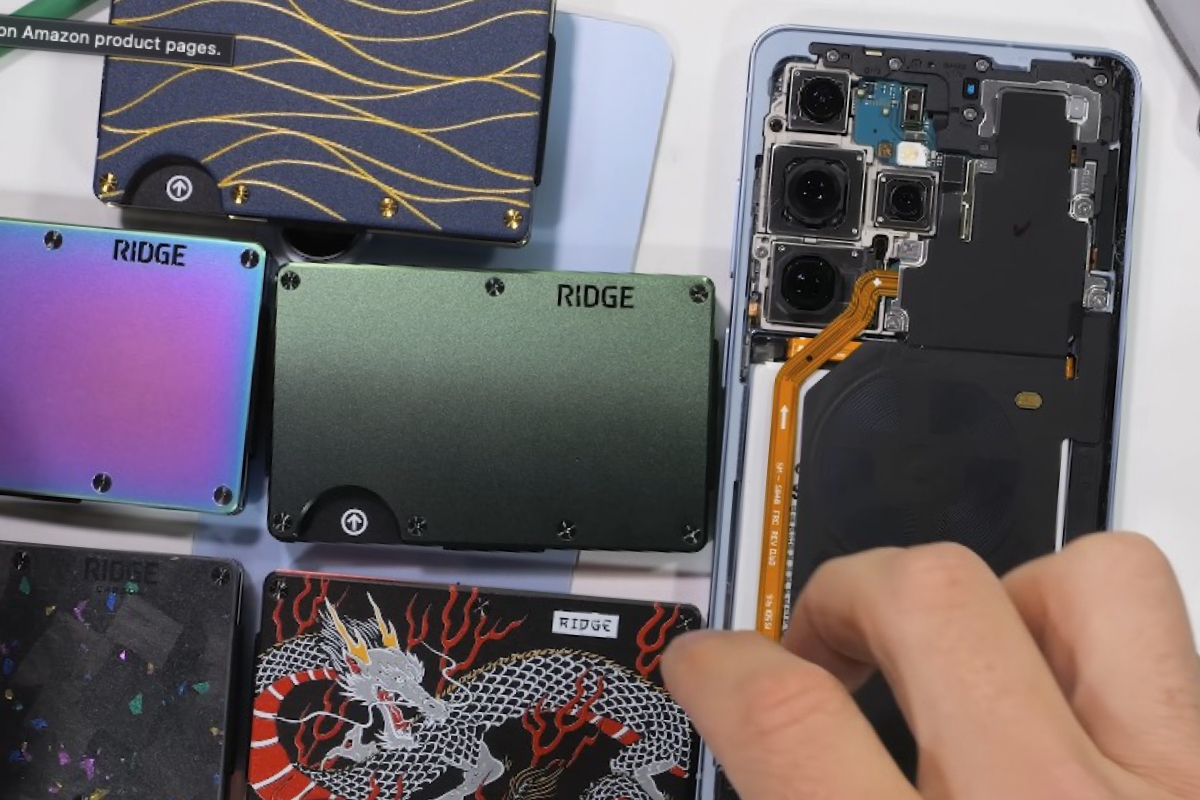
There are launches that are understood by what a brand teaches on stage and others that begin to be truly explained when someone takes the cover off. With the Galaxy S26 Ultra that is happening a bit. On paper, Samsung presented a phone that is continuous in design, very focused on AI and with a fairly measured speech about the hardware. But The first thorough disassembly of the terminal has shown that there are important changes insideespecially in chamber and refrigeration.
The interesting thing is that it is not a revolution visible at first glance. We are not talking about a radical redesign or a kilometer-long list of new components, but about a collection of internal adjustments that seek to better express the same concept of the Ultra range. And in premium phones that weighs more than it seems: when the external margin for change is narrowed, the battle moves to the interior, to how the optics are arranged, how heat is dissipated and how space is optimized without bulking up the device.
The periscopic camera is where Samsung’s hand is most noticeable
The most striking point of the disassembly is in the 5x zoom camera. Samsung maintains a 50 megapixel periscope, but significantly changes the internal architecture with an ALOP design, acronym for All Lenses On Prism. The idea, greatly simplifying, is to relocate the relationship between the prism and the lenses so that more light reaches the sensor and to better compact the module.
In a traditional periscope camera, the prism is placed in front of the lens assembly and this introduces limitations in the passage of light. On the S26 Ultra, as shown in the teardown, the lenses go directly over the prism. This reorganization allows the system to be opened more and results in brighter optics, with an f/2.9 aperture compared to f/3.4 in the previous model.
Samsung didn’t present this change as a big Unpacked headline, but in practice it may have more real impact than many software features. The disassembly maintains that this new layout allows to capture around 37% more light and, at the same time, reduce module size by approximately 22%.
It is not a minor nuance. Mobile photography largely lives on these types of silent improvementsthose that do not change the optical zoom figure, but the result does change when night falls or when the subject is far away and the margin of error increases. Instead of just selling more megapixels, Samsung seems to have reached right where it could scrape more practical performance.
More cooling for a generation that demands better performance support
The other great discovery is in dissipation. The disassembly shows a larger vapor chamber, with an approximate increase of 15% compared to that of the previous model. In a mobile of this profile it is not an ornamental change: it means trying to better endure gaming sessions, local AI tasks, high-resolution video recording and sustained intense loads without the terminal entering thermal limitations prematurely.
This growth of the vapor chamber does not come alone. Other information collected from disassemblies published these days also points to a more elaborate multi-layer system, with combinations of materials and more refined thermal management.
Small internal changes that are not seen, but count
The disassembly also leaves other curious details.. One of them is in the S Pen housing, which appears more isolated from the rest of the interior through a sealed design so that, if liquid enters through that gap, it does not easily affect other components of the phone. It is also mentioned that the pencil of the previous model does not fit quite well in this new space, which suggests a millimeter revision of the internal dimensions.
Another striking note appears in the speaker moduleswhere small internal balls are observed designed to reduce that metallic or too thin sound that usually accompanies the speakers integrated into smartphones. They are tiny details, almost invisible to the end user, but they help to understand to what extent the evolution of the product now involves surgical adjustments.
It has also been pointed out possible disappearance of anti-reflective coating so marked that it was present in the previous generation. The hypothesis accompanying the teardown is that Samsung would have prioritized the new privacy screen feature and that both solutions could have conflicted, although that has not been officially confirmed by the company.
The reading that this breakdown leaves is quite clear. The Galaxy S26 Ultra does not seem like a phone built to impress from a distance with a radical aesthetic change, but to refine many internal areas where there was still room for improvement. And that includes just two of the most decisive areas for a high-end: the camera and thermal management.
