
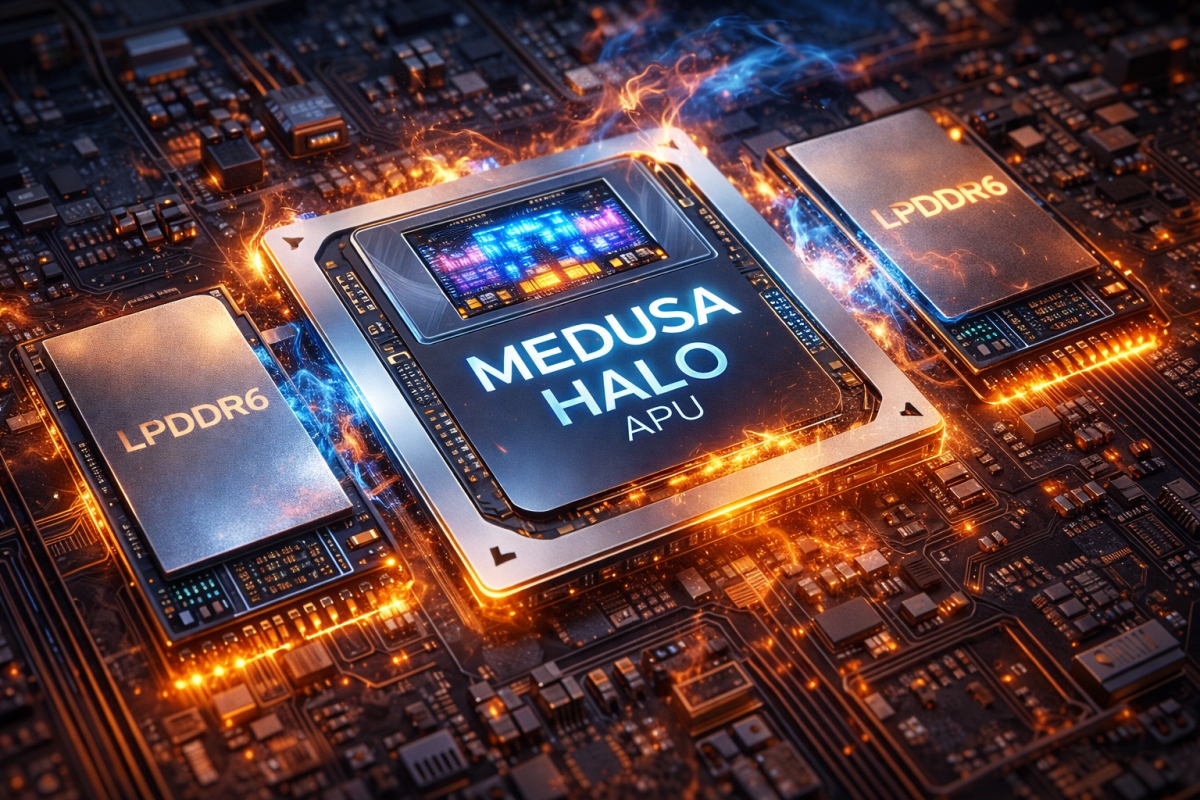
The AMD Medusa Halo will have LPDDR6 memory and a 384-bit bus
amd is working on his next Zen 6 coreswhich will be present first in processors for servers and workstationsto later reach the consumer market. The first rumors are arriving of this next generation of AMD APUsalso known as Jellyfish Halowhere it is said that he will use LPDDR6 memory. It seems that these next AMD laptop processors will be the first to receive this new generation of low consumption memories.
The AMD Medusa Halo will have LPDDR6 memory
The AMD Medusa Halo will have next generation memory LPDDR6where it is expected to have a 384 bit bus. This will allow a wider bus to offer a high bandwidth allowing data to be transported between the CPU and GPU more quickly. According to rumors, the most powerful Medusa Halo references will have up to 24 Zen 6 cores along with 48 RDNA 5 (or UDNA) graphics cores.
Up to 14.4 Gbps on Innosilicon LPDDR6 modules
memory LPDDR6which is already being supplied to some manufacturers for testing, can reach the 14.4Gbpswhich represents an increase of up to 50% compared to LPDDR5x current. But not only a higher speed characterizes these LPDDR6, but they also have a considerable energy savings characteristic of each evolutionary leap. Another novelty of LPDDR6 is that they have 12 bits per I/O bytegetting up to 24 bits on a single channela 50% more than LPDDR5x.
It is expected that AMD launches the new Medusa Halo in 2027so we will have to wait at least until next year to see the LPDDR6 on supported devices.
Juan Antonio Soto
I am a Computer Engineer and my specialty is automation and robotics. My passion for hardware began at the age of 14 when I broke down my first computer: a 386 DX 40 with 4MB of RAM and 210MB of hard drive. I continue to give free rein to my passion in the technical articles I write for Geeknetic. I dedicate most of my free time to video games, contemporary and retro, on the more than 20 consoles I have, in addition to the PC.
