
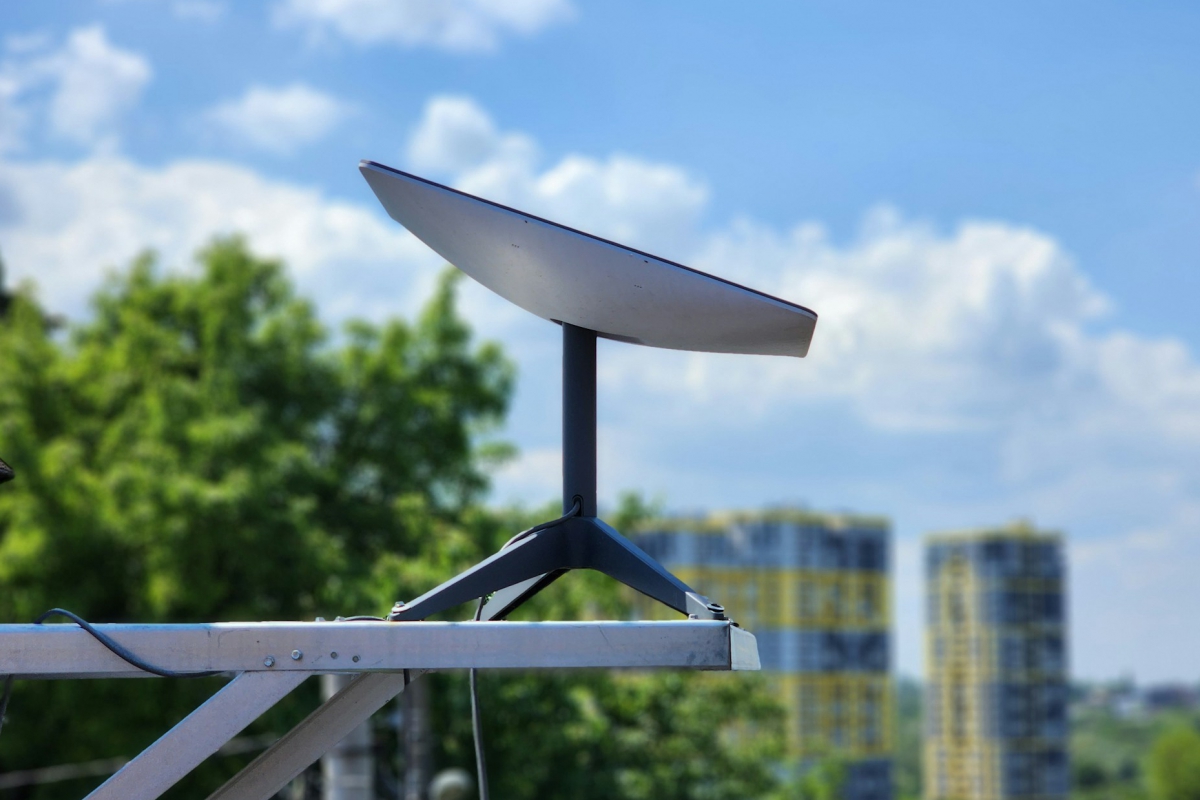
MediaTek and Starlink join forces to bring emergency alerts via satellite to any mobile phone in the world, without terrestrial coverage
When an earthquake, tsunami or natural disaster hits a region, mobile phone networks are often the first to collapse. It is precisely at that moment when you most need to receive an alert on your phone. MediaTek and Starlink have announced at MWC 2026 in Barcelona a collaboration so that emergency warnings reach mobile devices via satellite, even without any type of terrestrial coverage.
The system is already operational in the United States, Canada and Japan, and more than 4.4 million people have connected through Starlink Mobile during emergency situations. The announcement in Barcelona represents a step towards its broader commercial deployment on a global scale.
A normal mobile phone, connected to the satellite without additional hardware
The technology that makes this possible is called Direct to Celland allows a satellite in low orbit to communicate directly with a conventional mobile phone, without the need for special antennas or additional devices. It uses the S band of the radio spectrum, the same one already used by some terrestrial networks, which facilitates compatibility with existing mobile phones.
MediaTek contributes its modem to this collaboration M90described by the company as the world’s first 5G modem with integrated satellite technology. This chip implements the technical standard known as NR-NTNwhich is the specification defined by the international organization 3GPP to regulate mobile communications through satellites. In practical terms, it means that the satellite connection works within the same technical framework as terrestrial 5G networks, simplifying its integration into devices.
Through this infrastructure, users will be able to receive messages from the system CMASWEA wireless emergency alerts and the ETWS earthquake and tsunami warning system, which already operate on terrestrial networks in many countries.
Fill coverage gaps at the worst times
The problem that this technology tries to solve is specific: during natural disasters, telephone antennas collapse or are destroyed just when the population most needs to receive information. The direct satellite connection to the mobile acts as a backup network that does not depend on ground infrastructure.
Until now, consumer satellite communication solutions required specific hardware, such as portable terminals or antennas, or were limited to very basic functions such as sending emergency text messages on some iPhone models or devices with Snapdragon chips. MediaTek and Starlink’s proposal aims to make this accessible on more devices and in a more transparent way for the user.
The next step will be to expand the service to more countries and operators. MediaTek has not given a concrete roadmap, but the announcement at MWC 2026 signals that the commercial deployment of this technology is closer to becoming a global reality.
