
ASUS AEMP III improves mixed DDR5 memory support without XMP or EXPO profiles
The motherboard manufacturers They always try to offer the best features to users, as is the case with ASUS with AEMP III technology. This technology, which responds to the acronym ASUS Enhaced Memory Profile offers better performance on non-profiled memory modules XMP nor Expoand now also for memory modules from different brands installed on the same motherboard. The feature is available with motherboards of the Z890 and B860 series for processors Intel.
AEMP III improves DDR5 memory performance without XMP or Expo profiles
memory modules DDR5 standard, which are sold with just the specifications of the JEDECnow they will be able to improve on the plates ASUS with BIOS UEFI 3002 and 3103. In addition to improving speed and latency, the latest version has also achieved improved compatibility between mixed modulesthat is, of different brands and specifications. The function allows you to optimize the memory using the motherboard data, according to the installed CPU and those of the memory module itself.
Limited support, but key improvements in mixed configurations
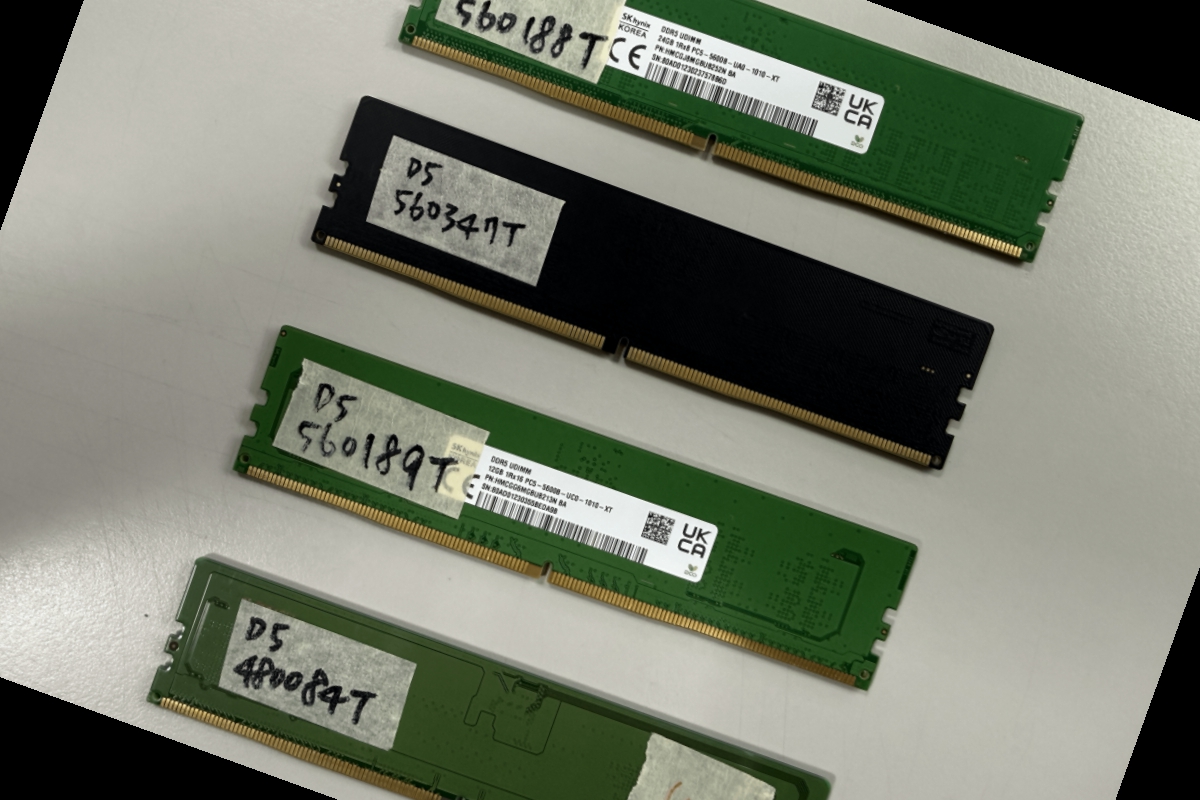
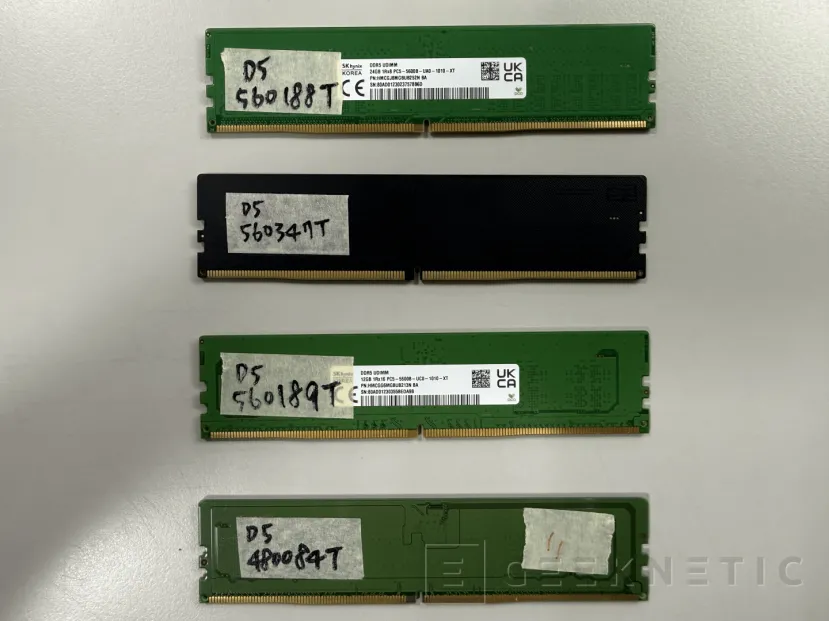
At the moment it is not possible to combine different types of modules DDR5 as U-DIMM and CU-DIMMyou cannot use modules either. single or double rank with AEMP. To demonstrate what AEMP is capable of, ASUS used a plate ROG Maximus Z890 Extreme to which a Intel Core Ultra 7 265K CPU. For the test, 4 modules from 3 different brands were installed and all of different capacities, specifically Samsung, SK Hynix and Lexar with capabilities of 8, 12, 16 and 24 GB.
More speed and lower latency thanks to AEMP III
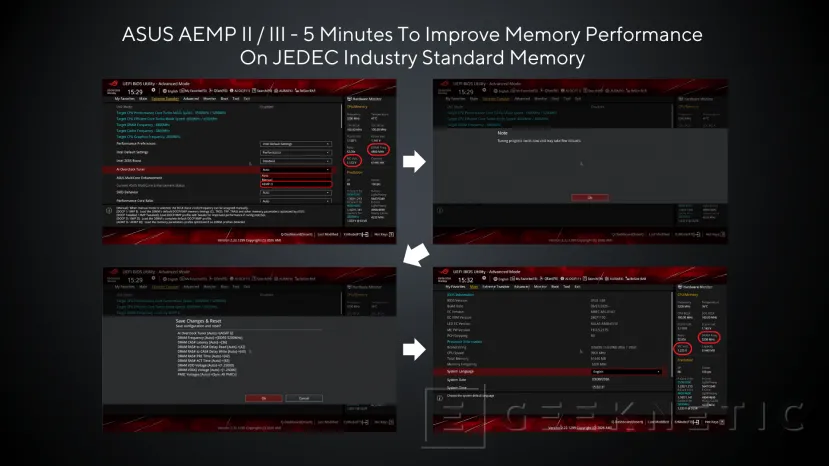
The result is that the motherboard was able to adjust the speed from the 4,800 MT/s up to 5,200 MT/s. But this was not the only change, it also managed to reduce latency from CL48 to CL36. The option is made from within itself BIOS in the menu AI Overclock Tunerand the process usually takes about 5 minutes. ASUS He further states that memory DDR5 can rise from 3,200 MT/s or 4,400 MT/s until the 5,200 MT/s and 5,600 MT/s respectively.
A solution to take advantage of basic or old DDR5 modules
An option that may come in handy to rescue old and more basic memory modules, given the current situation where it is difficult to find the modules. DDR5 It is not the only impediment to getting more RAM memory.
