ARM AGI introduces new levels of density per watt, reaffirming the CPU as a key element in the agentic AI revolution
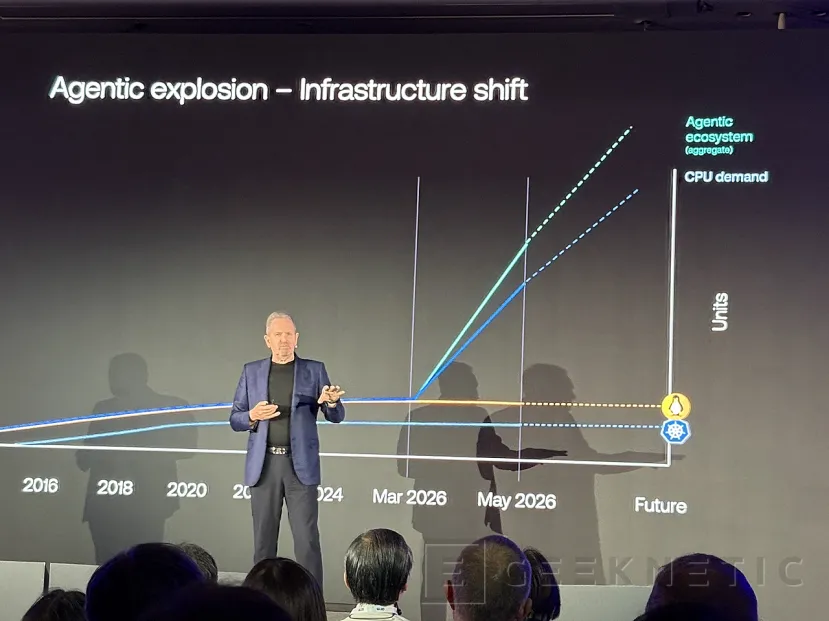
If there is one thing that all the important actors who attended Computex this year agree on, it is that the artificial intelligence revolution involves agentic artificial intelligence, dwhere applications and services are used from a central point that will orchestrate our incorporation into this technology.
Either from the cloud or with local models that are capable of managing this activity from our PC or mobile phone. In this context, ARM has launched its new AGI platform for datacenters on the market, where the CPU is once again key to managing those LLM models executed by GPU. It is a generalized message, we thought that AI is a matter of GPUs but the truth is that everyone agrees that the management of that information, provided by the LLM, will go through the general computing of the CPU
ARM AGIwhich already has two subsequent generations in sight in the brand’s roadmap, offers an outstanding core density, being able to mount two air-cooled CPUs in 1U racks with a density of up to 30 servers per rack, pfor a total of more than 8,160 CPUswhich tells us that each processor has 136 cores. It is not such a shocking figure if we take into account that Xeon 6+ reaches up to 288 cores per processor, in 2U configurations. With 20-23 servers per rack, we have more than 11,000 units.
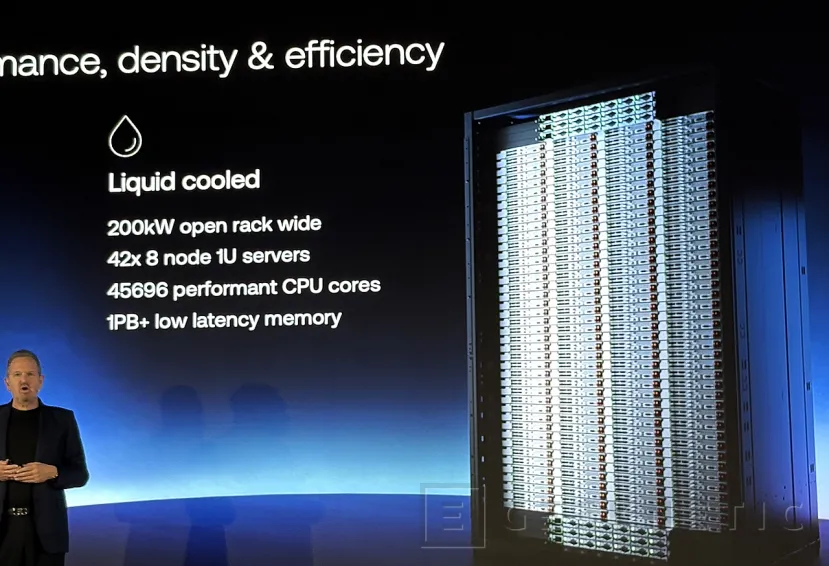
ARM partners for this new solution will also offer water-cooled racks, where the density is multiplied significantly, reaching almost 46,000 process cores. Both solutions promise better consumption than the competition, up to 60% energy savings, but will also be accompanied by ultra-low latency memory and dedicated solutions such as FuriosaAI data cards and Positron AI local inference accelerators.
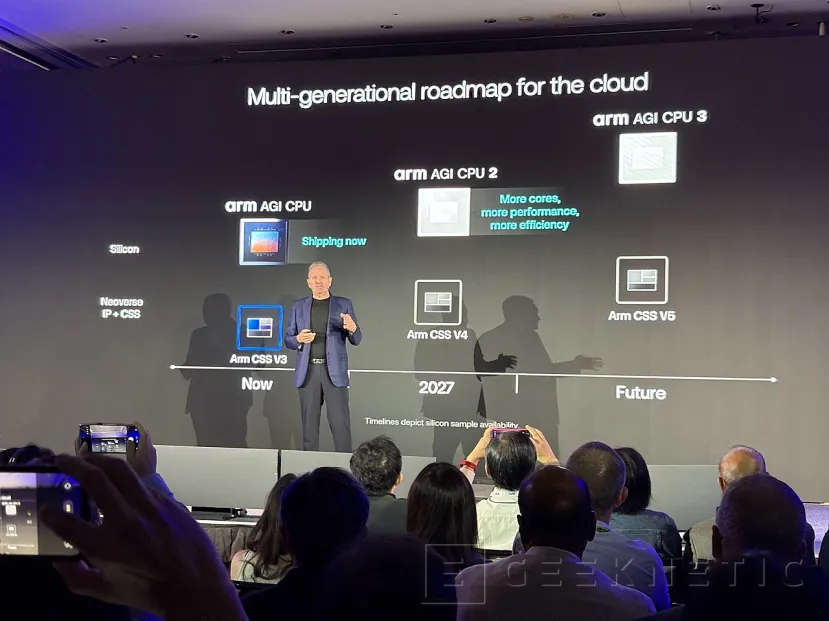
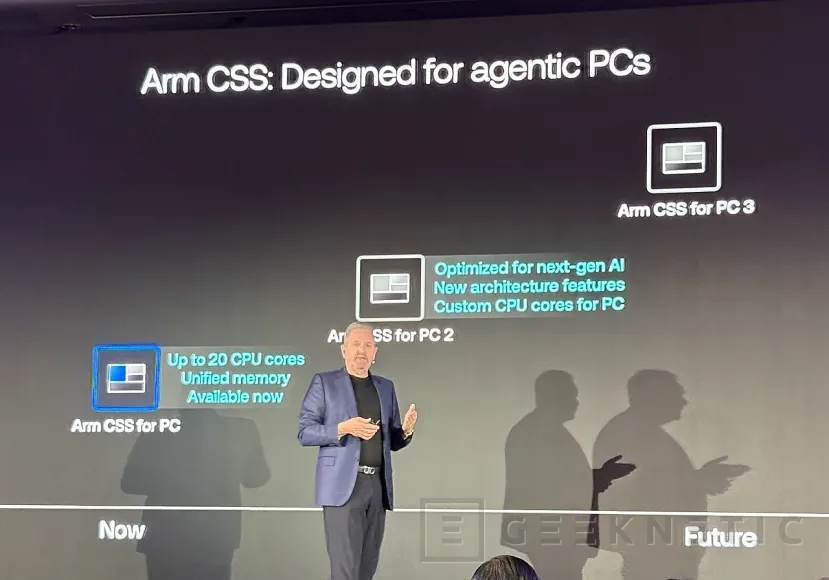
The roadmap of desktop solutions that have given life to new processors such as the NVIDIA RTX SPARK was also secured at the conference. Its CEO, Jensen Huang, was present, confirming that ARM is also focused on chiplet-based IP design, called ARM CSSwhich allows you to scale and customize solutions according to the needs of your clients.