
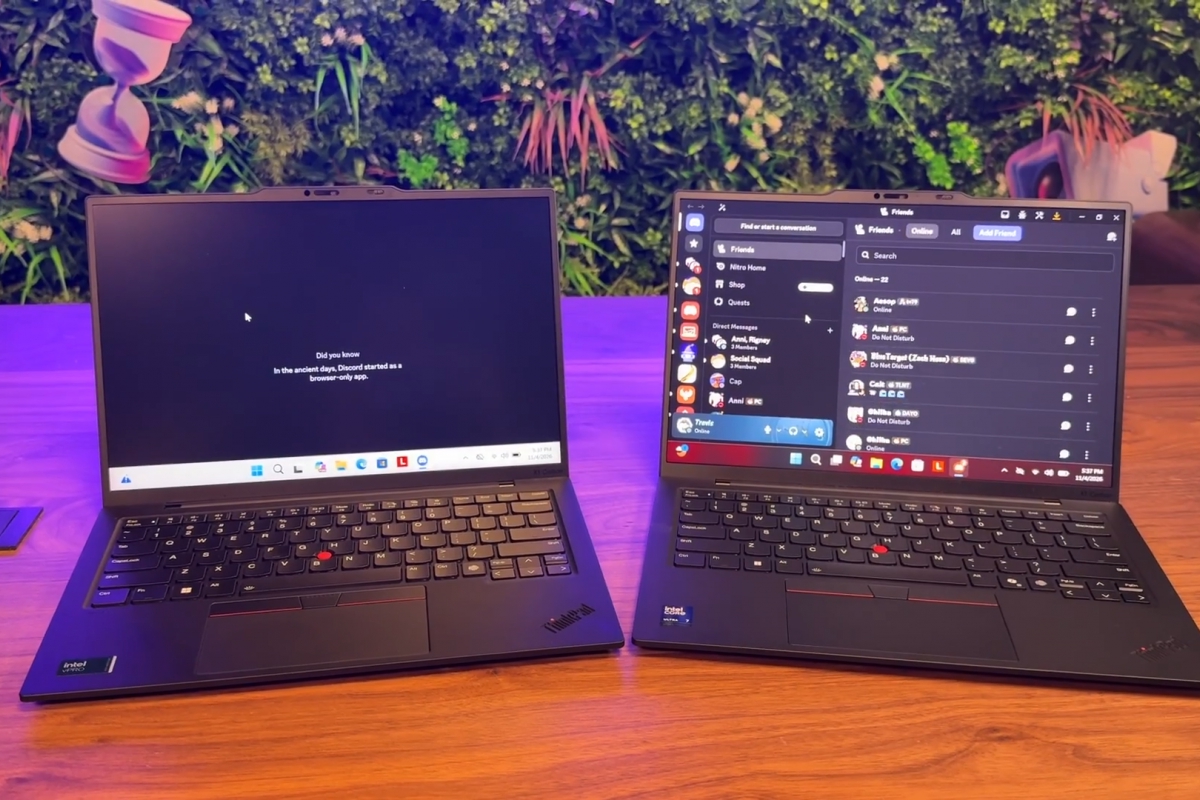
Discord replaces Electron with Rust in its new client for Windows, which now only consumes 290 MB of RAM
In the task manager it appears as Discord Phoenix and occupies 290.2MB RAM with two accounts open at the same time. It’s Discord’s new desktop client, rewritten in Rust to leave Electron behind, and the company already uses it internally.
Its co-founder and technical director, Stanislav Vishnevskiy, has published a 15-second video on Windows Latestthe current client displays a black window for about three seconds and takes about five seconds to reach the interface.
The new one opens a second and a half later, its window appears in less than a second and, when the old one finishes loading, it already shows the list of friends. Discord employees have confirmed that both were started cold, that is, without being previously loaded in the background.
Why has Discord chosen GPUI and not Tauri?
Electron inherits the architecture of Chromium, so each application built with it carries its own browser engine, with several processes per window. In fact, it is an old acquaintance in many apps, such as those from Microsoft. Many expected Discord to go with Tauri, which uses Rust for logic, but still draws the interface with HTML, CSS, and JavaScript within the system webview, which on Windows is WebView2.
Well, the company has chosen GPUI, the framework from the creators of the Zed editor, which draws the interface directly with the GPU and without HTML. Discord, which has used Rust since 2018 and in May released a native ARM version for Windows, will only maintain the system webview for embedded YouTube videos and other very specific sections.
The change also removes the home screen that checks for updates when opening the app, as the new client updates in the background. For reference, a Discord employee indicated in December 2025 that the current client’s normal usage remained below 1 GB, and the company even tested automatic restarts upon reaching 4 GB. Of course, the 290 MB correspond to an early version and Discord has not published a comparison on equal terms.
The transition does not stay at the desktop. Mobile apps will abandon React Native, maintaining native interfaces and sharing Rust code with the desktop. Ryan K. Rigney, director of marketing, mentions that private testing will begin soon, although there is no public release date. Obviously, we cannot forget the difficult context that the hardware world is experiencing, with the harsh memory crisis caused by the demand for AI equipment. It is a time where these optimizations are more important than ever.
