
Microsoft wants more native apps in Windows 11, but acknowledges there are still many bugs holding back developers
Microsoft has admitted that creating native applications for Windows became an obstacle for its own ecosystem. During Ignite 2026, one of its speakers explained that the difficulty in starting a project ended up pushing many programmers towards multi-platform frameworks or not developing for Windows at all.
Jaylyn Barbee, from the platform team, went further and acknowledged that some even quit before starting. According to Windows Latestthese statements occurred in several sessions dedicated to WinUI, the framework with which the company wants the next system applications to be built.
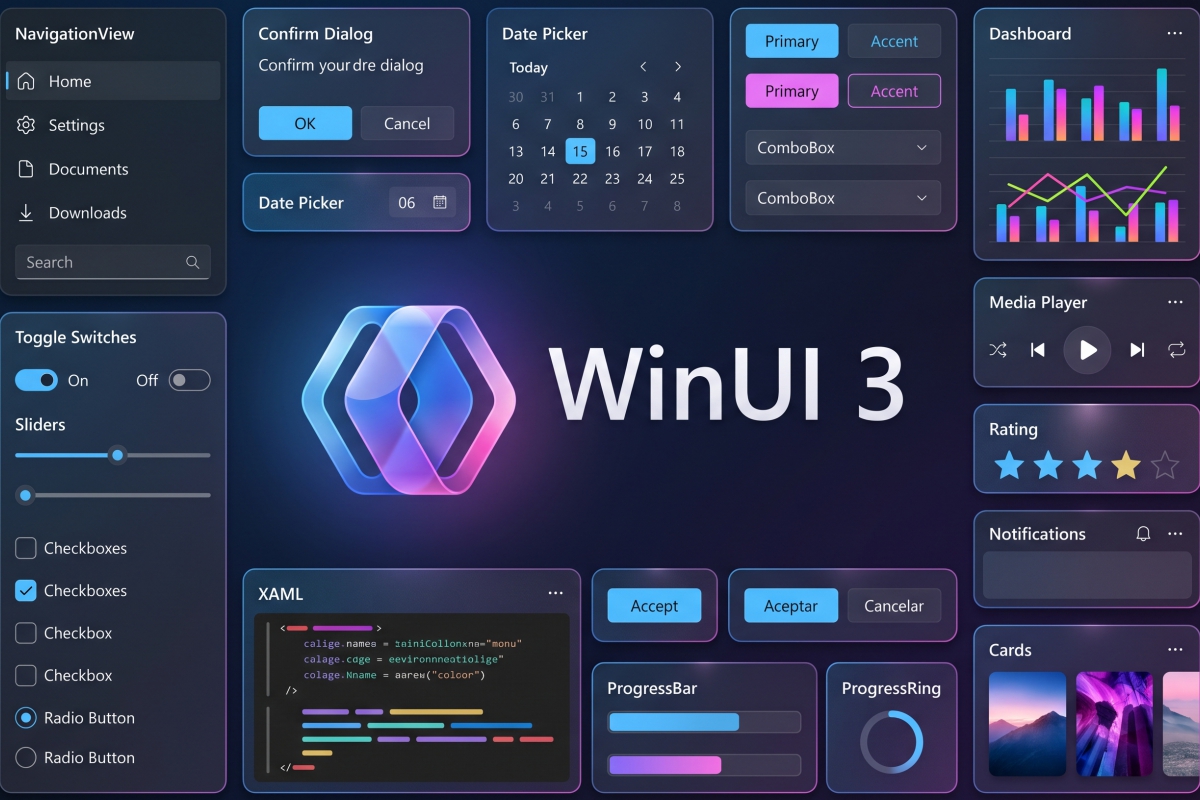
This approach is already noticeable in Windows 11. The Run box, for example, recently debuted a design in WinUI 3 after 30 years and Microsoft has put it as an example of the path the platform should follow. The company has also made it clear that it does not plan to replace it and that it considers it valid for business applications, not just consumer ones. Without a doubt, that is just what someone who is going to dedicate efforts to developing using WinUI needs to hear.
What does Microsoft offer to win over developers?
The first answer is WinApp CLIa command-line tool that covers the entire cycle of an application, from creation to signing and packaging for distribution. Just a few commands are enough to get a project up and running, and it is also designed to work with AI agents, which rely on skills and plugins from Microsoft itself so you don’t have to guess which command to use.
The second has to do with controls. TableView’s editable tables, charts, and InkCanvas, the ink/draw component, can now be tested in a experimental packageand Microsoft asks developers to integrate them and provide feedback.
Added to this is optimization work throughout the framework so that applications start sooner and take up less memory, in line with the WinUI 3 improvements that were already detailed in spring to lighten the file explorer.
The shortcomings that the team itself recognizes
Of course, in Ignite there was also self-criticism, something that is appreciated. Beth Pan, Windows development platform engineer, admitted that they have received many complaints about small bugs accumulated in WinUI and that the number of errors is high. Among the weak points, he cited the API that manages the windows, on which the team is still working, and the input processing, although in this section he highlighted the progress with the game controllers.
The public WinUI repository on GitHub gives an idea of the timelines. InkCanvas, which classic Windows applications already supported, was requested for WinUI 3 in 2022, was studied for Windows App SDK 1.5 in 2023, and has not appeared in an experimental version until August 2026. That same month, a keyboard bug reported in May was also fixed, whereby an application with active focus ignored the Enter key until the user clicked on the window again.
Meanwhile, performance work extends to other areas of the system, such as Windows 11 Search, which has already been revamped and is beginning to reach early users in beta versions of the system.
