
NVIDIA leads an alliance of 37 companies to defend cybersecurity with open source AI models
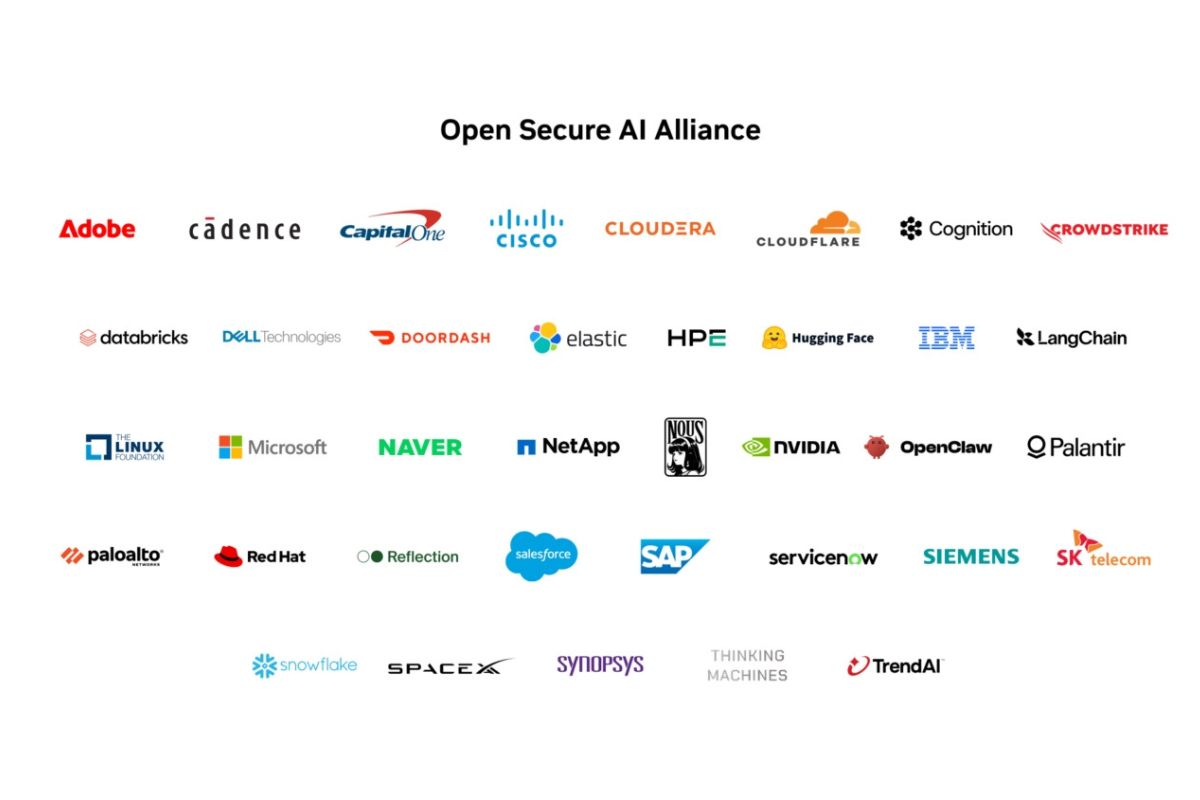
NVIDIA has announced the creation of the Open Secure AI Alliancea coalition of 37 companies committed to sharing open tools for cybersecurity of artificial intelligence systems. Founding partners include Microsoft, IBM, Cisco, Cloudflare, Palo Alto Networks, Hugging Face, Dell Technologies, and the Linux Foundation, among others. The announcement builds on previous work from initiatives such as Akrites and OpenSSF.
The company presents the alliance as a response to a specific dilemma: whether cybersecurity defenses based on artificial intelligence should be built on open modelswhich any defender can inspect and adapt, or rely on closed systems controlled by a few companies. NVIDIA defends that both approaches are necessary, although the weight of its speech clearly falls on the advantages of open.
The central argument is supported by a recent incident. NVIDIA recalls that, after the Hugging Face intrusion, the company had to resort to the open GLM 5.2 model to analyze more than 17,000 suspicious actions, after the closed tools it used were unable to distinguish between attackers and defenders during forensic analysis.
What NVIDIA and its partners bring to the table
NVIDIA says it will contribute models, weights, data, and a new research framework for agents called NOOAthat is, NVIDIA Labs Object-Oriented Agent, now available on GitHub, designed to facilitate the monitoring, traceability and auditing of the behavior of AI agents. According to the company, the goal is for security teams to better test and govern these systems before deploying them in production.
The rest of the partners contribute complementary pieces. For example, HPE contributes SPIFFE/SPIRE, a zero-trust identity framework to verify which agents can communicate with each other. Hugging Face has given its Safetensors format, which prevents remote code execution when loading models, to the PyTorch Foundation. IBM and Red Hat provide digital signatures for security patches, and Microsoft adds MDASHa system that coordinates multiple agents to detect and demonstrate exploitable vulnerabilities.
An alliance with its own interests
Obviously, since this is an NVIDIA announcement, it should be analyzed with caution. And the company is not a neutral actor in the debate between open and closed models, since its business depends on the largest possible number of companies training and executing artificial intelligence on their own servers, something that open models favor over the closed services of providers such as OpenAI or Google, which concentrate computing in their own cloud. A more open and distributed ecosystem is, in practice, most hardware sold by NVIDIA.
Be careful, this does not invalidate the underlying technical argument, which coincides with what was stated by a large part of the cybersecurity community. It’s true that defensive teams need to be able to inspect and modify the tools they use, something that closed systems make difficult by design. But it is also not worth losing sight of the fact that NVIDIA itself recognizes in the same text that open models can be manipulated to eliminate safeguards or be reused for malicious purposes, a risk that the alliance does not resolve, it only redistributes among more actors.
The list of founding partners includes both historical defenders of open source and companies that base a good part of their business on closed models, such as Microsoft or Palantir. This mix suggests that, beyond the ideological debate between openness and control, what the alliance seeks in practice is standardize shared defense tools against attacks that are already using AI offensively, regardless of which model ends up executing them.
NVIDIA closes its statement with a direct request to regulators and governments. It asks them not to treat open models as a default threat and to invest in shared infrastructure for attack evaluation and simulation. It is a position that benefits both the security of the sector and NVIDIA’s own business model, two things that, in this case, are not necessarily contradictory, but neither are they identical.
