
Ryzen X3D, NPUs and OLED monitors as the axis of performance
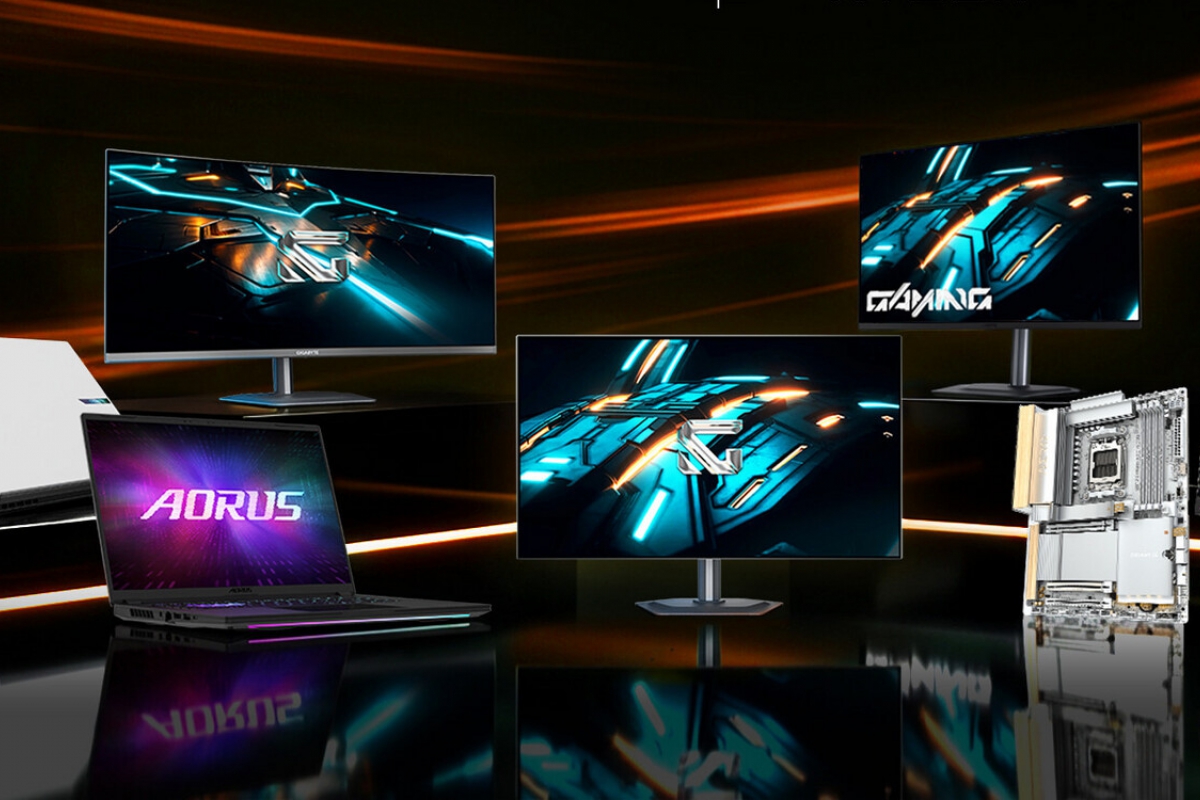
AI on PC is moving from a pretty label to a practical piece of everyday performance. Not because the computer is going to “think” for you, but because More and more tasks are solved locally, with less latency and without depending so much on the cloud. In this context, GIGABYTE has announced that it is deepening its collaboration with AMD to accelerate AI on the device itself on three fronts: laptops for gaming and creation, motherboards for desktop computers and high refresh rate OLED monitors.
The movement points to a very real problem: Many PCs don’t fail because of a lack of power, they fail because of how they hold it. Heat, consumption peaks, profiles that don’t fit or adjustments that turn into an entire afternoon of trial and error. The proposal of this alliance is to reduce that friction.
AI on the device: the difference is in the “now”
When a task is executed on the computer itself, the response is usually more immediate and does not depend on connection, queues or external limits. There is also a control reading: If the process does not leave the computer, you reduce dependencies. That is why local AI fits with the current evolution of CPUs and platforms, increasingly loaded with dedicated blocks such as NPUs.
But power alone is not enough. The challenge is for the user to obtain results without diving into menus or adjusting twenty things blindly.
AORUS MASTER 16 and AERO X16 computers
On the laptop side, the ad highlights the AORUS MASTER 16based on the AMD Ryzen 9 9955HX3D with AMD 3D V Cachea cache design intended to maintain stable frames in fast games and accelerate demanding creation loads.
So that this performance is not just a peak, GIGABYTE accompanies it with WINDFORCE Infinity EX coolingdeclared for 230 W of maximum total thermal power. The idea is simple: maintain power without the user having to tune profiles all the time.
Additionally, the company mentions GiMATE, its AI agent, to bundle power controls, performance, and AI-related features into more direct, workflow-oriented settings.
The second proper name is GIGABYTE AERO X16described as Copilot Plus PCwith processors AMD Ryzen AI 400 Series. Here the focus is on the integrated NPU, intended to handle certain AI tasks efficiently on the device itself, aimed at day-to-day experiences.
In practice, this approach usually prioritizes balance: response in productivity, efficiency and functions that benefit from local processing without depending on external services for each action.
X870E X3D motherboards: less “touch and pray” with Ryzen 9000
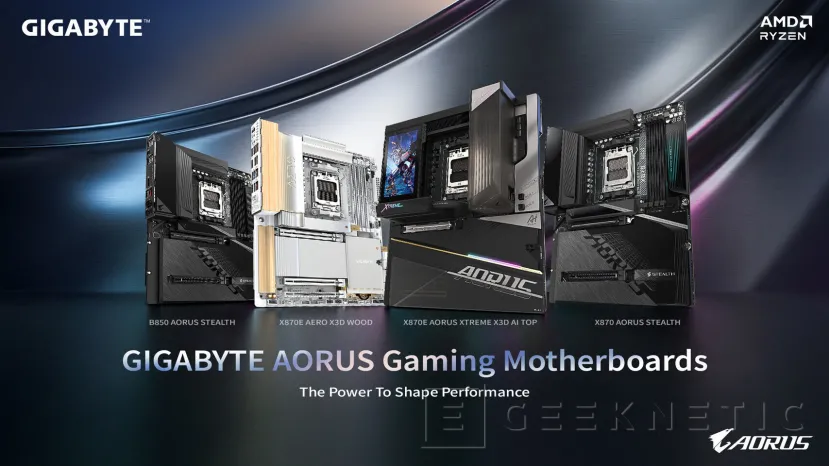
On the desktop, GIGABYTE places the focus on its X870E X3D Series motherboardsdesigned to take advantage of the AMD Ryzen 9000 with 3D V Cache, with an important reminder: the platform setting directly influences stability and response in games.
The differentiating asset is X3D Turbo Mode 2.0a proprietary AI mode described as a fusion of hardware and software optimized for the behavior of the 3D V Cache. The promise, beyond the number, is to reduce the “try this, go back” and reach a stable point sooner.
OLED Monitors: FreeSync Premium Pro and Competitive Utilities
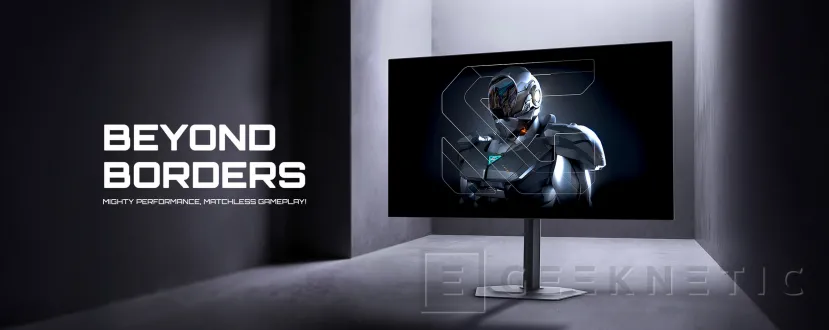
The third block is the OLED monitors. The models are cited MO27Q28GR, MO34WQC36 and MO32U24certified with AMD FreeSync Premium Prowith variable synchronized refresh to minimize tearing and jerks.
On that basis, GIGABYTE adds its Tactical Featuresa suite of tools for competitive use. For example, Tactical Switch 2.0 allows you to change resolution and aspect ratio with one click, including formats such as 4:3 or 5:4. Aim Stabilizer inserts black frames to reduce motion blur, and Game Assist offers overlays like configurable crosshair and timer.
What does this announcement mean for those who buy a PC today?
The bottom line is that the PC is increasingly selling itself as an ecosystem– Platform, system control and display tuned so you’ll notice it in real sessions, not just in a specs table. In this case, the alliance is landed with specific names and an obsession repeated throughout the message: fast, fluid and stable performance, both for playing and for creating and assembling a team without any problems.
It is also a sign of where the competition is going in 2026. The power of the CPU and GPU is becoming equal in many ranges, and the differential value shifts towards “how it feels”: how long it takes to react, how long it lasts without temperature cuts and how much it forces you to tinker to reach a fine point. If the combination of AMD hardware, cooling, BIOS and utilities becomes more consistent, the user gains time and confidence. And in a market where there are more and more options, that consistency may be just what decides the purchase over a team that, on paper, promises the same.
