
https://www.geeknetic.es/Noticia/37388/Corsair-cancela-pedidos-de-un-kit-DDR5-de-48-GB-tras-un-fallo-de-precio-y-enciende-el-debate-sobre-la-confianza-en-compras-online.html
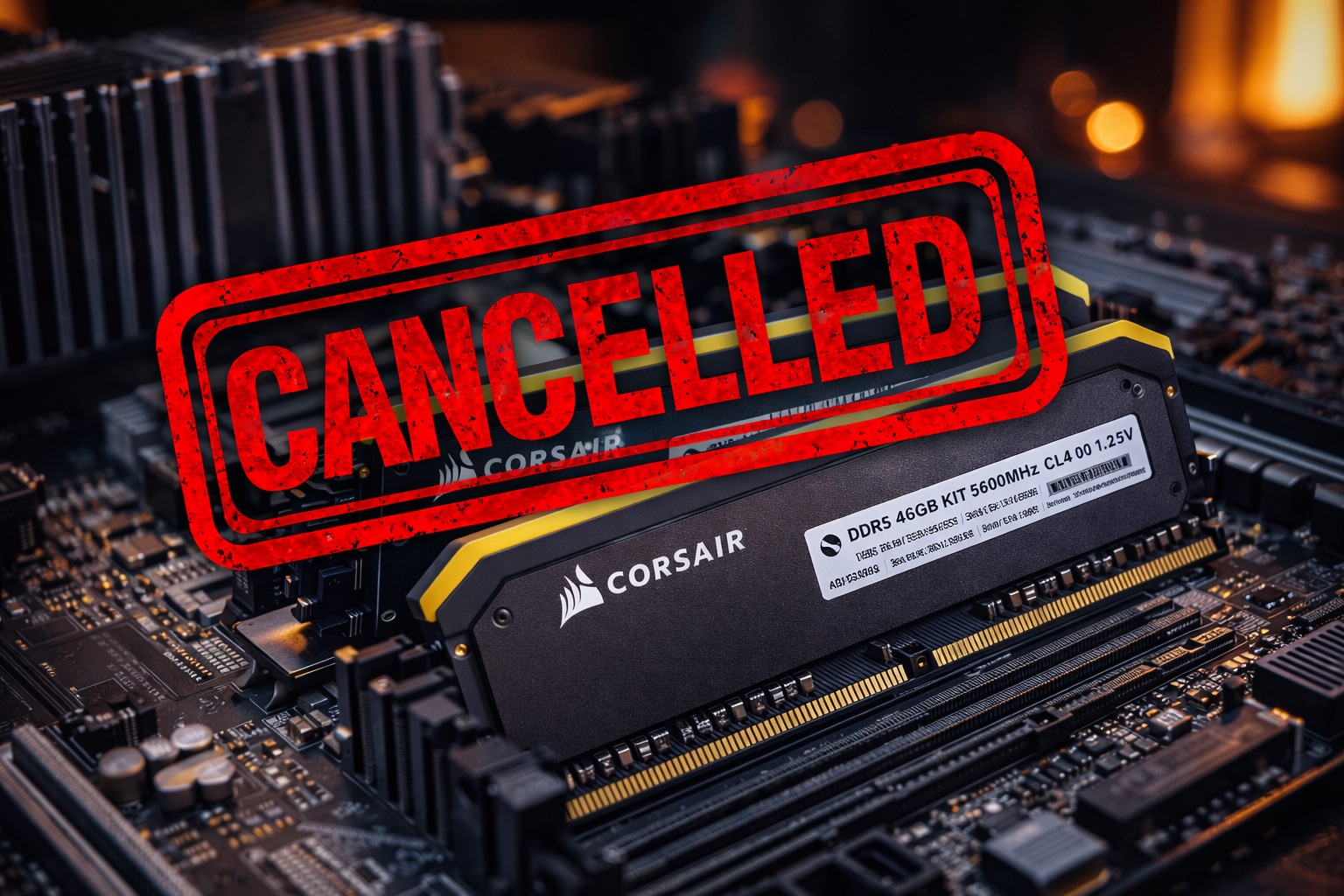
There are days when the click to buy feels like winning the lottery. Enter an official store, see a premium memory kit with a huge discount and think: finally a joy in the midst of rising hardware prices. That was exactly what many users experienced on January 1when the Corsair store showed a 48 GB DDR5 memory kit at a strikingly low price. Shortly after came the twist: chain cancellations and an apology email that did not convince everyone.
What happened and why Corsair canceled the purchases
Corsair explained that the episode was due to a internal price error and an inventory problem. According to the company, the product appeared with an incorrect amount and, in addition, there was no real stock to fulfill the orders. With that argument, he proceeded to cancel the purchases and return the money, pointing out that his store does not contemplate pre-sales for these memory kits.
Under normal conditions, such a failure would be an anecdote. The problem is the context: memory and other components are going through a delicate moment of prices and availability, and any extreme bargain goes viral in minutes. When hundreds or thousands of people think they have caught the deal of the year, cancellation feels like a closed door in the face.
The apology, the coupon and the detail that made it worse
In your communication, Corsair offered a discount coupon for a future purchase as a gesture of compensation. But here came the second setback: Several users shared screenshots where the code came with an expired validity datesomething that turned an acceptable apology into a scratch-faced apology.
After the commotion, Corsair adjusted the discount offered for future memory purchases, trying to put out the fire with something more tangible. Even so, in this type of crisis what is discussed is not only the euro: it is the feeling that a confirmed purchase should have weight, and that errors should not always be paid for by customers.
Why did this case make so much noise?
The combination was perfect for the technological drama: a desired product, an abnormally low price, and PC building communities that double as an instant speaker. A discounted link does not live long, but in that short time it reproduces like a benign virus: chat groups, forums, social networks. When the cancellation message arrives, the anger already has an audience.
Furthermore, the current market makes the user’s pulse faster. If you think that memory is going to increase or that it is scarce, you go for it. If they then cancel you, you feel like you not only lose an offer, you also lose an opportunity to assemble or update the team at a difficult time.
The fine line between legitimate error and trust
In online commerce, price errors exist. And in many countries there are frameworks that allow orders to be canceled if the error is obvious. But, at the reputation level, the injury appears when the user sees a complete process, pays, receives confirmation and then is told that it was impossible. There arise the questions that Corsair is going to have to calmly chew: if there was no stock, why could it be bought? Why didn’t the system block it before? How did you sneak in a badly dated coupon?
Corsair insists it didn’t withdraw an offer on a whimbut corrected an erroneous publication linked to inventory. That may be reasonable. The problem is that the management of the details, especially the coupon, gives ammunition to the perception of shoddyness, even if the origin was a real failure.
What should you do if this happens to you?
This episode leaves three practical lessons. One, if the price seems too good, adjust expectations: it may end in cancellation. Two, save screenshots of the product and order status, in case communication becomes confusing. Three, don’t get married to a single reference: if your goal is to expand memory for work or play, compare similar capacities and real availability before paying a premium to chase the same kit.
Corsair is not the first brand to suffer a store accident, but this case stands out for the moment and for how sensitive the public is to the cost of hardware. A bad afternoon of management turns into weeks of comments, memes and distrust, and that costs much more than a discount.
In the end, the lesson for the industry is simple: when people buy expensive technology, they don’t just buy a product. Buy peace of mind. And that peace of mind is easily broken when a confirmed cart turns into a cancellation email.
