
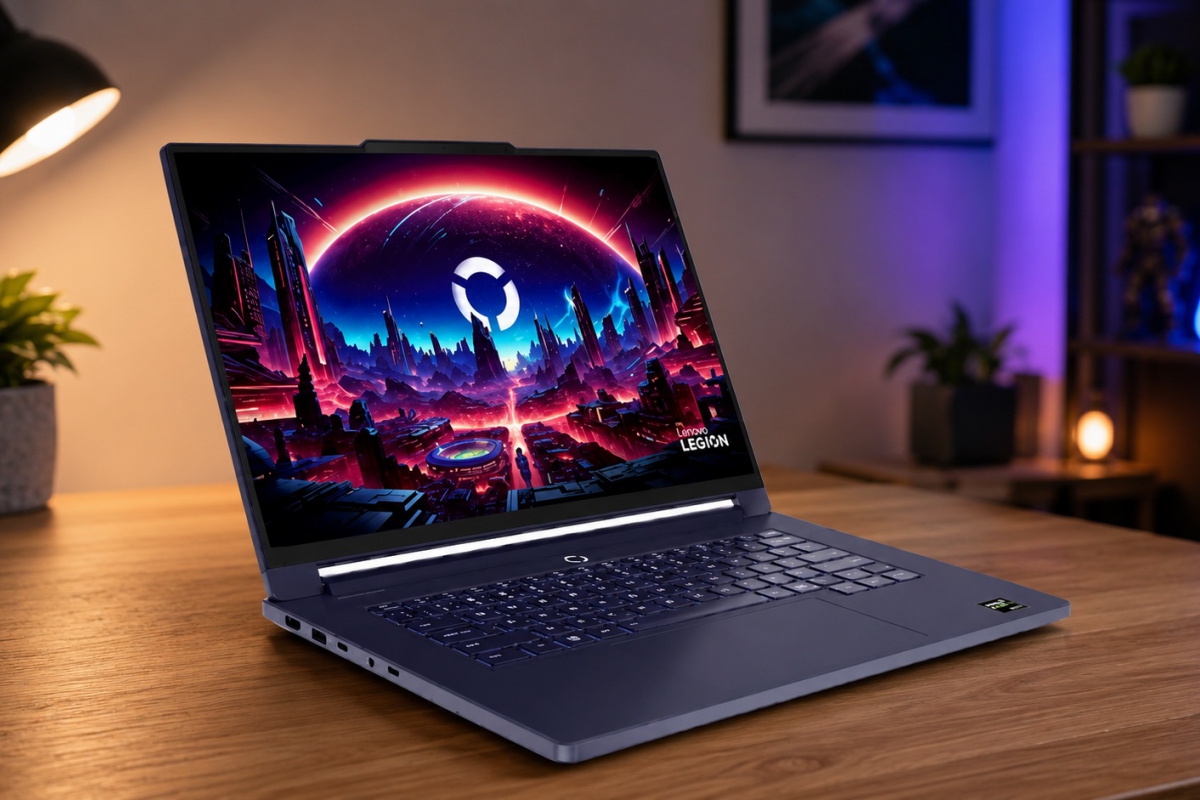
the first gaming laptop in the Legion series that bets everything on the integrated Radeon 8060S
There are few riskier decisions in the gaming laptop market than doing without the dedicated GPU. For years, the presence of a discrete graphics card from NVIDIA or AMD has been the quintessential differentiating criterion in this category, the component that justified the price and separated gaming equipment from the rest. Lenovo has decided to break with that scheme in its new Legion range with the launch of the 15-inch Legion 7a Gen 11, a device that relies entirely on the integrated graphics solution of the AMD Ryzen AI Max+ 392 processor to tackle workloads that previously required a separate GPU.
The equipment was presented at the Mobile World Congress 2026 held in Barcelona and It complements the 16-inch version of the same Legion 7a Gen 11which is already sold in markets such as the United States and Europe equipped with a discrete RTX 5060. The 15.3-inch model takes the opposite path: without an additional GPU, a Strix Halo processor and a weight of only 1.65 kilos, which places it in unusual territory for a team with gaming aspirations.
The AMD Strix Halo platform as the central axis
The heart of the 15-inch Legion 7a is the AMD Strix Halo platformto which belongs the Ryzen AI Max+ 392. This processor combines the Zen 5 architecture for CPU cores (up to 12 in configurations with the 392 model) with integrated RDNA 3.5 graphics in the form of the Radeon 8060S and the XDNA 2 neural processing block, capable of reaching 50 TOPS for local artificial intelligence tasks. The TDP of the set can reach up to 95 watts in this device, which allows the chip to operate with margin when tasks demand it.
One of the most unique elements of this architecture is the use of a unified memory shared between CPU and GPU. Instead of having a dedicated VRAM pool like on laptops with discrete graphics, the Ryzen AI Max+ manages a single high-bandwidth memory pool that powers both the compute cores and the graphics engine. Lenovo aims to 32 GB configurations as a starting pointwith the possibility of reaching 64 GB in certain markets. The processor options available are the Ryzen AI Max+ 388, 392 and 395, all of them with the Radeon 8060S integrated.
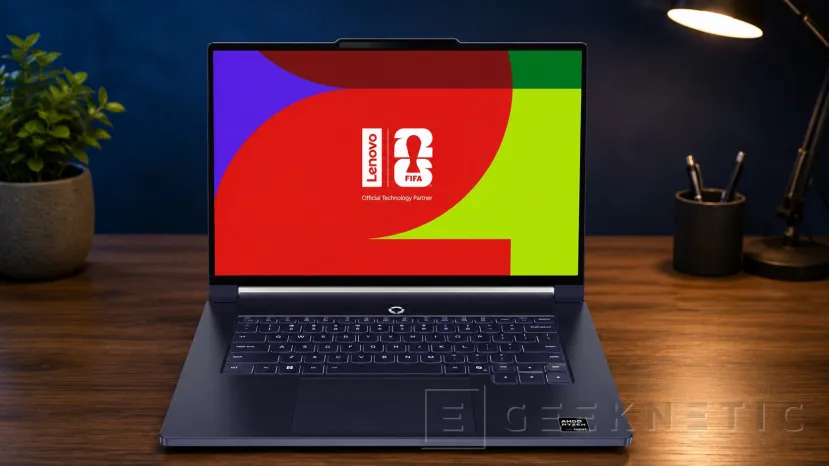
The screen is a 15.3-inch OLED panelensuring absolute blacks, high contrast and color fidelity without relying on local backlighting. The set is housed in an aluminum casing that forgoes the numeric keypad of the 16-inch model in favor of a focused design, with full-size arrow keys and a larger trackpad.
Charging and connectivity: 180 watts via USB-C
Among the technical details that Lenovo has revealed, the support for charging at 180 watts via USB-C. This figure fits the standard USB Power Delivery 3.1 Extended Power Rangewhich defines fixed levels of 36 volts at 5 amps to achieve this charging power. The inclusion of this capability means that the Legion 7a can be recharged with compatible high-power chargers, especially useful for a device that, given its TDP of up to 95 watts under sustained load, may need robust power in demanding sessions.
The Legion 7a is also Copilot+ PC certified, which implies support for Windows features that require a minimum of 40 TOPS neural processing power. The XDNA 2 block of the Ryzen AI Max+ clearly exceeds that threshold, enabling features such as artificial intelligence tools built into the system and improvements in video calling and content editing.
Availability and price: Summer 2026 in Europe
Lenovo has confirmed that the 15-inch Legion 7a It will be available in euro zone markets from June 2026, with a starting price of approximately 2,000 euros. The company has not yet detailed what processor and memory configurations will be available from day one.
Team positioning is deliberately ambiguous– It does not compete directly with high-end gaming laptops equipped with RTX 4070 or higher, but rather occupies a middle space between high-performance ultrabooks and entry-level gaming laptops with basic discrete GPUs. Its differential value is in combining reduced weight, OLED screen and the ability of the Radeon 8060S to handle modern titles at 1080p with high settings, all in a form factor that is unlike any other Legion in the brand’s recent history.
The final result will depend largely on how the equipment manages thermal stress and the distribution of memory bandwidth under sustained load in gaming, two unknowns that can only be resolved when the model reaches the test benches in the months prior to its commercialization.
