
The Galaxy S27 already leaves a very early clue about its chip and Samsung puts Exynos back in the center
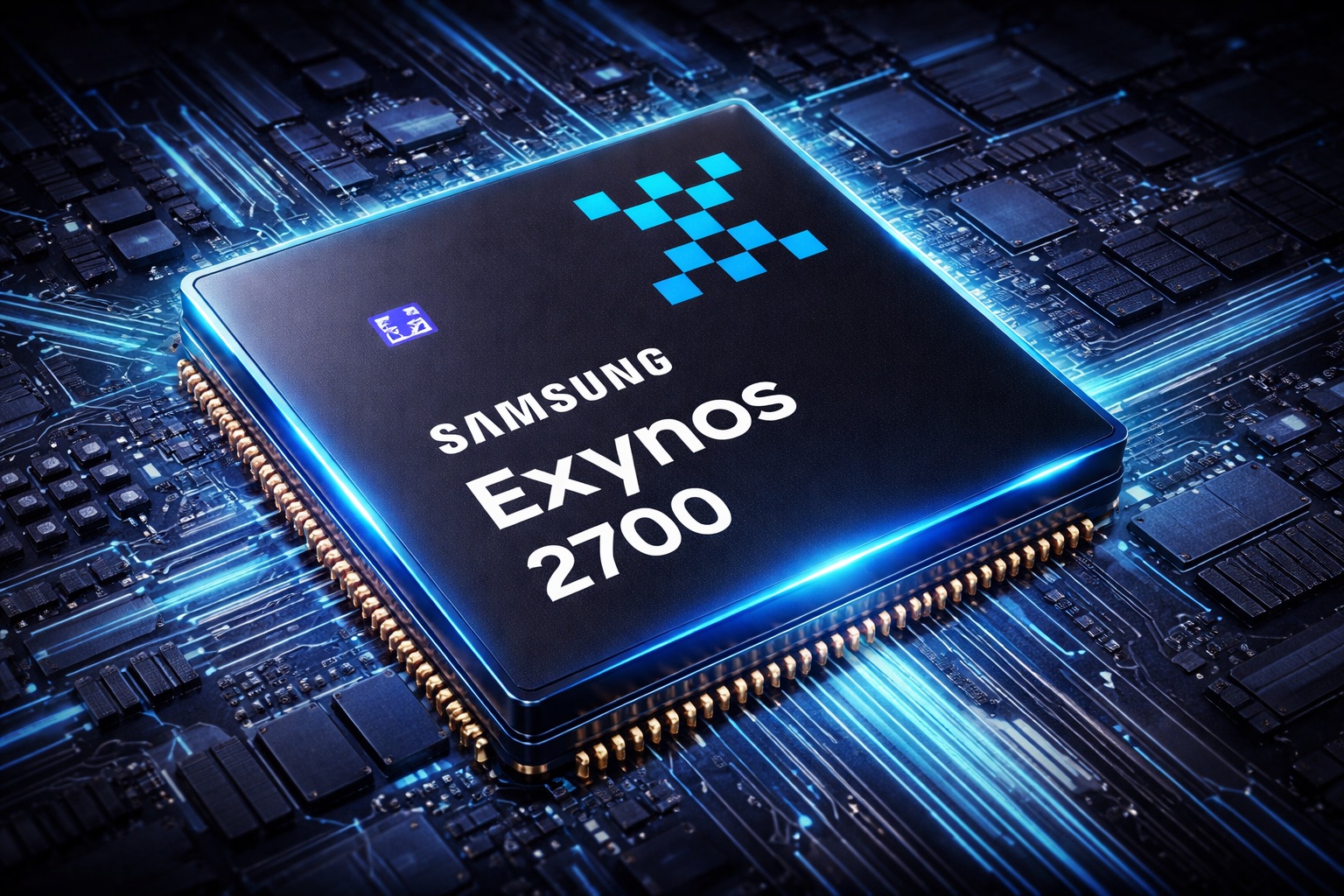
Samsung has not even let the launch of the Galaxy S26 family cool down completely and the first serious clue about the next generation is already beginning to appear. A Geekbench registration of a chip identified as S5E9975 has reactivated speculation around the supposed Exynos 2700the processor that, in theory, could give life to part of the Galaxy S27 range. There is no official announcement, there is no closed file and it is not advisable to treat this appearance as an absolute confirmation. But there is something important: the next Exynos is already beginning to leave traces well in advance.
The information that accompanies that record draws a ten-core chip, with a configuration spread across several clusters and associated with 12 GB of RAM in an engineering sample. The results seen in Geekbench leave 2,603 points in single core and 10,350 in multi core.
These are striking figures for two reasons.. The first, because they allow us to begin to outline the structure of the future SoC. The second, because they are below what was expected if compared to previous rumors of the Exynos 2600, something that makes it clear that we are facing a very early development or, simply, before a test that does not yet represent the final performance of the product.
Samsung shows again that Exynos is still alive
What is truly relevant is not only in the punctuation. It’s in the industrial message. Samsung has been trying to reposition Exynos as a strategic piece for its premium mobile phones for some time. In recent years, the discussion around its own chips had moved between caution, skepticism and constant comparison with Snapdragon. That is why each leak linked to the next generation is also read as a signal about Samsung’s real ambition.
If the Exynos 2700 ends up being the brain of part of the Galaxy S27 family, the company would once again insist on an idea that is key to it: rreduce external dependence and reinforce vertical integration between chip design, manufacturing and final product. That strategy has not always worked out equally well, but Samsung has not let it go. On the contrary, everything indicates that he wants to continue pushing her.
Score matters, but right now it’s not the most important thing
It’s tempting to just stick with the numbers, but that would surely be a mistake. Such an early example of engineering serves more to confirm a direction than to draw performance conclusions. The fact that the database includes it with Android 17, ten cores and that specific distribution already gives a lot of contextual information. The pure numbers, on the other hand, can change a lot between now and the actual launch.
In fact, the timing itself invites caution. There are many months left until the expected Galaxy S27 window, so The most reasonable thing is to think that Samsung continues to fine-tune clocks, efficiency, thermals and general behavior. In high-end mobile chips, the final performance does not depend only on the architecture, but on the balance between sustained power, consumption and thermal control. And that part of the work can still take several turns before reaching a commercial product.
The next debate will not be just the CPU, but the entire package
The appearance of this possible Exynos 2700 also points to another discussion that Samsung has been dragging on for some time: what exactly it wants to offer in its premium range. Because the processor is no longer judged only by the raw figure in benchmarks. It also weighs how it performs in computational photography, on-device AI, thermal maintenance, autonomy, and graphical experience. That will be where Samsung plays an important part of the story when the time comes to present the Galaxy S27.
Furthermore, another interesting possibility has already crept around this chip: that Samsung is pushing more internal development in the graphics part and dissipation mechanisms. If that ends up materializing, the Exynos 2700 would not only be a natural evolution of the previous model, but a piece with more control by Samsung in areas where the brand wants to make a difference. That would fit with the idea of turning S27 into more than just an annual renewal.
A premature leak that already says enough
At this point, no one should sell this appearance as a closed confirmation of the Galaxy S27 or as a definitive test of performance. But it does leave several useful clues. The first, that Samsung is already working with early samples of what could be its next star chip. The second, that Exynos continues to be a strategic priority for the company. And the third, that the debate on Samsung’s premium Galaxy will go back to, once again, the balance between its own chip, real performance and product ambition.
That makes this news more important than it seems. Not because the advanced benchmark is going to decide anything by itself, but because it shows that Samsung’s next relevant Galaxy is already starting to take shape on the inside. And when that happens so soon, it’s usually because the company wants to reach the next generation with more than just a name change.
