
Lenovo wants Magic Bay to stop being a curious extra and become an ecosystem in 2026
If you move around with a laptop in tow, there are accessories that you buy with enthusiasm and stay in a drawer, and others that end up stuck in your routine. Lenovo has been trying for some time to make its Magic Bay system fall into the second group: a docking point on the top of some ThinkBooks that allows you to add modules without cluttering the table with cables.
The novelty is that 2026 may be the year in which Magic Bay goes from “loose Lenovo accessories” to a platform with more ambition. On the one hand, the company continues to show prototypes that stretch the idea towards secondary screens and modules designed for productivity. On the other hand, information is circulating that points to a opening of the ecosystem to third parties in 2026something that would change the game if it ends up materializing.
What Magic Bay is in practice and why it’s not just a magnet
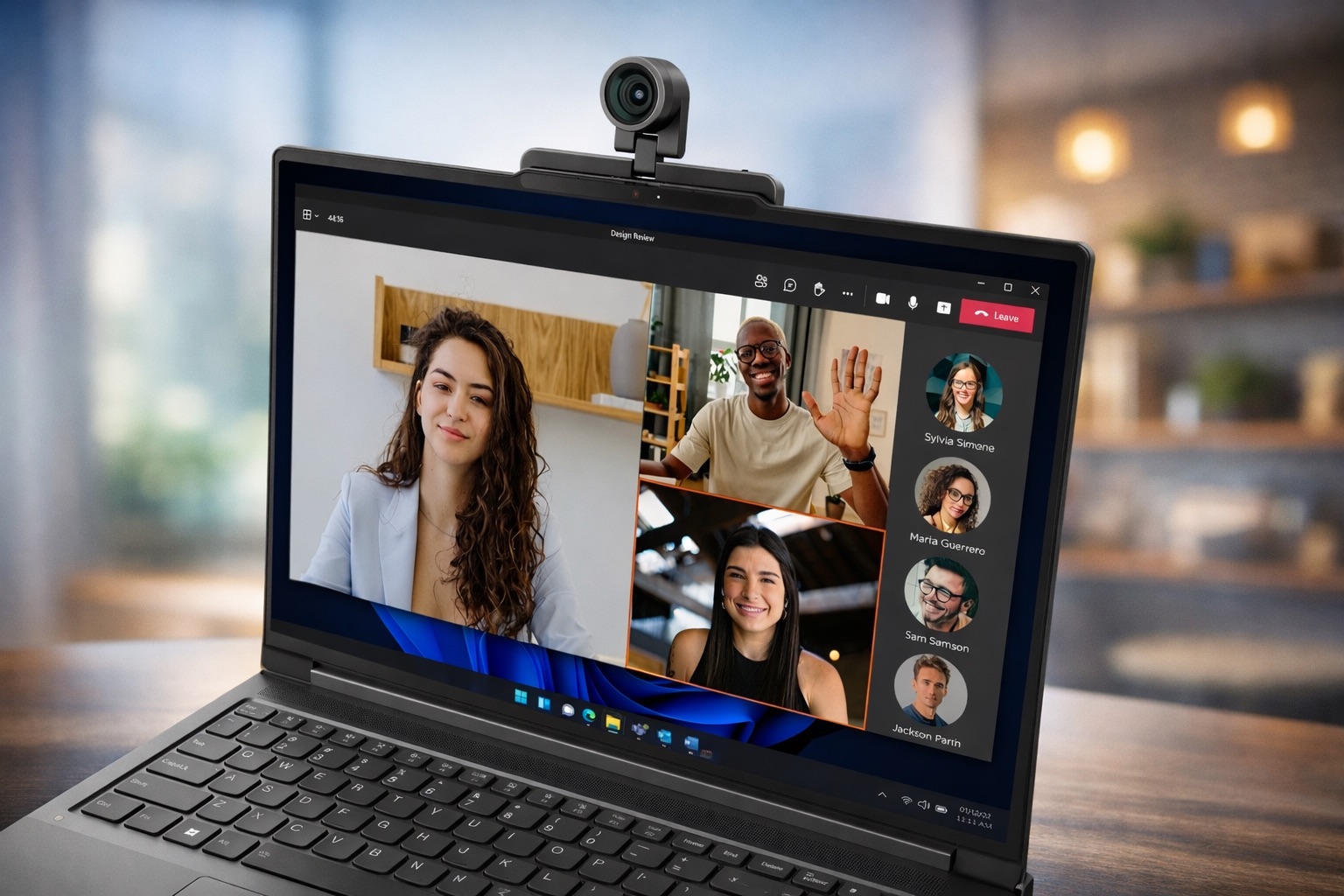
Magic Bay is, in essence, a bay in the top frame of the laptop which combines magnetic fixation with physical contact using pins. The result is that you can attach accessories without taking up USB ports, and without that dance of cables that turns a work table into a nest. In the Lenovo showcase there have been modules such as LTE, designed to keep you connected when WiFi fails, and a detachable 4K webcam to improve video calls without depending on the internal camera.
The usefulness is not only in adding things, but in doing it with minimal friction: get to a meeting, attach a module and that’s it. If the concept reminds you of a dock, that’s because it is, but with the “click” of something that is placed in seconds.
Screen prototypes: the most visible leap
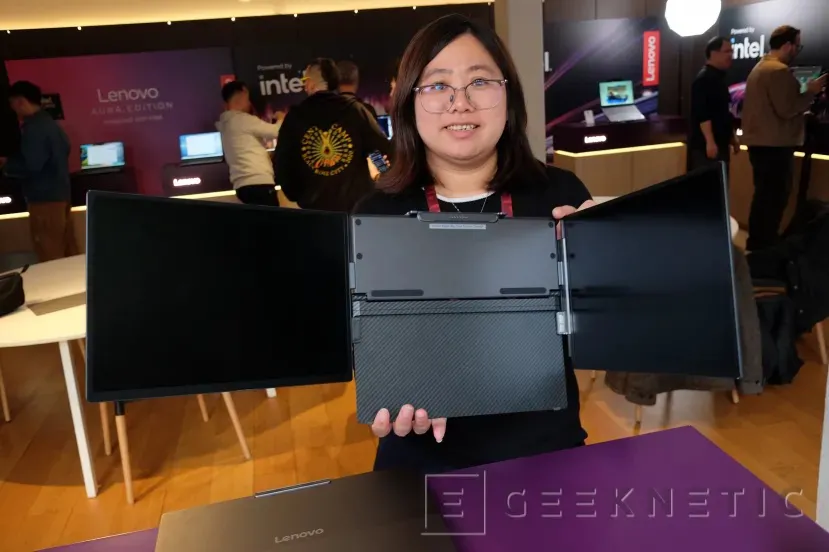
Where Lenovo is really pushing is the idea of expanding the screen without carrying a second device. At Mobile World Congress 2025, the company showed off concepts that turned a ThinkBook into a pocket-sized multi-monitor station.
It is a bet with a traveler approach: foldable, integrated and with a rear leg so that the weight does not pull on the laptop screen. It is not a new idea on the market, but the difference is that Lenovo tries to make it look like part of the laptop, not an added hulk.
The other branch of Magic Bay is not about big screens, but about persistent information. The Tiko concept evolved into what Lenovo calls Magic Bay HUD: a heads-up display type module that attaches magnetically and aims to keep notes, transcription or notifications off the main screen, integrating with Lenovo AI Now.
The logic is simple: if you work with meetings, dictation or heavy multitasking, anything that reduces open windows and keeps your state visible without invading the desktop can add up. It’s a less flashy approach than extra screens, but easier to justify on a work laptop.
The big move: opening Magic Bay to third parties in 2026
Here comes what can change history the most: the opening of the system. According to leaks, Lenovo will open Magic Bay to third-party accessories in 2026, and associates it with specific future ThinkBooks. If that ends up really landing, it would be a platform leap: going from “Lenovo makes modules” to “Lenovo defines a connector and others build on top of it.”
It is the movement that turns an idea into an ecosystem. Without third parties, such a system lives or dies at Lenovo’s pace. With third parties, niches appear: specialized cameras, audio for streaming, connectivity modules and even very specific corporate solutions.
It is clear that we work more and more in mobility, and a laptop falls short in screen, camera or connectivity depending on the day. Traditional accessories work, but they are separate devices with their cables and bag. A well-executed modular system can reduce that friction and, incidentally, convert a laptop into a more adaptable tool without making it fat inside.
For now, the photo is this: Lenovo continues to show ambitious ideas (attachable screens, HUD always active) and, according to the information circulating, it is preparing a key step towards opening in 2026. If they nail it, Magic Bay can stop being a rare extra and become a reason to buy for those who live with the laptop on them.
