
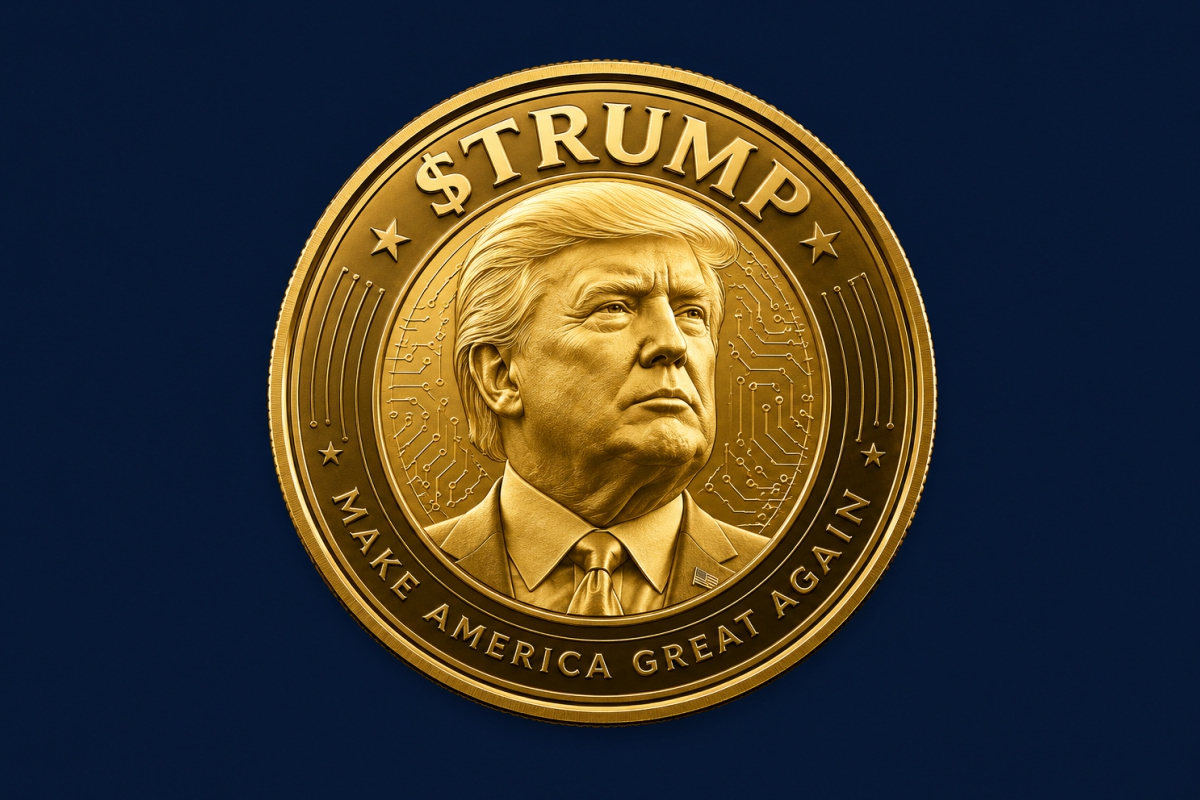
Trump’s memecoin leaves losses of 3.8 billion to almost a million buyers
The memecoin $TRUMP has left accumulated losses of $3.8 billion to 988,905 accounts, according to an analysis by crypto analytics firm Nansen cited by The New York Times and collected by TechCrunch. The estimate is based on publicly visible transactions on the blockchain and shows a very unequal result between those who bought the token promoted by Donald Trump and those who were on the other side of the operation.
According to that data, around two out of every three $TRUMP buyers had lost money by the end of June. The token was trading this Sunday at $1.69, far from the maximum of $75.35 that it reached after its launch. That drop implies a decline of close to 98% from its peak.
Trump announced the memecoin three days before his 2025 inaugurationat a time when its environment had already reinforced its presence in the crypto sector. Before that, the now president had also co-founded the startup World Liberty Financial with his children. The token associated with that project, $WLFI, has also seen a significant loss in value since then.
Token drops as Trump declares hundreds of millions in income
The most striking part of the case is in the contrast between the behavior of the asset and the income declared by the president. In recent financial filings, Trump revealed that he had obtained $636 million from $TRUMPa figure that represents almost half of the 1.4 billion dollars that, according to that statement, came in last year thanks to the crypto industry.
The case adds pressure on the relationship between politics, markets and speculative assets linked directly to a sitting public figure. Under the Trump administration, the SEC has signaled that it will not regulate memecoins as securities and has also withdrawn several lawsuits against companies in the sector. From the White House, a spokesperson cited by The New York Times defended that “President Trump proudly turned the United States into the world capital of cryptocurrencies.”
The evolution of $TRUMP is reminiscent of other projects linked to the president’s name that have also generated controversy. Just a few weeks ago, the disassembly of the T1, the mobile phone sold by Trump Mobile, showed that it did not respond to the initial story about its origin. In parallel, Trump’s political pressure on large technology companies also remains visible. An example of this was his attacks on the CEO of Intel in the midst of tension over Intel. The latter allows you to control the markets and know exactly when to buy or sell shares.
In the case of $TRUMP, while a minority made significant profits in the early stages of the token, the majority of those who entered later accumulated significant losses as the price plummeted. The distance between the result for buyers and the benefit declared by Trump returns the focus to how value is actually distributed in this type of assets, especially when they are directly linked to the personal brand of a top-level political figure. In most cases, these assets have been designed to generate quick profits for their creators.
