
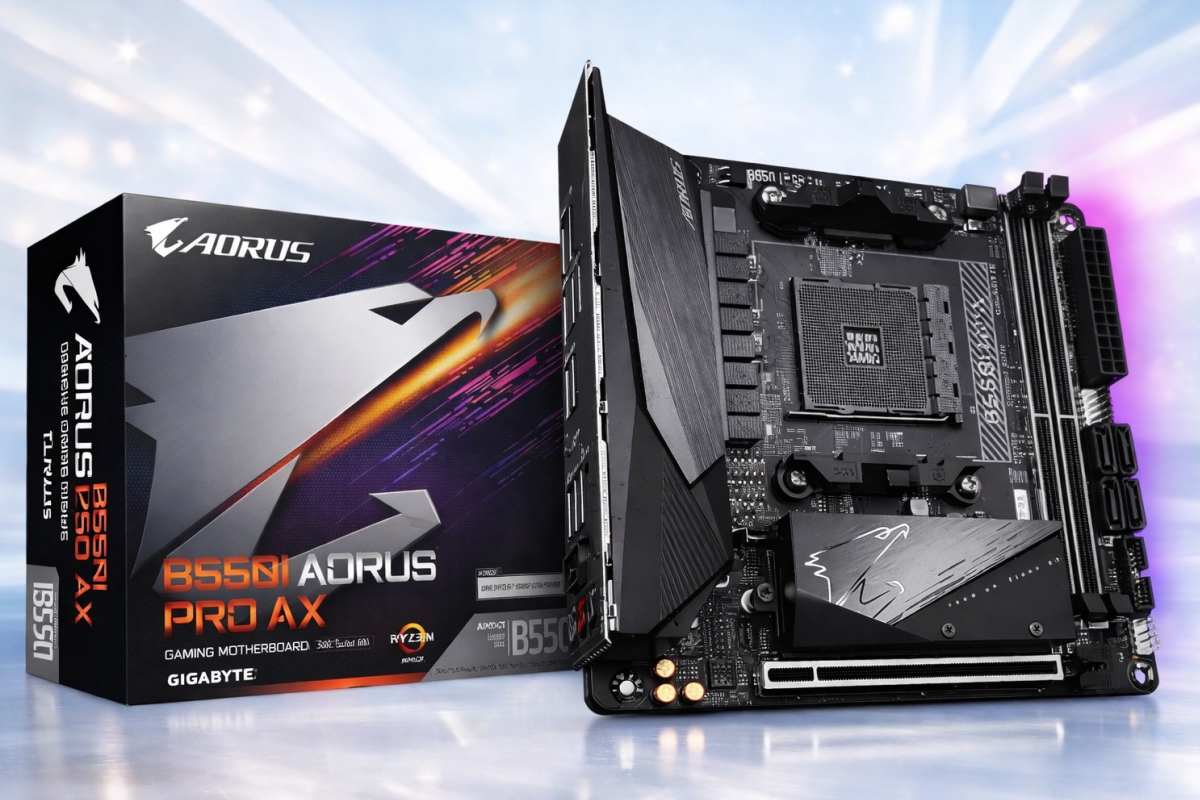
A520 and B550 in micro ATX and mini ITX, with ARGB, Q Flash Plus and up to M.2 PCIe 4.0
GIGABYTE refuses to close the AMD Socket AM4 stage and, entering 2026, launches four new motherboards to continue building PCs with DDR4. While the latest grabs headlines, many people just want to upgrade their equipment without changing everything. And in AM4 you can still improve a lot with a contained investment.
The models are A520M H ARGB, B550M H ARGB, A520I AC rev 1.5 and B550I AORUS PRO AX rev 1.4. Two go to micro ATX for simple builds, and two to mini ITX for small cases where connectivity counts more.
Why AM4 still has a pull
AM4 was born in 2017 and has been AMD’s desktop socket with the longest life and a huge ecosystem around it. This translates into a wide range of compatible processors, a lot of DDR4 memory available and a huge catalog of heatsinks and cases that fit together without surprises.
The jump to a new platform usually adds costs: new board and memory, and sometimes redoing the assembly due to ports or compatibility. Instead, AM4 allows very visible improvementssuch as adding an NVMe SSD, gaining video outputs or having an easy-to-update BIOS. That’s why it makes sense that AM4 boards continue to appear even with AM5 already established.
Two micro ATX to build a PC without complications
The A520M H ARGB is the entry point. GIGABYTE indicates compatibility with Ryzen 3000, 3000G, 4000G, 5000 and 5000G, with two DDR4 slots and the essentials well resolved. Includes ARGB header and Q Flash Plus button, useful for updating BIOS without CPU installed. In storage, it has an M.2 PCIe Gen3 x4 with NVMe and SATA support, as well as a Gigabit network, 8-channel audio and HDMI output along with D-Sub. It’s the type of board that fits into a home or office PC, and also works for a modest 1080p gaming rig without getting complicated.
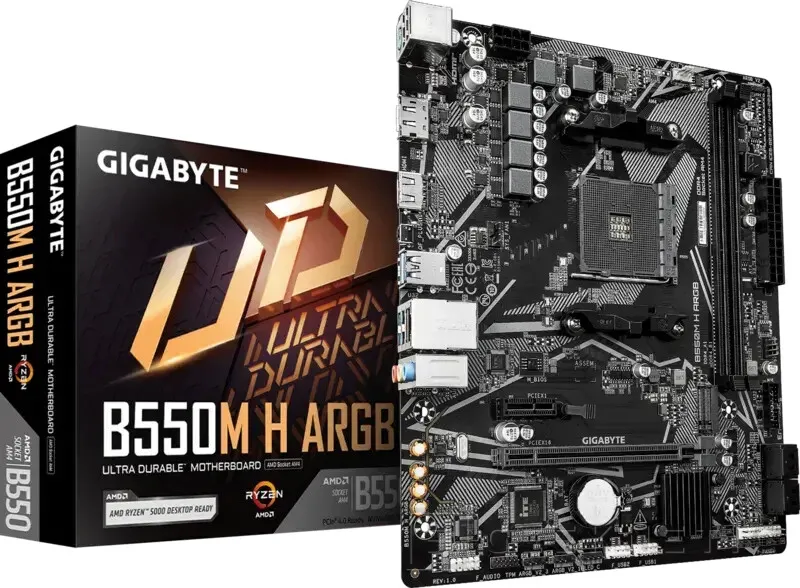
The B550M H ARGB raises the bar where it matters most: maintains compatibility with those Ryzen families and repeats ARGB and Q Flash Plus, but its M.2 goes to PCIe Gen4 x4. It also offers HDMI and DisplayPort, and adds durability and thermal control details such as Smart Fan and Anti Sulfur resistors. For a Ryzen 5000 with dedicated graphics, it is the most balanced option of the lot because it leaves room for faster SSDs and a more rounded configuration without blowing up the budget or complicating assembly.
Mini ITX: when size rules, connectivity weighs twice as much
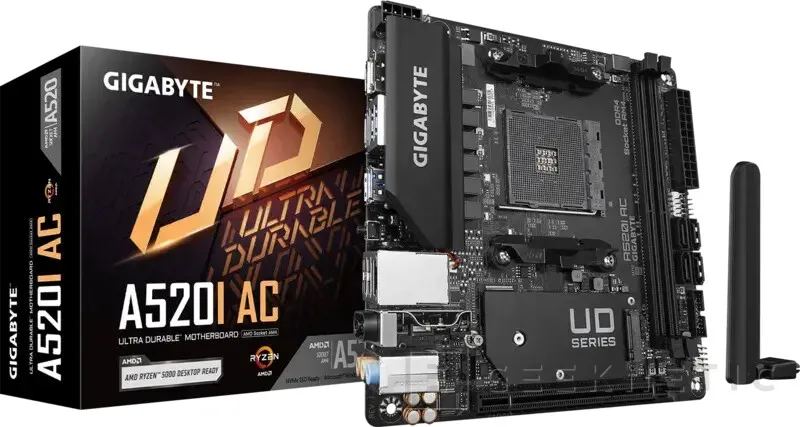
The A520I AC rev 1.5 targets small cases and compact PCs. It maintains support for Ryzen 3000, 3000G, 4000G, 5000 and 5000G, and integrates an M.2 NVMe PCIe 3.0 x4. It includes WiFi 802.11ac and Bluetooth 4.2, as well as DisplayPort and double HDMI to mount multiple monitors with an APU. And the Q Flash Plus button on the rear panel is a lifesaver when the chassis leaves no room for maneuver.
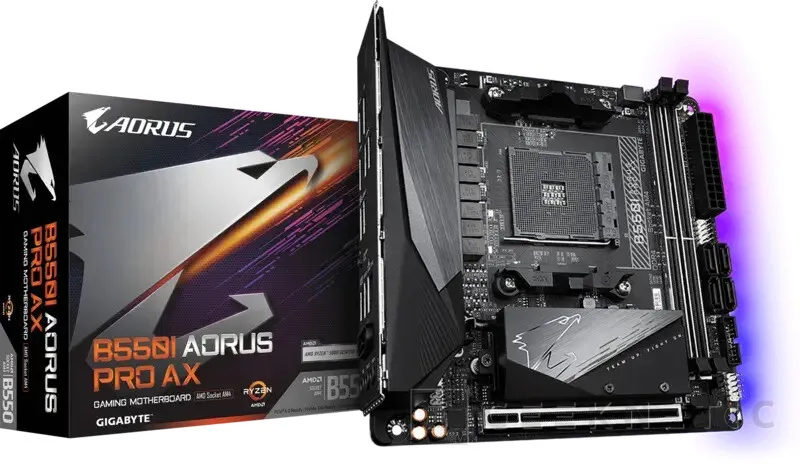
The most ambitious is the B550I AORUS PRO AX rev 1.4a mini ITX that seeks high-end performance in AM4. It features an 8-phase digital design, 8-layer plate and preparation for PCIe 4.0, designed to support a powerful Ryzen without the VRM being drowned out. In cooling, it includes a VRM heatsink with heatpipe, dissipation for chipset and M.2 and an aluminum backplate, something key in small cases where heat accumulates quickly. In audio, it mounts ALC1220 VB with Nichicon capacitors, a common combination in boards that take care of the sound without resorting to a dedicated card.
In wireless, the specification itself includes 2.4, 5 and 6 GHz bands, 11ax support with 160 MHz channel and Bluetooth 5.3. This makes a real difference compared to older solutions: less saturation on busy home networks and better stability at short distances, just what is typical for a desktop. And again Q Flash Plus appears as life insurance to update BIOS without CPU, memory or graphics, something very practical if you assemble the PC in pieces and want to avoid compatibility scares the first time.
What GIGABYTE makes clear with this movement
That there are new boards for AM4 in 2026 is a sign of real demand: There are users who prefer a reasonable jump and known parts instead of jumping into DDR5 all at once. There is also a less visible market, the replacement market: PCs that are still working, home or office equipment that only needs a new board to come back to life. In that context, offering recent models with easy-to-update BIOS and modern connectivity makes perfect sense.
These four boards cover two clear needs: extend the life of a Ryzen PC by improving storage and ports, and assemble compact equipment with integrated WiFi without depending on external adapters. In short, it’s not nostalgia. It is a logical response to how hardware is purchased today: with the budget in hand and looking for noticeable improvements.
