
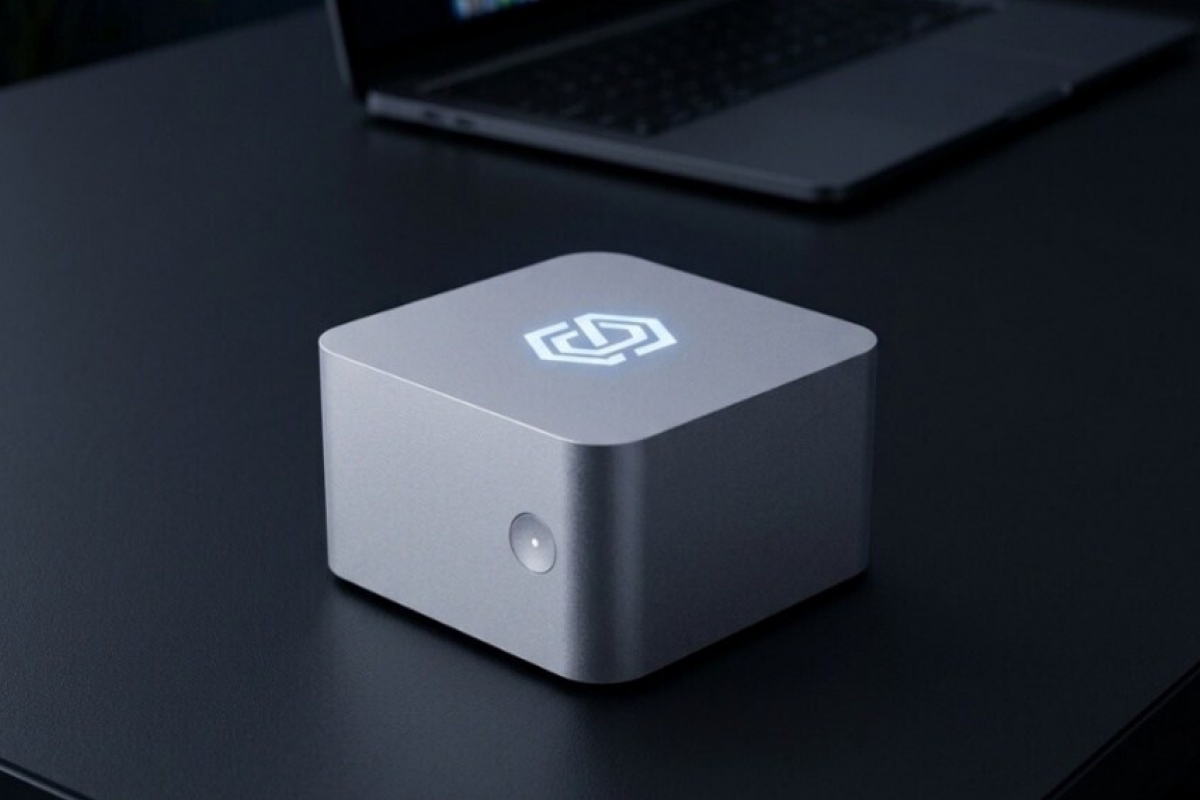
SOLAI presents Solode Neo, a device with pre-installed OpenClaw to run AI agents locally
SOLAI has announced Solode Neoa desktop device designed to run artificial intelligence agents at home or in the office without completely depending on the cloud. The proposal is based on an idea that is gaining weight in the sector. We are referring to bringing autonomous agents to a dedicated physical format, ready to function permanently and accessible to users who do not want to set up a complex environment on their own.
The equipment arrives preconfigured with OpenClaw and a selection of language modelsso the user only needs to connect it to power and a Wi-Fi network to get started. SOLAI presents it as a plug and play solution aimed at enthusiasts and early adopters, with OTA updates to incorporate framework improvements and new models without additional steps.
According to the company, Solode Neo is designed to execute agentic loads continuously, 24 hours a day. Among the uses mentioned are the email automationorganizing files, preparing research reports or managing routine tasks through messaging applications such as Telegram. All this supported by a dedicated NPU and local processing by default.
That is precisely one of the central messages that the brand highlights. SOLAI insists that inference, voice processing and data handling are carried out on the equipment itself, unless the user activates other options. At a time when many AI functions go through external platforms, the argument of data privacy and control It can be one of the main strengths of the device.
OpenClaw continues to gain prominence
Much of the interest in Solode Neo is explained by the presence of OpenClaw, an open source tool that in just a few months has managed to gain a foothold in the emerging agent market. In February we already saw how OpenAI signed the creator of OpenClaw shortly after its viral launch, a clear sign that the technology was not going unnoticed.
Unlike a conventional chatbot, OpenClaw is designed to execute concrete actions in the system. You can open applications, manage files, interact with user-linked services, and respond to commands from different messaging interfaces. This approach is precisely what has made this type of software one of the most active segments in the current artificial intelligence race.
SOLAI tries to take advantage of that interest with a layer of simplification. Instead of asking the user to manually install OpenClaw, configure permissions, and choose compatible models, it packages it into a physically closed device, but based on open and upgradeable software. The idea aligns with the typical industry strategy of taking powerful, but still complex, tools and turning them into a ready-to-use product.
A promising market, but still to be validated
Solode Neo will go on the market with a price of $399reduced to $369 for those who get on the waiting list before reservations open in the United States. The figure places it in interesting territory. Taking into account that it is not a typical PC, it is not a cheap gadget, but it does not fall into the category of inaccessible professional hardware either.
But the big question is whether these teams will have a place in the professional sector. On paper, having a personal node for automations and smart tasks sounds attractive, especially for technical profiles or advanced users. However, it remains to be seen whether the general public sees real value in purchasing another specific device to do things that in some cases you can already solve from your mobile phone, PC or cloud services.
It will also be necessary to observe how the security part is resolved. The more power an agent has over files, applications, or messaging, It becomes more important to define limits, permissions and forms of supervision. This debate has accompanied OpenClaw since its first versions and does not disappear just because it is packaged in hardware. In fact, a ready-to-use product can broaden the scope of the concept, but also expose it to more control demands.
