
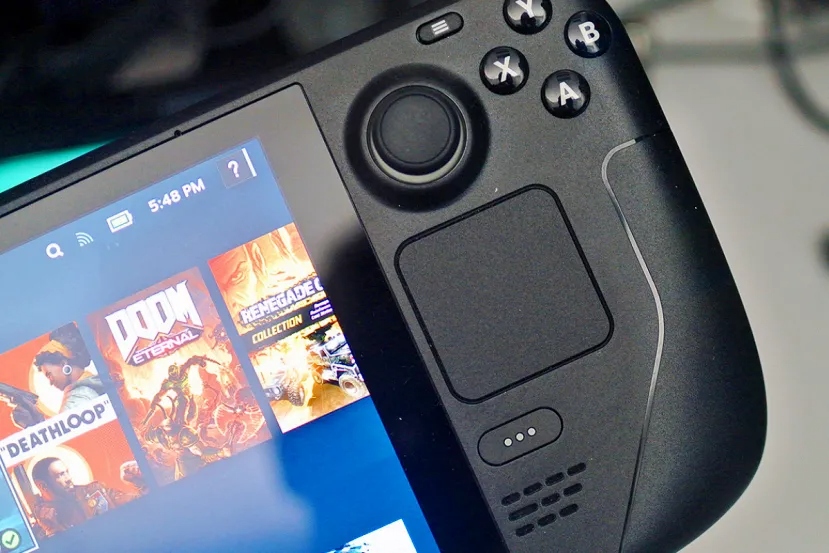
Steam Deck 2 would bet on a standard AMD APU and not on a semi-custom chip to be better prepared by 2028
Steam Deck 2 would once again be on the horizon 2028but the most interesting fact about the new leak is not so much the date as the change in focus on the processor. According to information attributed to KeplerL2, Valve would leave behind the idea of a semi-custom APU and opt for a standard AMD chip, a decision that could give it more flexibility when launching the console and avoid some of the problems that the component market drags.
The technical reading is quite clear. Instead of waiting for AMD to tweak a specific design for Valve, the company would use a Existing commercial APU and would adapt SteamOS to it. That would allow you to choose a solution that is closer to the best hardware available at the time of launch and reduce the risk of being locked into silicon that ages early or arrives late to the market due to the supply chain.
The idea fits with what we already said when it was leaked that Steam Deck 2 would not arrive until 2028 and would point to Zen 6 and RDNA 5. The key would not only be to provide more raw performance, but to make sure that this jump really feels like a new generation and not like another revision in a market full of portable devices that are renewed almost every year.
Valve wants to prevent its next laptop from being born conditioned by the silicon calendar
In the original Steam Deck, using a custom APU made sense because it helped build a very measured balance between CPU, GPU, consumption and cost. But in a market that since 2022 has been filled with equipment from ASUS, Lenovo, MSI and other manufacturers, waiting too long can backfire. If the proprietary chip is delayed while the rest of the industry continues to move forward, the laptop runs the risk of arriving with less competitive specifications or with a price that is too high.
With a standard APU, Valve could rely on an already mature AMD platform and work on what best fits in autonomy, heat and performance. Everything indicates that the company would continue to have room to adjust the TDP and system behaviorbut without carrying the rigidity of a semi-custom development. In a portable console, where every watt and every degree counts, that flexibility can be as important as the power itself.
Additionally, this decision is also better understood if you look at the component context. The current memory crisis continues to affect all consumer hardware and we have already seen how even other future machines could be disrupted by that pressure. In fact, just a few hours ago there was talk that the portable PlayStation 6 could arrive before Steam Deck 2, partly within the same framework of rumors and supply tensions.
For now everything is still in the field of filtration, but the change in strategy makes sense. Valve doesn’t need to win the annual release racebut to arrive with a balanced, well-tuned machine with a clear leap compared to the current Deck. If a standard AMD chip is better suited to achieve this than a custom-designed APU, the decision seems quite logical.
