
https://www.geeknetic.es/Noticia/37299/Thermaltake-renueva-sus-ventiladores-TS-EX-RGB-con-sensor-de-temperatura-integrado-conexion-magnetica-y-versiones-de-120-y-140-mm.html
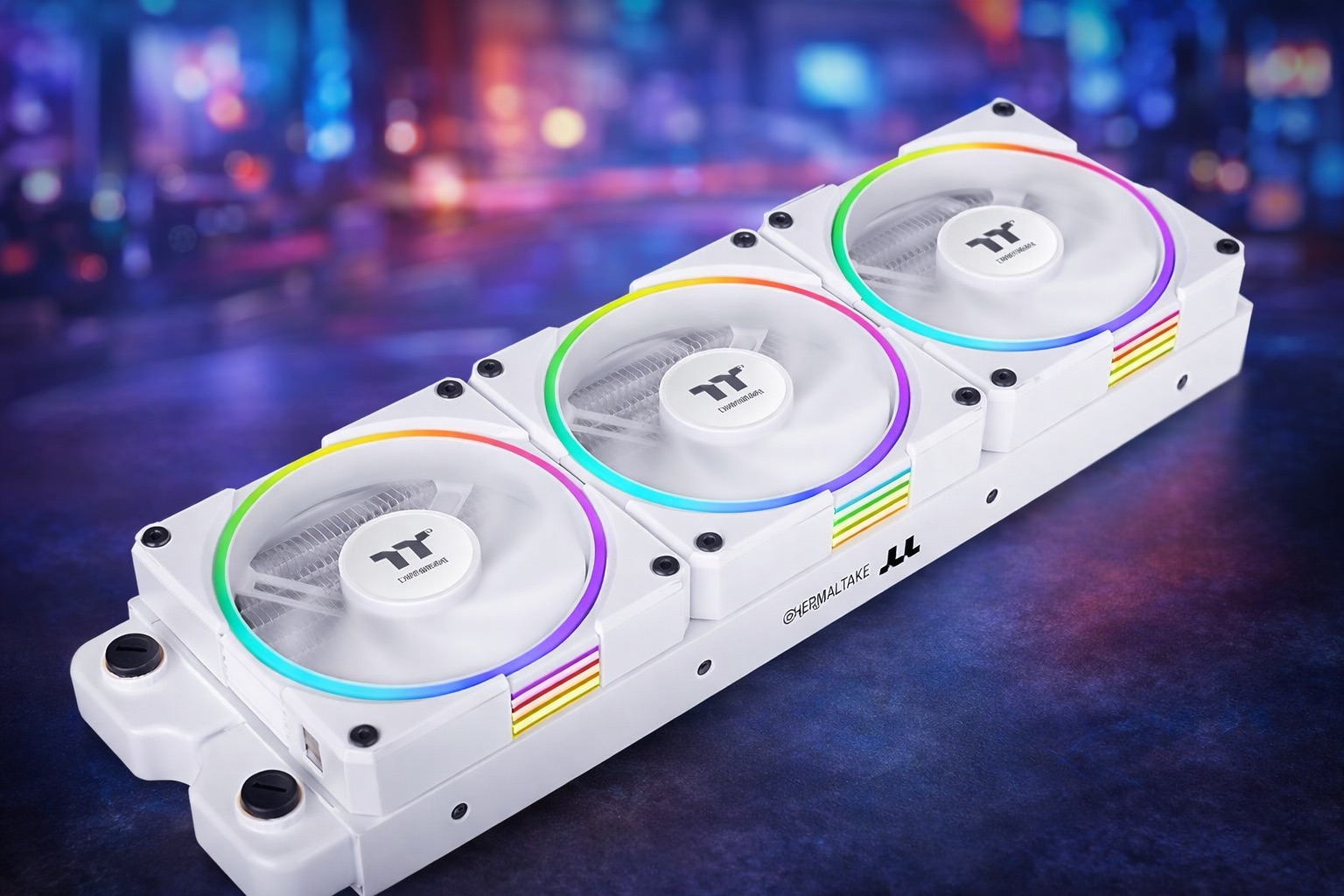
Thermaltake has been competing for years in a curious field: fans that not only move air, but also try to facilitate PC assembly. The TS EX RGB series get right in there. You want to improve cooling, but also attack two classic pain points: cables everywhere and imprecise ventilation curves because they depend on a single sensor. The range comes in two sizes, TS120 EX RGB and TS140 EX RGBand with black and white versions.
One temperature sensor per fan for zone cooling
The most striking novelty is that each fan integrates its own temperature sensorplaced behind the blades. The idea: instead of relying only on CPU temperature or a general board reading, each unit detects the heat of the air in its area and adjusts its speed in real time.
On a modern chassis, this may make more sense than it seems. The GPU is usually the thermal focus during gaming, while in productivity tasks the heat is shifted to the CPU and VRM. Even radiators can behave differently depending on their position. With local reading, the promise is simple: more precise response and less noise when you don’t have to “push” as much.
MagForce 2.0 to clean the interior and reduce connections
The second trick is MagForce 2.0Thermaltake’s magnetic connection system for daisy chaining fans. It uses pogo pin type contacts and, depending on the brand, doubles the size of the contact pads to better tolerate alignment and reduce failures when connecting multiple units in series.
The practical benefit is direct– Fewer PWM cables and fewer lighting cables crossing the case. Not all of them disappear, but the interior is much cleaner and assembly is faster, especially in fronts with three fans or long radiators.
Linear lighting and control from TT RGB Plus 3.0
In aesthetics, it moves away from the typical RGB ring and opts for a linear effect visible on the sides that do not have the magnetic connector. Everything is integrated into TT RGB Plus 3.0from where effects, synchronization and control functions are managed.
There is an important nuance here: in a fan with its own sensor, the software is not just “colors”. It is the layer that defines how rpm rises and falls and how a group of fans behaves to avoid annoying noise peaks.
TS120 EX RGB, figures designed for radiators and filter boxes
The TS120 EX RGB works with PWM between 500 and 2000 rpm. In the technical sheet they declare 56.01 CFM airflow and 2.45 mm H₂O static pressure, with 27.3 dB A noise per unit.
That profile fits with a mixed use: radiators of reasonable density and chassis where the front has filters or grilles that add resistance. It also incorporates anti-vibration pads on all four corners and hydraulic bearing with a declared lifespan of 40,000 hours at 25 degrees.
TS140 EX RGB, more flow and a clear jump in pressure
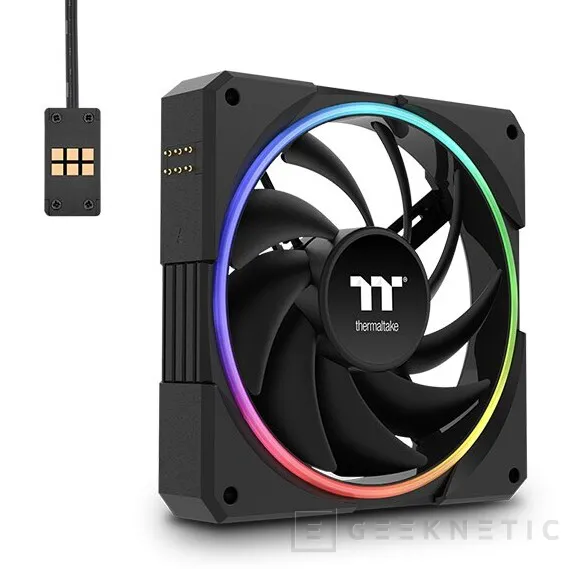
The TS140 EX RGB targets mounts where the 140 mm has an advantage: 280 or 420 radiators, or fronts with space for large fans. The white model sheet indicates 93.35 CFM flow and 3.32 mm H₂O static pressure, with 32.1 dB A noise.
Static pressure is the data that usually separates a decorative fan from one that is really useful in radiators. If the pressure holds, performance tends to be more stable when the box is hot and the system has been under load for a while.
Packs of three and an experience designed to ride quickly
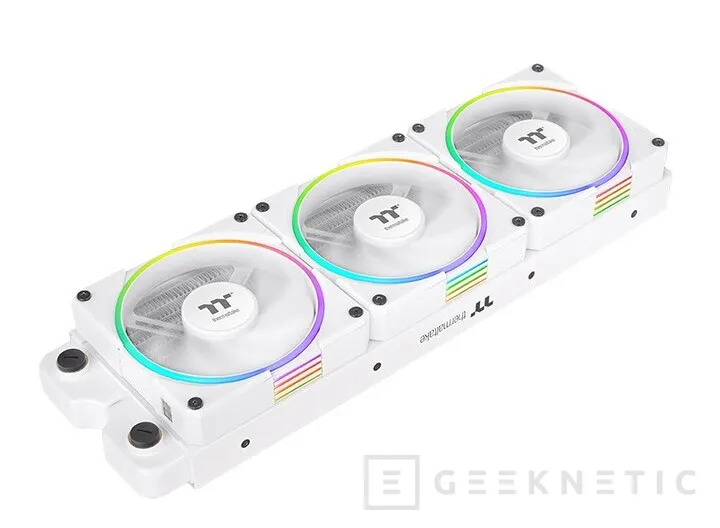
Thermaltake sells these fans at packs of three which include controller and wiring for the connection system, both in black and white. In proprietary solutions, the controller defines the actual experience: compatibility, stability, and how easy it is to keep everything running without turning cable management into a separate project.
In RGB ventilation, many incidents come from the same thing: extensions, adapters, saturated hubs or poorly seated connectors. A chain system with more forgiving contacts not only looks beautiful, it also reduces “things that can go wrong” when you transport the PC or when you open it to clean. And that, in builds with several fans, is more appreciated than a new lighting effect.
For whom does this series make sense?
TS120 and TS140 EX RGB are especially suitable for three scenarios. The first, equipment with a radiator, where pressure and wiring order matter. The second, boxes with a restrictive front, where good pressure can make more difference than increasing rpm without control. The third, PCs where the heat changes location depending on the load, because the individual sensor points to cooling more “by zones” than by average.
The test that always remains is: how they behave in a real assembly and if the software works without problems. But the approach is clear: more control, fewer cables and integrated RGB without sacrificing performance.
