
ASRock shows us its AM5 catalog with X870E, X870, B850 and B650 boards in the heat of Taichi’s tenth anniversary
We attest that, in the Computex 2026ASRock is taking advantage of the 10th anniversary of its Taichi family to present a much broader lineup of motherboards than the initial focus on the commemorative edition suggests. Clearly premium models coexist on the stand, such as the X870E Taichi 10th Anniversary or the new X870E Taichi Whitewith proposals aimed at creation, mid-range and tighter priced configurations under the Creator, LiveMixer, Nova, Challenger and Rock families.
The feeling when seeing them together is that ASRock wants to organize its AM5 offer better. Taichi continues to be its image and specifications showcase, but around it it has built a fairly clear ladder with variants for creators, users who prioritize connectivity, mid-range mounts and microATX formats. Several common elements are also repeated in the cards on display, such as USB4, DDR5 and Wi-Fi 7 in much of the high and medium-high range.
| Range | Model | Chipset | Featured Format/Feature |
|---|---|---|---|
| Top of the range anniversary | X870E Taichi 10th Anniversary | X870E | 24+2+1 phases, 10 GbE, Wi-Fi 7, USB4 |
| Taichi white version | X870E Taichi White | X870E | 24+2+1 phases, 10 GbE, dual PCIe 5.0 x16 |
| Creation oriented | X870 Taichi Creator | X870 | 10GbE + 5GbE, USB4, Ultra USB Power support |
| Hybrid profile and connectivity | X870 LiveMixer WiFi | X870 | USB4, Wi-Fi 7.5GbE |
| Gaming enthusiast range | Phantom Gaming X870 Nova WiFi | X870 | 18+2+1 phases, 5 GbE, Wi-Fi 7, USB4 |
| X870E mid-range | X870E Challenger WiFi | X870E | 14+2+1 phases, 5 GbE, Wi-Fi 7 |
| microATX mid-input | B850M Rock WiFi | B850 | mATX, 2.5GbE, Wi-Fi 6E |
| ATX mid-range | B850 Rock WiFi 7 | B850 | ATX, 2.5GbE, Wi-Fi 7 |
| microATX gaming | B850M Challenger WiFi | B850 | PCIe 5.0 x16, 2.5GbE, Wi-Fi 7 |
| More contained AM5 base | B650M Pro-A Gen5 | B650 | PCIe 5.0 x16, 2.5 GbE, front USB-C |
Taichi continues to set the bar with the 10th Anniversary edition, the new White and the Creator variant
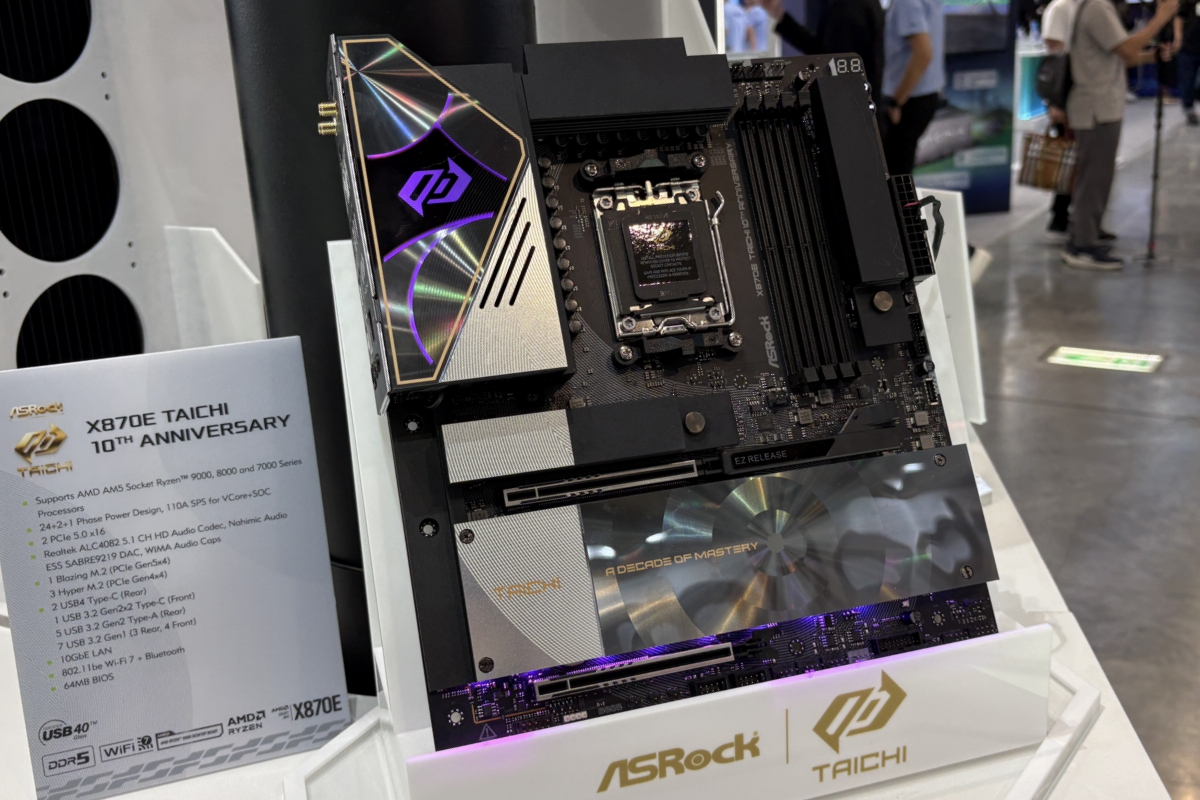
The visual protagonist of the stand is the X870E Taichi 10th Anniversarya plaque that serves as both a product and a commemorative piece of the series. In the tab shown by ASRock a VRM of 24+2+1 phasessupport for Ryzen 9000, 8000 and 7000 processors, double PCIe 5.0 x16, ESS SABRE9219 DAC audio with Nahimic, two USB4 Type-C, 10 rear USBs, 10 GbE LAN and Wi-Fi 7 wireless connectivity with Bluetooth. It is, in other words, the most complete interpretation of what the brand understands as Taichi today.
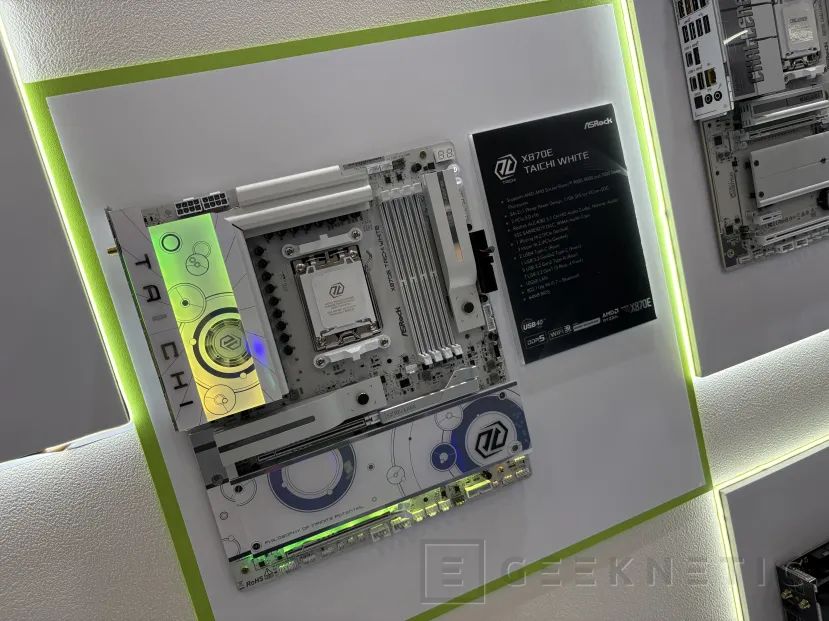
Next to him is placed the X870E Taichi Whitewhich ASRock had already advanced as the first all-white Taichi. It maintains practically the same philosophy in power and connectivity, with the same 24+2+1 phases10 GbE, double PCIe 5.0 x16 and Wi-Fi 7, but it completely changes the visual presence of the product. Seen in person, it is a plate clearly designed for thematic assemblies in white, an area where more and more brands want to have a well-defined high-end reference.
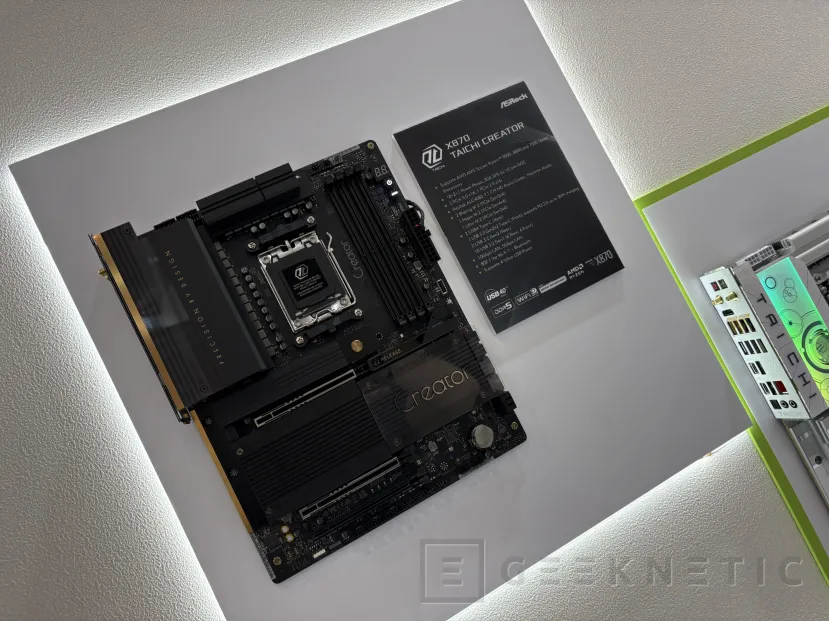
The third model that completes this premium block is the X870 Taichi Creatora somewhat different variant because it drops to the X870 chipset, but focuses its speech more on production and connectivity. According to the stand file, it offers 16+2+1 phasesUSB4, dual network with 10GbE and 5GbEtwo PCIe slots for graphics cards, several M.2 and support for Ultra USB Power. The name Creator itself makes its role clear: not to compete so much for aesthetics as to fit into workstations and creation equipment where the network and I/O weigh more.
LiveMixer, Nova and Challenger cover the intermediate stretch between creation, gaming and mid-high range
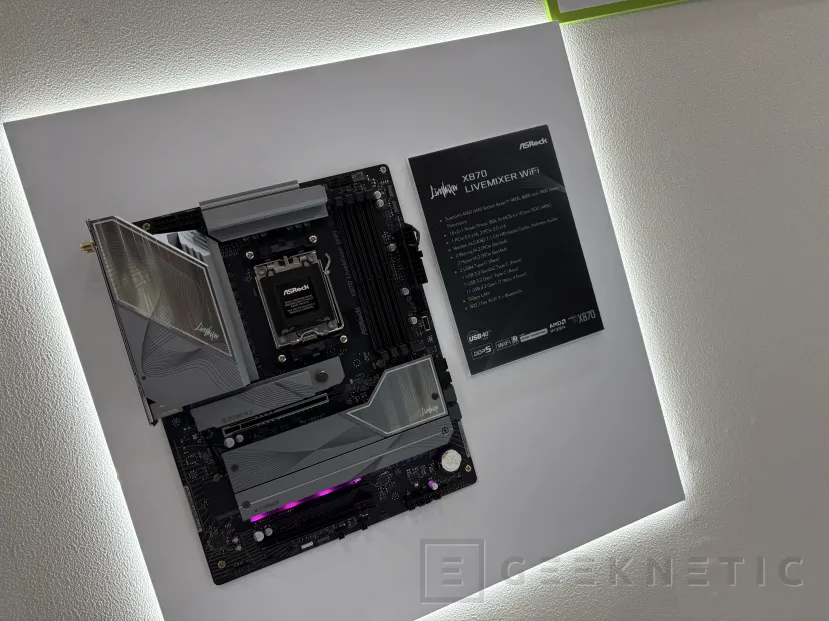
Further down in the high range appears the X870 LiveMixer WiFia board that maintains much of the platform’s modern credentials, but with a slightly more versatile approach. The exposed file talks about 16+2+1 phasesPCIe 5.0 x16, USB4, 5 GbE, Wi-Fi 7, several M.2 and a high number of USB ports. In practice, it is a board that tries to combine abundant connectivity and a less sober design than Taichi Creator, something logical for a family that has historically sought to attract streaming profiles, a mix of peripherals and more ornate setups.
Within the Phantom Gaming sub-brand, the X870 Nova WiFi It goes up another notch as an alternative clearly focused on gaming within the X870 platform. The stand card indicates 18+2+1 phasesPCIe 5.0 x16, 5 GbE, Wi-Fi 7, USB4 and up to four M.2 in total. Compared to Taichi, the visual language changes, much more aggressive, but maintains a connectivity and power base typical of the high range.
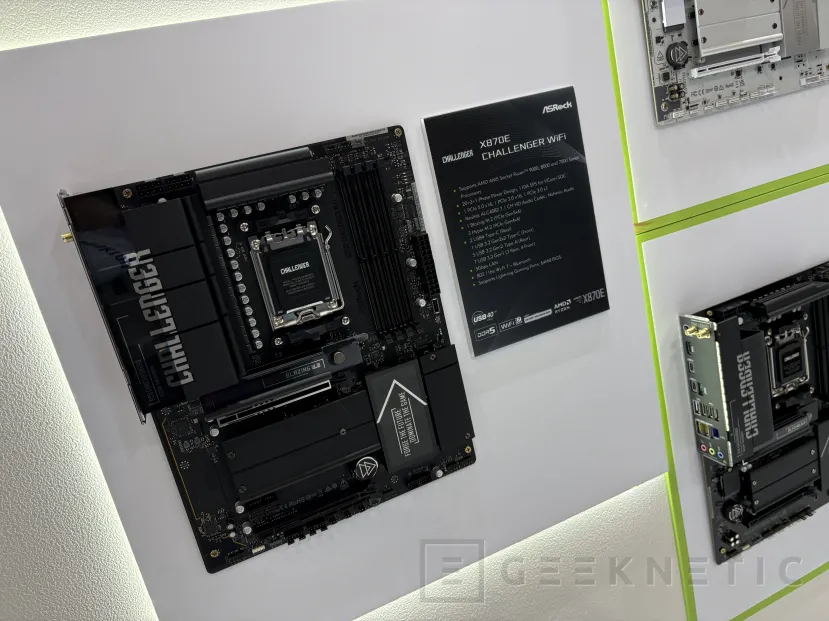
The X870E Challenger WiFi It now opens a somewhat more contained profile, although it is still on the X870E chipset. According to the visible tab, it integrates 14+2+1 phasesPCIe 5.0 x16, 5 GbE, Wi-Fi 7, two M.2 and a tighter USB block. It fits quite well as an option for those who want to get into X870E without paying the price or visual display of Taichi and Nova.
Rock, Challenger and Pro-A drop to B850 and B650 to cover tighter setups
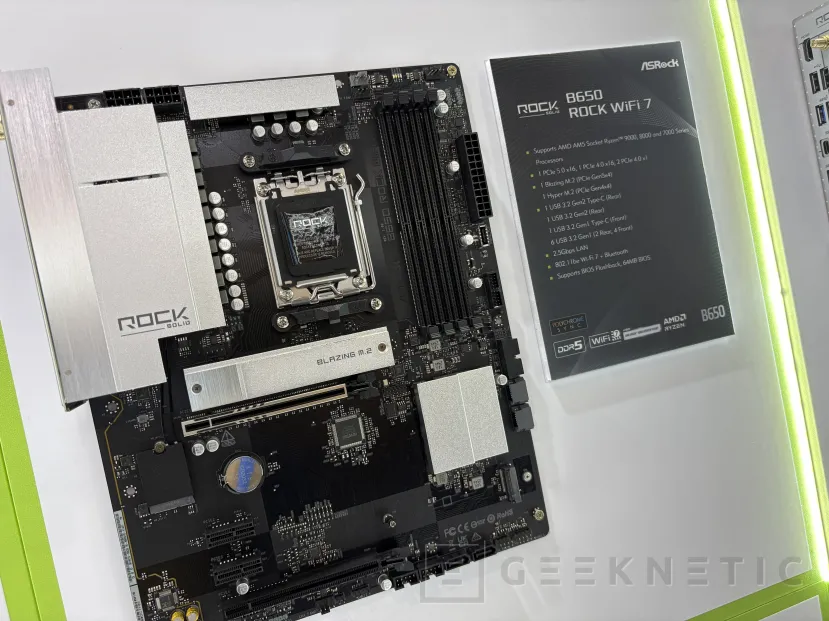
ASRock also shows several boards designed to cover the bulk of the AM5 market. The B850M Rock WiFi and the B850 Rock WiFi 7 They share a very sober aesthetic in brushed aluminum and a mid-range proposal that prioritizes the essentials: PCIe 5.0 x16, two M.2 slots, network of 2.5GbE and wireless connectivity that goes up to Wi-Fi 7 in the ATX version and remains in Wi-Fi 6E on the microATX.
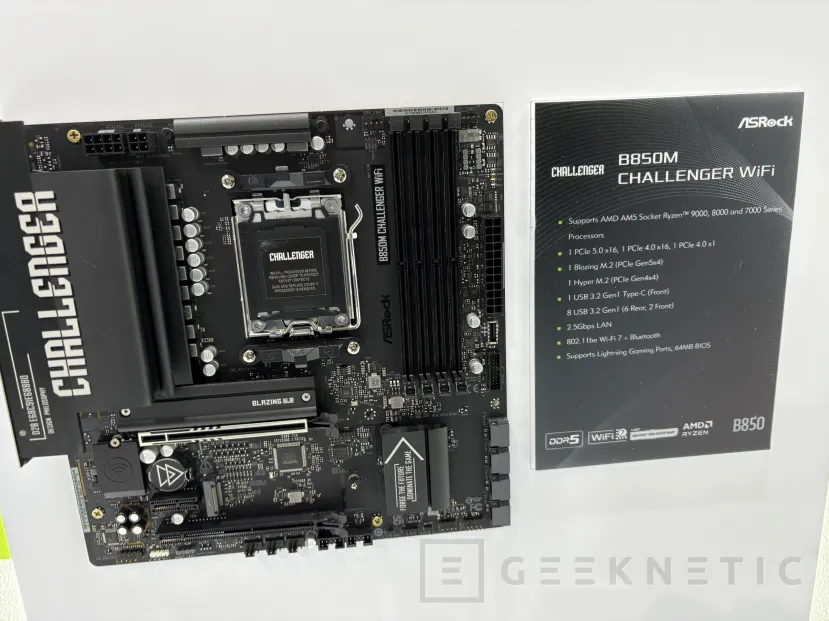
Something similar happens with the B850M Challenger WiFiwhich takes the most gaming visual language of the Challenger family and lowers it to microATX format. The visible sheet talks about PCIe 5.0 x16, an M.2 Blazing Gen5, another Hyper M.2 Gen4, 2.5 GbE and Wi-Fi 7. It does not seek to impress by abundance, but rather to offer a relatively modern AM5 base in a more accessible step.
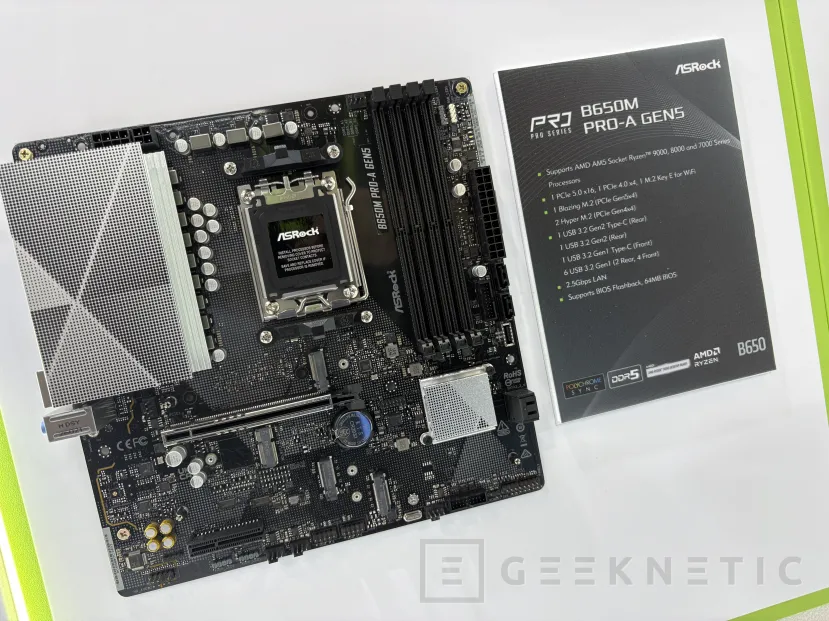
Finally, the simplest of the group is the B650M Pro-A Gen5which makes it clear that ASRock does not want to abandon the AM5 entry segment while several generations of chipsets coexist. It mounts PCIe 5.0 x16, 2.5 GbE, several M.2 and front USB-C, without the network deployment or connectivity of the upper plates, but with a sufficient base for current Ryzen mounts that do not need as much I/O.
