
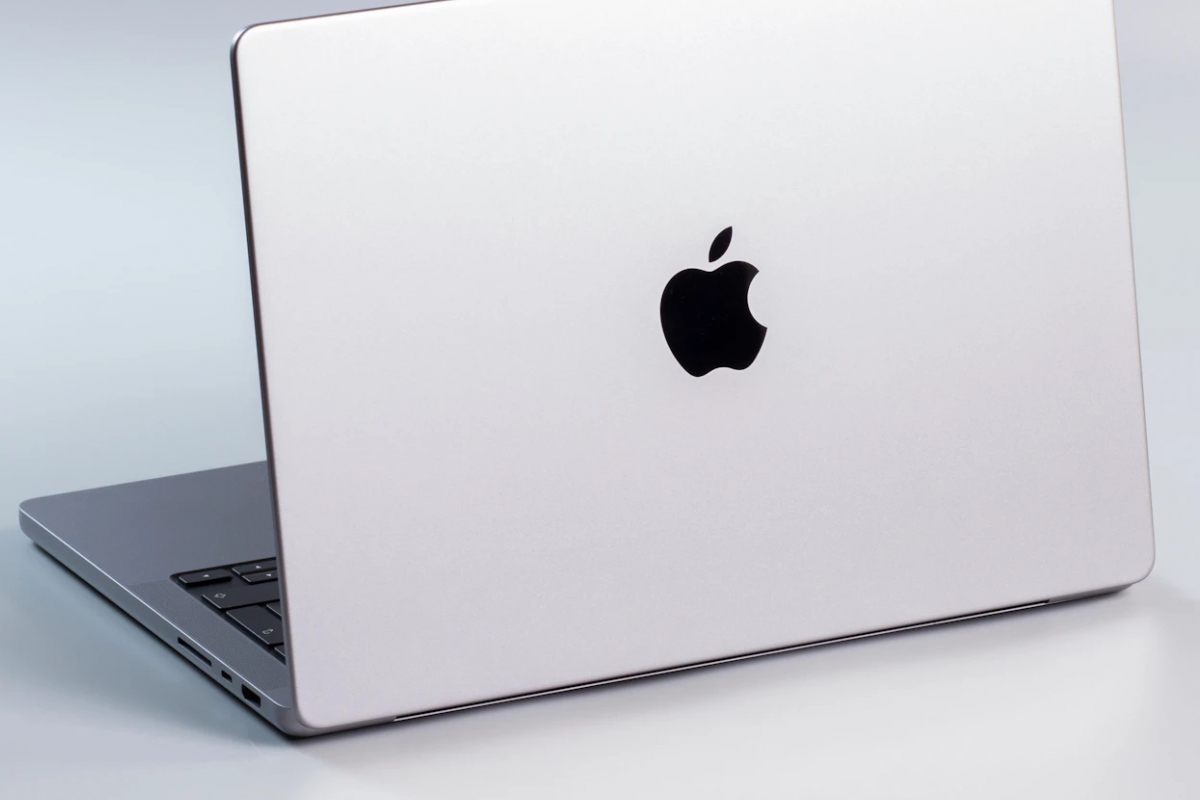
A new rumor claims that Apple will jump from the basic M6 to the M7 family and will leave the Pro and Max without replacement at the end of 2026
Apple’s roadmap for its next Mac chips is moving again. New information attributed to Mark Gurman and collected by TechPowerUp maintains that the company would have canceled the hypothetical M6 Pro and M6 Max to give a twist to your calendar and jump directly to the M7 family in the high range. If confirmed, we would be facing a clear break with the pattern that Apple has followed since the launch of Apple Silicon, where each important generation has ended up being deployed in base, Pro, Max and, later, Ultra variants.
According to the leak, Apple would go ahead with a basic M6 planned for the end of 2026, focused on the entry-level MacBook Pro and with relevant improvements in CPU microarchitecture, neural engine and memory bandwidth. The source speaks of a target close to 200 GB/s, compared to 123 GB/s for the basic M5, in addition to an integrated GPU with 12 cores, which would represent a 20% increase compared to the current 10-core configuration.
Therefore, instead of accompanying that chip with Pro and Max versions within the same generation, Apple would reserve that jump for the M7 familywhich would debut in 2027. The base M7 would arrive in the first half of that year with a memory bandwidth of about 240 GB/s, while the M7 Pro and M7 Max would arrive at the end of 2027. Later, in 2028, an M7 Ultra would appear for the Mac Studio.
The leak fits with the M6 schedule, but clashes with the idea of a large touch MacBook Pro with that chip
At the beginning of the year we explained to you that Apple planned to launch the M6 at the end of 2026, a forecast that fits quite well with this new leak. Both versions coincide in the general calendar of the M6 and that the second half of 2026 aims to be a key moment for the renewal of the Mac.
There is also agreement on another important point. For months now, this generation has been linked to greater attention to artificial intelligence in localsomething that this new information reinforces by focusing on the NPU and the greater memory bandwidth. That detail is not minor, because Apple has been pushing Apple Intelligence for some time and needs more margin to run models on the device without depending so much on the cloud.
However, there are also some doubts. Just a few days ago we said that the touch MacBook Pro no longer seems like such a distant rumor and that some reports placed this redesign around an M6 chip, even with the idea of a possible MacBook Ultra. If the thesis now prevails that the M6 will only exist in the base version and that the powerful models will jump directly to the M7, then Apple would have to resolve a contradiction. Either that premium touch redesign does not arrive so soon, or it does so with a different naming and segmentation strategy than what had been suggested.
The possible M5 Ultra for Mac Studio reinforces the idea of a longer transition between high generations
The leak also adds that Apple would be testing a M5 Ultra for Mac Studio with very high figures, around 36 CPU cores, 80 GPU cores and up to 768 GB of memory. That doesn’t confirm anything on its own, but it does suggest that Apple could be using the M5 range to stretch its professional offering a little more while reserving the big structural leap for the M7 family. It would also be the spiritual successor to the missing Mac Pro.
If that roadmap ends up being real, 2026 would not be the year of a complete renewal of the entire Mac range, but rather the year of a very strange transition. There would be a basic M6 as an evolution of the entry step, possibly accompanied by screen and design changes in some equipment, while the true renewal of high-performance chips would move to 2027. Although Mark Gurman is a reliable source, we cannot say anything for now. We will closely follow all the news in this regard.
