
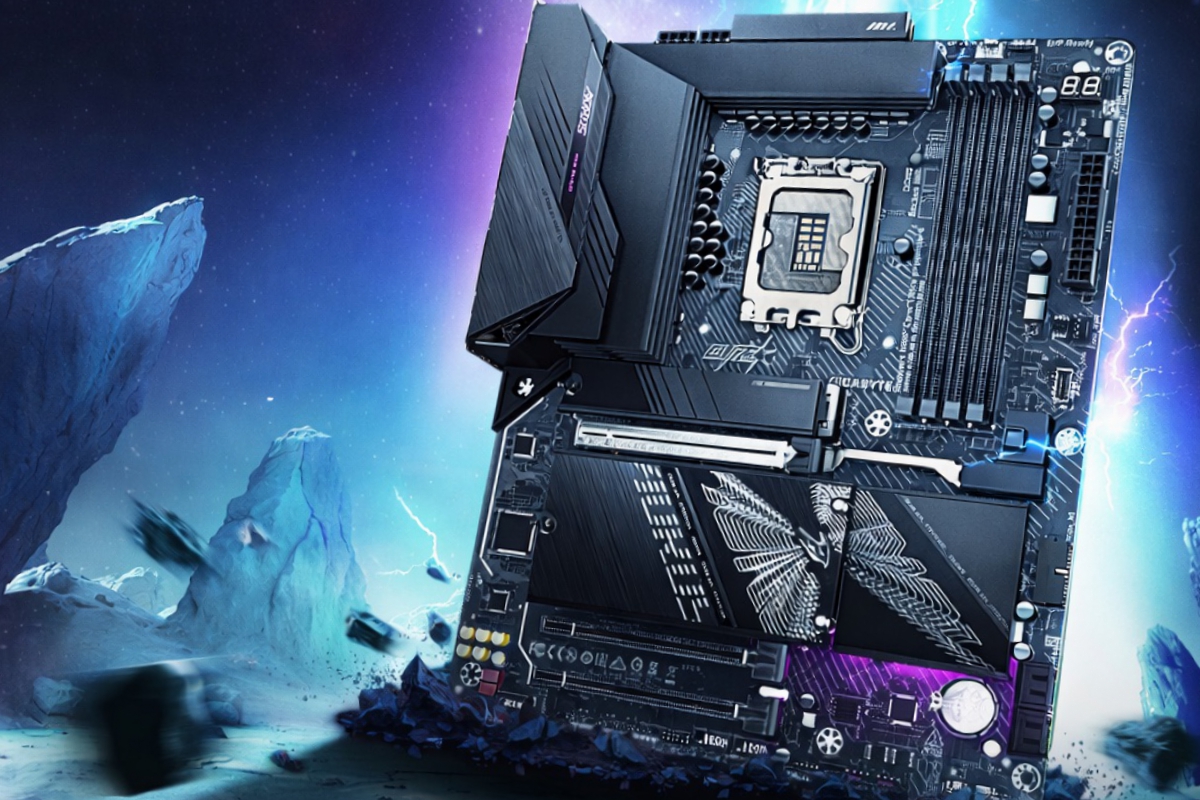
GIGABYTE makes a move with its new Z890 Plus and focuses on high-speed DDR5 memory without giving up capacity
GIGABYTE has presented a new batch of Z890 Plus motherboards designed to accompany the Intel Core Ultra 200S Plus Seriesan update with which the brand wants to reinforce its high-end desktop catalog in one of the points that is arousing the most interest in this generation: memory.
The company has not only confirmed compatibility with the new Intel processors on the Z890 platform and LGA1851 socket, but also wanted to turn the arrival of these boards into a showcase for advanced memory technologies such as CQDIMMa format that seeks to reduce one of the classic tolls of the PC enthusiast: having to choose between a lot of capacity or a lot of speed.
GIGABYTE wants memory to be the protagonist again
For years, the evolution of enthusiast motherboards has almost always been told through the VRM, the power phases, the number of M.2 slots or the rear connectivity. All of that is still there, but this time GIGABYTE has placed the magnifying glass on another less showy and very technical battle– How to maintain good memory performance when installed capacity increases. This issue is what explains the presence of CQDIMM in the announcement, a technology that seeks to improve signal integrity and sustain higher frequencies in configurations that not so long ago required a notable reduction in effective speed.
The interesting thing about the advertisement is that it is not presented as a simple cosmetic refreshment of already known plates. GIGABYTE’s message suggests that this Plus series wants to fit with Intel’s new desktop push and with a scenario where fast memory is no longer a luxury reserved for the benchmark, but rather a piece with real impact on certain loads.
The Z890 Plus series arrives at the right time for the Core Ultra 200S Plus ecosystem
Compatibility with the Intel Core Ultra 200S Plus Series was already fully established in the Z890 ecosystem, but this new Plus family appears at a particularly opportune time. Intel has just reinforced its proposal with the Core Ultra 270K Plus and 250K Pluschips with which the company wants to regain ground in gaming and high-performance desktops, maintaining compatibility with 800 series motherboards. This makes the new GIGABYTE shipment a kind of second wave for users who were waiting for more refined hardware, more mature at the BIOS level and with better discourse around memory.
From a commercial point of view, it also makes sense. Whoever now enters the Intel desktop platform does not only look at the processor. See if the board has room for growth, if it integrates WiFi 7, if it offers Thunderbolt or USB4, if it can handle multiple M.2 drives without weird compromises and, increasingly, if the base of the system is prepared for more ambitious DDR5 kits. There GIGABYTE already had Z890 models with very complete specifications, such as the AORUS ELITE WIFI7 and its variants, with four DDR5 slots, up to 256 GB of memory, several M.2, modern connectivity and high-speed network.
What CQDIMM can mean in a high-level PC
Beyond the technical name, the substance of the matter is quite clear. On consumer platforms, increasing total RAM capacity while maintaining high frequencies has always been a delicate balance.. When more slots are filled or denser modules are used, stability can suffer and actual maximum speeds often drop. GIGABYTE wants to sell just the opposite idea: that with this new generation of boards and with support for CQDIMM, we can aspire to a scenario less conditioned by that old commitment.
This has direct implications for very specific profiles. A user focused solely on gaming may not need extreme memory configurations, but can benefit from lower latencies and better fine-tuning. On the other hand, those who combine gaming with video editing, virtual machines, 3D creation or local processes related to AI can find real value in a platform capable of moving more RAM at higher speeds without forcing them to jump to much more expensive professional environments.
There is another important detail in this announcement. The hardware industry had been pushing motherboards as products full of extras for some time, but not always with a tangible improvement that was easy to explain. Here there is a recognizable story: Better compatibility with the new Core Ultra, more room for advanced DDR5 and a platform ready for the next jump in memory. This helps the motherboard once again occupy a central role in the purchase, instead of remaining a mere support for the rest of the components.
We will now have to see how all this ends up in prices, real availability and support of specific modules, because in very high capacity memory the theory always sounds better than the final bill.
