
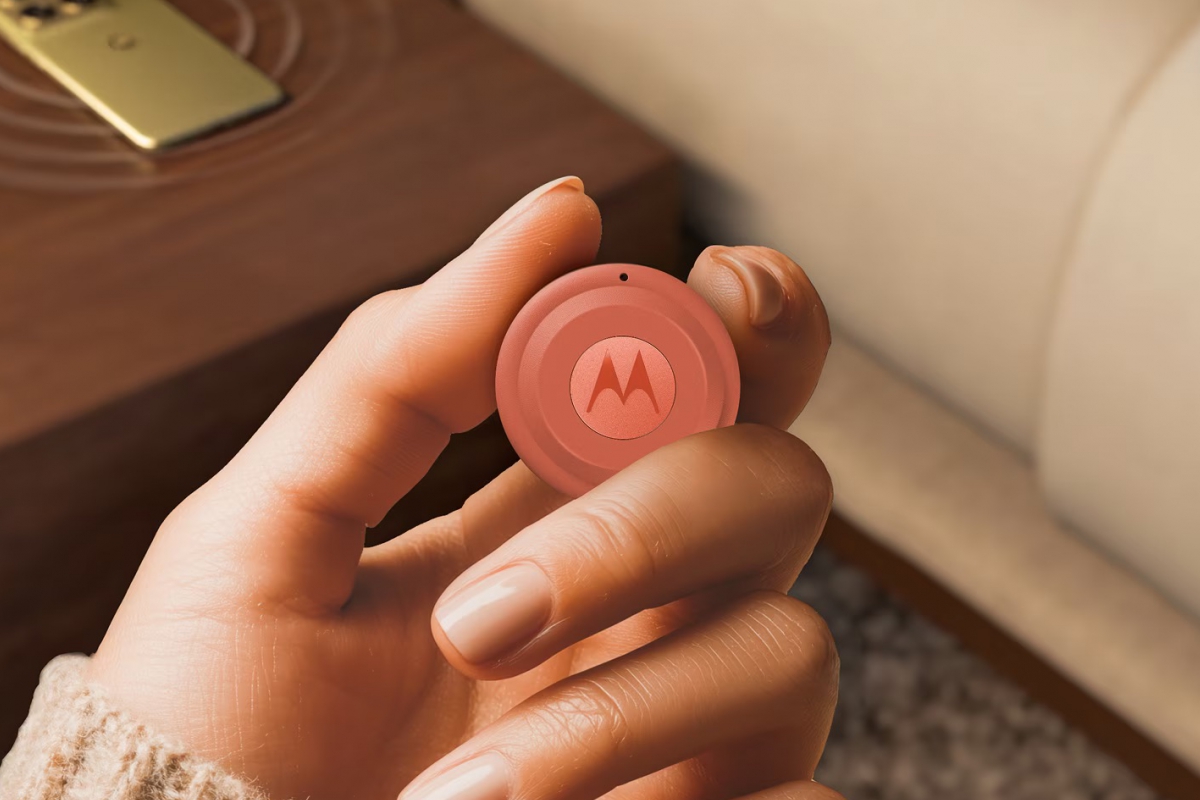
Motorola’s Moto Tag 2 arrives in Spain with UWB and up to 600 days of battery
Motorola has officially put the second generation of its Bluetooth locator on sale in Spain, the Moto Tag 2a device designed to stand up to Apple’s AirTag but designed specifically for the Android ecosystem. The accessory comes with notable improvements in connectivity and autonomy compared to its predecessor, and can now be purchased in several stores for a price that is around 38 euros.
The market for AirTag-type locators has long been dominated by Apple, with Samsung as the main alternative thanks to its SmartTags. However, The opening of Google’s Find Hub network has changed the landscape completely: Now the vast majority of Android phones can use this type of tracker, and that has opened the door for manufacturers like Motorola to compete head-to-head with Cupertino. The first Moto Tag already had a solid debut in this area, and the Moto Tag 2 now arrives to consolidate that position with a renewed internal architecture.
Google Find Hub support and millimeter accuracy
The strong point of the Moto Tag 2, according to its own technical sheet, is full compatibility with Google’s Find Hub network. This means that The device can be detected and located by any nearby Android mobile that has this function active, without depending on third parties or exclusive Motorola applications. To preserve user privacy, all location information is transmitted and stored using end-to-end encryption, and the system includes unwanted tracking alerts that warn if an unknown tracker is traveling alongside us for an extended period of time.
At the hardware level, Motorola has taken an important leap by incorporating ultra-wideband (UWB) technologysomething that not all locators on the market still offer. Thanks to this technology, the Moto Tag 2 allows directional search with millimeter precision, as long as the phone to which it is linked also has a compatible UWB chip.
Bluetooth 6.0 and a 77 decibel speaker
For situations where the lost item is not in sight, but relatively close, the Moto Tag 2 has Bluetooth 6.0 connectivitythe latest revision of the standard, and a built-in speaker capable of emitting audible alerts of up to 77 decibels. This combination allows you to quickly locate objects such as keys, backpacks or suitcases even in environments with some ambient noise, without having to resort solely to the mobile application.
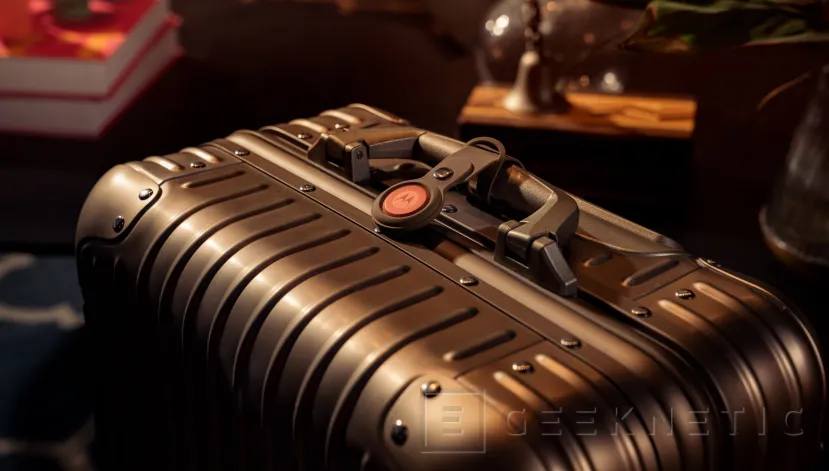
In terms of design, Motorola has maintained the spherical and minimalist aesthetic that already characterized the first model. The Moto Tag 2 It weighs just 8.5 grams and measures 31.9 x 31.9 x 8 millimetersdimensions very similar to those of its direct rivals. Its construction combines plastic and metal, and is IP68 certifiedallowing it to withstand accidental immersion in water without damage. This level of resistance makes it suitable for accompanying objects that spend time outdoors, such as bicycles, hiking backpacks or travel luggage.
Battery for almost two years and multifunction button
One of the aspects that Motorola most highlights about the Moto Tag 2 is its autonomy. The device is powered by a CR2032 button cell battery.easily replaceable by the user himself, and according to the manufacturer can offer a useful life greater than 600 daysthat is, almost two years of continuous use without needing to change the battery. This is a figure notably higher than that offered by most current locators on the market, and probably the most striking sales argument of the entire device.
As an added value, the Moto Tag 2 It integrates a multifunction button that performs a double task: on the one hand, it allows the linked phone to ring by simply pressing it, something useful when it is the mobile phone itself that has been lost from sight; On the other hand, it works as a remote shutter release to take photos with the phone’s camera, a function designed for selfies or group photos without having to touch the screen.
Availability and price in Spain
The Moto Tag 2 is now available in the Spanish market through several stores, with a price that is around 38 euros depending on the point of sale. The device arrives in a format designed to fit into the wide variety of cases, supports and keychains already existing for this type of accessories, which facilitates its adoption among those who already used a previous generation locator.
With this second generation, Motorola reinforces its commitment to a segment that, until recently, was practically inaccessible for Android users without resorting to third-party solutions with less integration. The combination of UWB, Bluetooth 6.0, water resistance and an autonomy that far exceeds that of the competition places the Moto Tag 2 as one of the most complete alternatives within Google’s Find Hub ecosystem, at a time when more and more manufacturers are looking for a place in a market that Apple had been dominating practically alone for years.
