
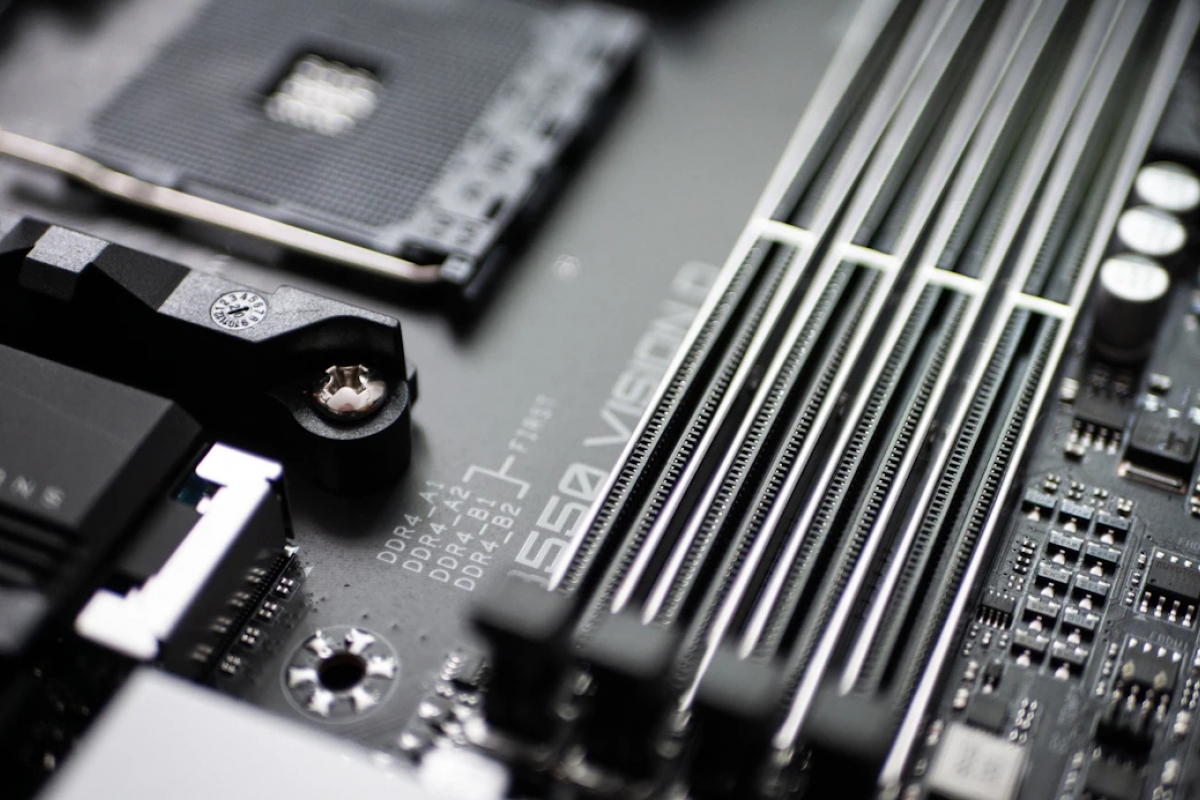
RAM will continue to be scarce and expensive in 2027, while SSDs finally begin to get cheaper
Anyone who is waiting for RAM to drop in price in 2027 has bad news ahead of them. The consultant TrendForce has published a report that draws two completely different futures for a computer’s memory depending on the type of chip we are talking about, DRAM and NAND Flash, with artificial intelligence acting again as the great factor that distorts everything.
While conventional DRAM memory will continue to be stressed and with rising prices throughout the year, flash memory used in SSD units will enter a phase of greater slack in the second half of 2027, with falling prices. It is an unusual divergence between two types of memory that usually move quite synchronously. Despite this, it seems that this report is not as negative as others that we have already reported.
Why DRAM won’t let up until 2028, according to TrendForce?
The origin of the problem is no mystery. Everything is focused on the manufacture of HBM memory for AI servers, which consumes a disproportionate number of wafers compared to conventional DRAM. This means that, although manufacturers increase their wafer production, this effort does not translate into a proportional increase in the final memory available on the market.
Added to that is a calendar problem. Several manufacturers have already announced capacity expansions, but between the construction of new plants, the installation of machinery and the preparation of materials, that new production will not begin to be significantly noticeable until the second half of 2027. That means it will not bear full fruit until 2028. Meanwhile, TrendForce expects global server shipments to grow even faster than the 17% year-on-year recorded in 2026, driven by new Intel and AMD platforms and the arrival of the call Agentic AI to real production environments.
The SOCAMM standard is another factor that TrendForce points out as responsible for each AI server needing more and more memory per unit. With this panorama, the consulting firm places the DRAM sufficiency ratio at around -1% or -2% during 2026, an imbalance that, far from being corrected, will widen even further next year.
There is an interesting nuance in all this and that is that this constant increase in cost is beginning to weigh even on the accounts of those who invest the most in AI infrastructure. TrendForce mentions that several cloud providers have already registered negative free cash flow during 2026, despite maintaining record capital spending. If memory prices continue to rise, that item will gain weight within their infrastructure budgets, and it is not yet clear if that will end up affecting the purchasing pace of these companies.
NAND Flash flips script thanks to new factory capacity
The case of NAND Flash memory is practically the opposite. During 2026, manufacturers barely expanded physical capacity and preferred to gain production by migrating to more advanced processes. By 2027, TrendForce anticipates a much more aggressive expansionwith new factories gradually coming into operation just when demand for consumer electronics remains weak due to the general rise in the cost of mobile phones and laptops.
The main growth driver will continue to be enterprise storage, with SSDs of type QLC monopolizing a good part of the additional demand. TrendForce expects the NAND sufficiency ratio to turn positive in 2027, marking the transition from a supply-constrained market to a more balanced one, although it warns that a real takeoff of agentic AI could trigger demand for high-speed SSDs and stop that price correction sooner than expected.
