
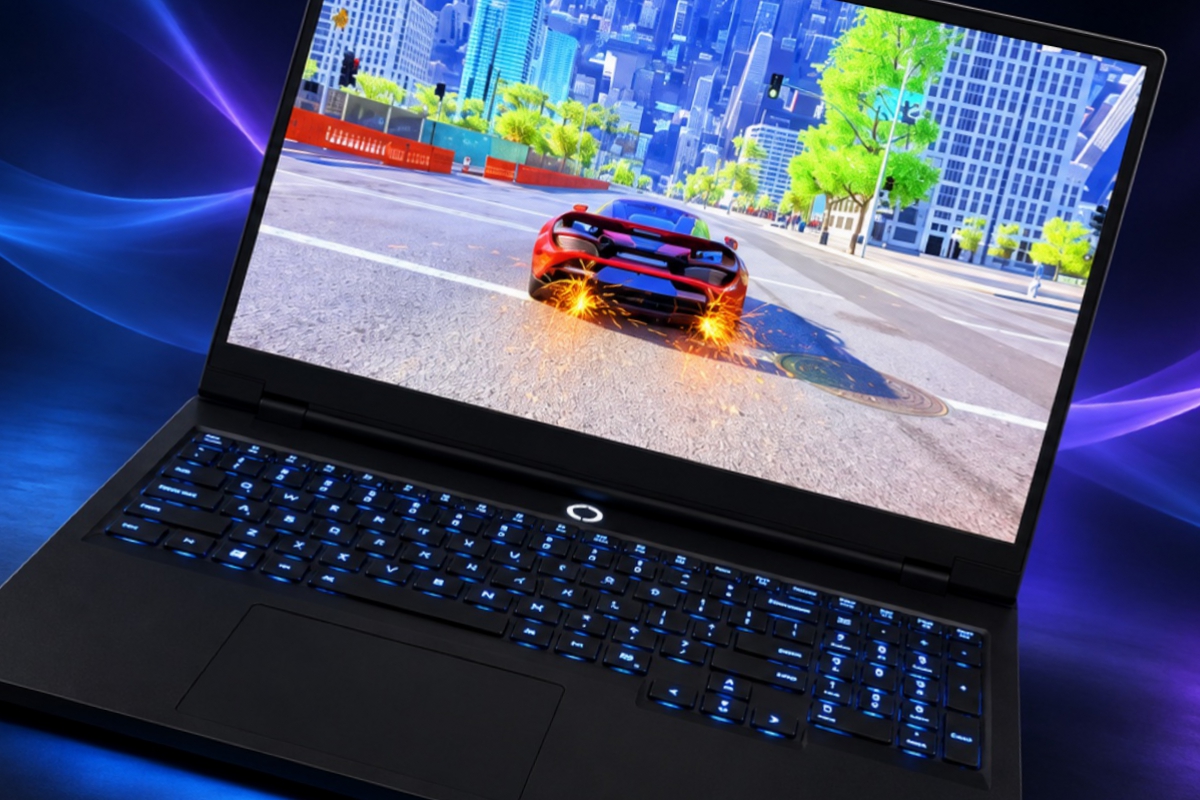
TCL shows a Lenovo Legion with a 360 Hz OLED screen, 20% faster than the Samsung prototype
TCL CSOT has shown a Lenovo Legion laptop prototype with a 360Hz OLED display manufactured using inkjet printing. The demonstration took place at DTC 2026, the company’s display technologies conference held on November 13 in Wuhan, China.
The information identifies a 16-inch panel with a resolution of 2,560 × 1,440 pixels. It is a demonstration of the technology that TCL is preparing for gaming laptops, without an announced commercial configuration: the processor, the graphics card or the price of the exposed equipment have not been published.
A 16-inch panel, 1440p and 500 nits declared
The display achieves a 360Hz refresh rate and a claimed 100% coverage of the DCI-P3 color space. Its resolution corresponds to a 16:9 aspect ratio, a fact that should be kept when comparing it with other 16-inch laptops that use 16:10 screens.
A reported brightness of 500 nits. The information available does not specify whether it is a full-screen measurement or a smaller window, so it does not allow direct comparison with any HDR maximum brightness figure from another manufacturer.
20% cooler than Samsung’s 300Hz OLED
The prototype surpasses the 300 Hz OLED panel for laptops that Samsung Display showed off in August. The difference is 60 Hz, a 20% increase. The comparison concerns OLED screens for laptops; There are already gaming devices with LCD technology that reach higher frequencies.
Skip can also be expressed by the interval between updates. At 360 Hz it is approximately 2.78 milliseconds, compared to 3.33 milliseconds at 300 Hz and 4.17 milliseconds at 240 Hz. These are calculations from frequency, not measurements of pixel response time.
IJP printing has already had a first commercial step at 240 Hz
Lenovo and TCL CSOT announced the Legion R9000P with a 16-inch 240Hz IJP OLED panel in July. The new prototype increases that frequency by 50%so the fact shown in DTC is a refreshing improvement on a technology that had already reached a commercial laptop.
IJP corresponds to inkjet printing. TCL explains that this process forms films of light-emitting organic material by depositing them on the substrate. Compared to vacuum thermal evaporation, it makes it possible to dispense with the high-precision metal masks used to place these materials.
The manufacturer attributes a simpler process and better use of the material to the method. These manufacturing advantages do not in themselves set the price of a laptop: we still need to know how much a device that incorporates the 360 Hz panel will cost.
The R9000P from July used a Real RGB Stripe subpixel arrangement. That feature belongs to the previous model and should not be automatically carried over to the prototype, whose published coverage does not provide the same detail on the subpixel structure.
TCL prepares more industrial capacity for its printed panels
Development comes as TCL expands its IJP OLED infrastructure. The company began production on its generation 5.5 t12 line, located in Wuhan, in November 2024. That installation precedes the industrial expansion it is preparing in Guangzhou.
On October 31, the entry of manufacturing equipment into the new 8.6 generation t8 line began. TCL announced that step on Nov. 6, putting mass production of the facility in the fourth quarter of 2027.
The factory is designed to process approximately 22,500 glass substrates per month and primarily target tablet, laptop and monitor screens.. That volume corresponds to substrates, not an equivalent number of finished panels.
The t8 schedule describes the start-up of a factory. TCL has not linked it in the information to the production date of the 360 Hz panel, so it does not allow its commercial launch to be placed in 2027.
A TCL CSOT official explained that the company works with partners and that production of the panel could begin soon. It did not specify a month or identify the commercial laptops that will use it.
The exposed Lenovo Legion unit remains a prototype. For now, there is no announced price, on-sale date, or final configuration for purchasing a device with this display.
