
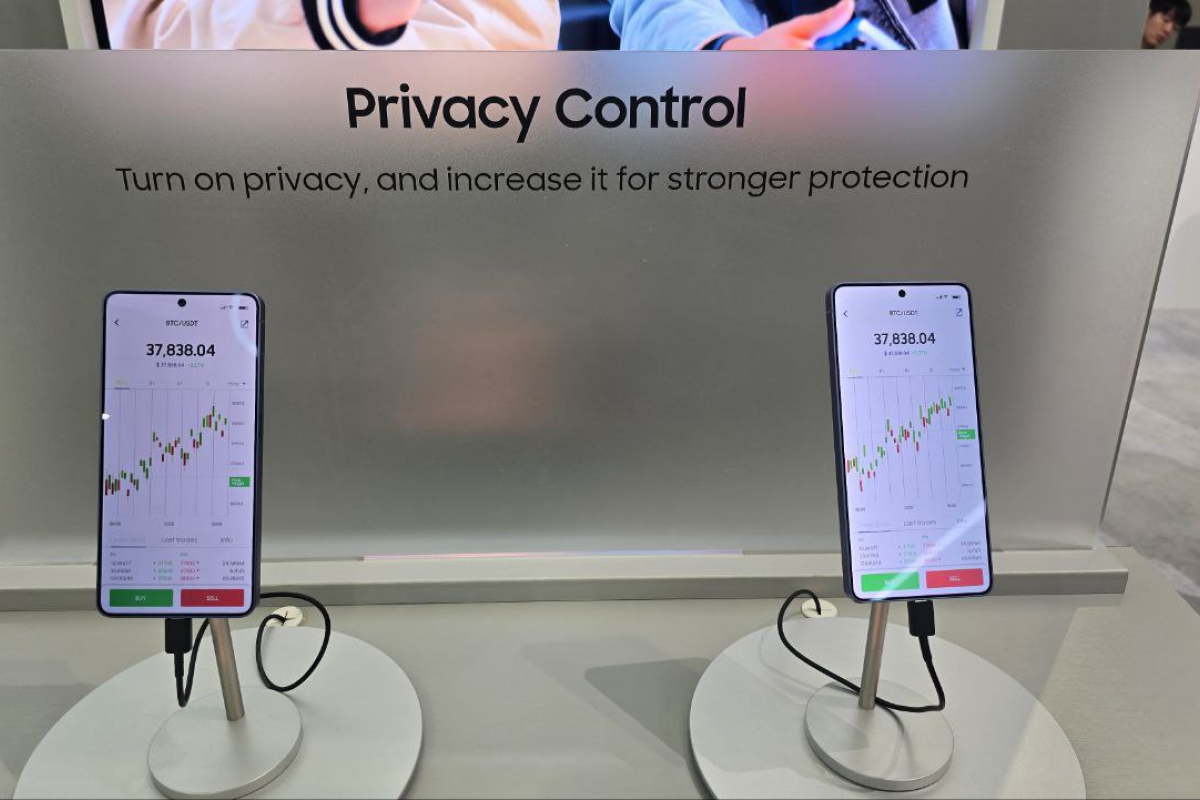
the technology that protects your privacy from within the screen
In its fourth consecutive participation at the Mobile World Congress in Barcelona, Samsung Display has focused its presence on showing how OLED screens are evolving to adapt to the era of artificial intelligence. The big news is Flex Magic Pixela privacy solution integrated directly into the panel that already equips the Galaxy S26 Ultra, although the technological showcase goes much further.
The company’s stand has been organized under the concept of Intelligent OLED Citydivided into four themed zones: AI Square, AI Edge District, AI Entertainment District and AI Sports District. Each of them responds to a different use scenario for OLED screens in devices connected to artificial intelligence functions.
Flex Magic Pixel provides software-agnostic privacy
The prominence of the stand falls on Flex Magic Pixela technology that controls the direction of light at the pixel level. The result is a screen that is seen completely clearly from the front, but that limits visibility from the side angles, preventing other people from seeing the content without having to install any external physical filter.
The solution is built on the company’s LEAD platform, marketed since 2021, to which is added a multi-layer light-blocking structure that precisely aligns several layers of Black Matrix. At MWC 2026, Samsung Display has also presented LEAD 2.0the updated version that integrates FMP into this platform.
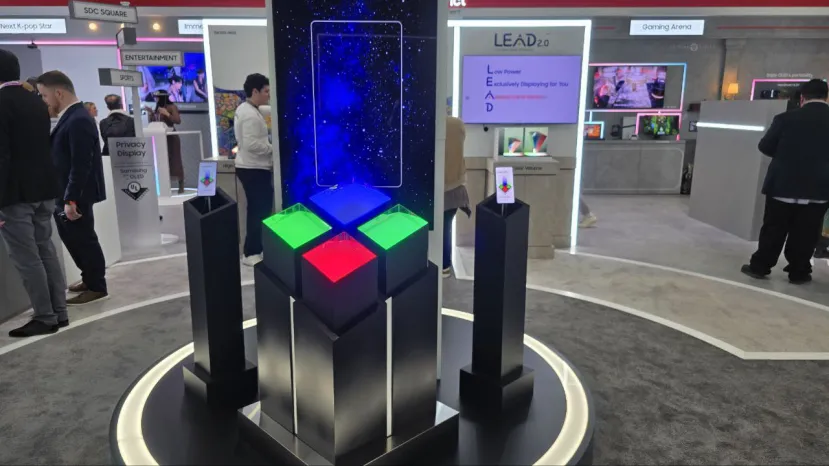
Samsung’s argument for developing this technology is that, as smartphones incorporate more AI functions that process personal data, protecting that information at the hardware level, and not just through software, is more important. If this sounds familiar to you, it is because it is the same technology that the Samsung S26 Ultra will include once it is available on the market.
5,000 PPI screens and pocket robots
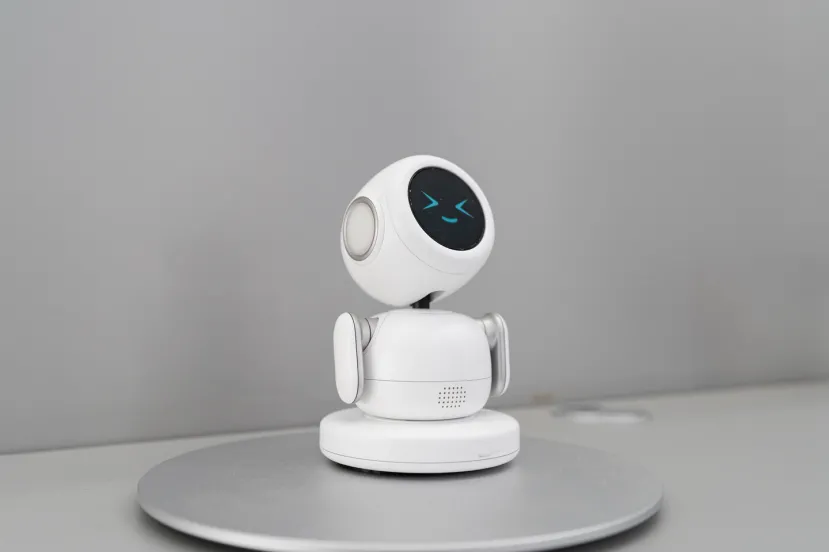
Beyond privacy, Samsung Display has taken advantage of MWC to show a series of product concepts that explore new screen formats. One of the most striking is the Mini PetBota small companion robot equipped with a 1.34-inch circular OLED screen. This is capable of interacting through voice and touch. He has also presented the AI Toy Housewhich combines a 13.4-inch circular screen with an 18.1-inch flexible screen. These are proposals similar to those we already saw at the ZTE stand.
In the field of mixed reality, the company has exhibited its technology OLEDOSthat is, OLED on Silicon, a type of extreme resolution display that is manufactured by depositing organic materials on silicon wafers instead of glass. This allows pixel densities to be achieved much higher than those of a conventional smartphone. The device presented is just 1.4 inches diagonal and reaches 5,000 PPIcompared to the usual 400-500 PPI on current mobile phones. The demo experience allows visitors to virtually attend a K-pop concert at that level of resolution.
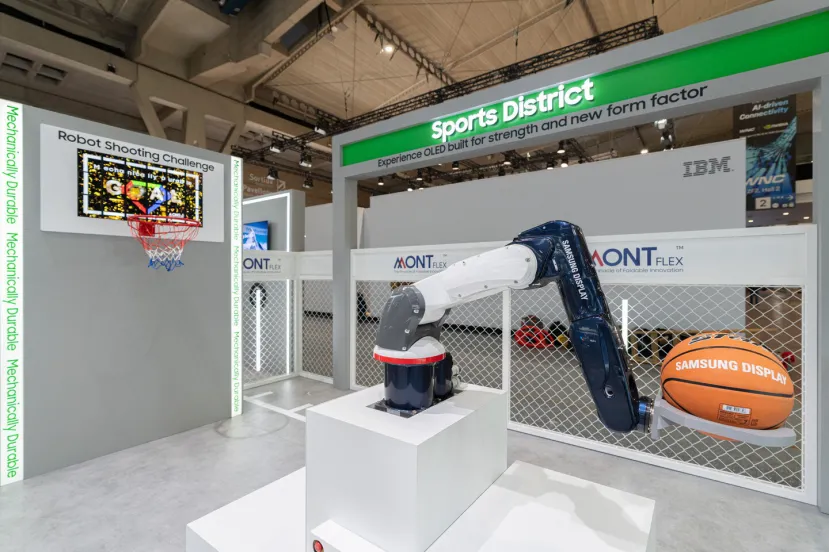
Finally, the sports area of the stand also includes a durability test for folding screens that attracts attention: 18 folded smartphones mounted on a basketball backboard, on which a robotic arm throws balls to measure impact resistance. The same test has already generated interest in the CES 2026where it was shown privately.
