
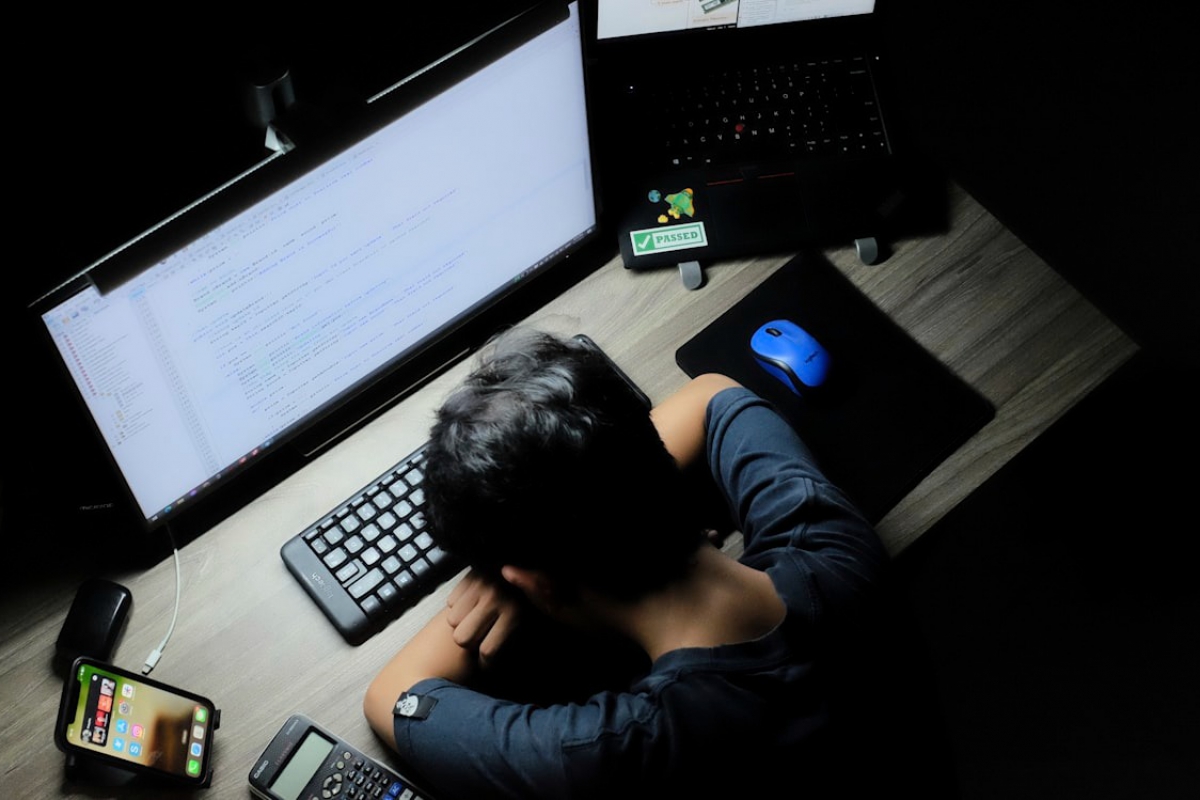
This is how increased productivity is burning out programmers
According to a recent article published by Business Insiderthe promise that artificial intelligence would make developers’ jobs easier has an important counterpart. Siddhant Khare, a software engineer, has ignited the debate with an essay warning that AI has made you more productive than everbut it has also led to a unprecedented exhaustion. While all businesses strive to improve productivity, the human cost of this frenetic pace is quietly taking its toll.
Khare, who paradoxically is dedicated to creating AI tools for a company in the sector, assures that the problem lies in the transformation of the role of the programmer. In their own words, engineers have gone from being creators to become mere reviewers. The developer describes his day-to-day life as being the “judge on an assembly line that never ends,” limiting himself to constantly approving blocks of code generated by the machine.
The performance paradox and the brutal cost of context switching
The essay details how artificial intelligence reduces the cost of production, but drastically increases the effort of coordination, review and decision-making. Khare confesses to having delivered more code in the last quarter than in his entire career, while at the same time feeling more drained of energy than ever. And this is much more beast than optimizing Windows 11 to be more efficient. It is a radical change in the way the brain processes workload.
Before, professionals spent hours focus deeply on a single design problem. Now, they’re forced to jump between half a dozen different tasks because the AI ”only takes an hour” to solve them. As the engineer points out, artificial intelligence does not get tired when switching contexts between multiple problems, but the human brain does, which causes profound fatigue that no software optimization can solve.
This experience is not an isolated case, since other engineers in forums such as Hacker News report similar dynamics. A recent study by Harvard Business Review, conducted over eight weeks with 200 technology sector employees, supports these claims. The research found that AI tools did not reduce work, but rather systematically intensified it. Once the initial excitement is over, workers discover that their workload has grown, leading to cognitive fatigue and worse decisions.
The fear of being left behind and the worrying atrophy of skills
Added to this operational exhaustion is the constant pressure to stay up to date. The dizzying pace of updates by companies like OpenAI or Anthropic generates anxiety among professionals in the sector. Khare recounts how he spent his weekends evaluating new tools, reading every changelog, and watching demos out of sheer terror of becoming obsolete in front of his peers. It is an ecosystem that demands constant attention through multiple social and work platforms.
But perhaps the most alarming side effect is loss of fundamental technical capabilities. Khare himself admits to having had great difficulty solving a concurrency problem on a whiteboard, without the help of his laptop or AI. Compare this situation to the use of GPS: we used to build mental maps to navigate the city, but after years of digital assistance, that vital skill atrophies due to simple lack of use.
Even very prominent figures in the industry openly share this concern. Andrej Karpathy, former head of AI at Tesla and creator of the popular term vibe coding, recently confessed that he is starting to notice how his ability to write code manually is atrophying. Faced with this situation, professionals like Khare ask the technology companies that create these models to implement adequate security barriers to prevent humans from mentally self-destructing.
