
SteamOS improves compatibility with older games that use Direct3D thanks to DXVK 3.0.1
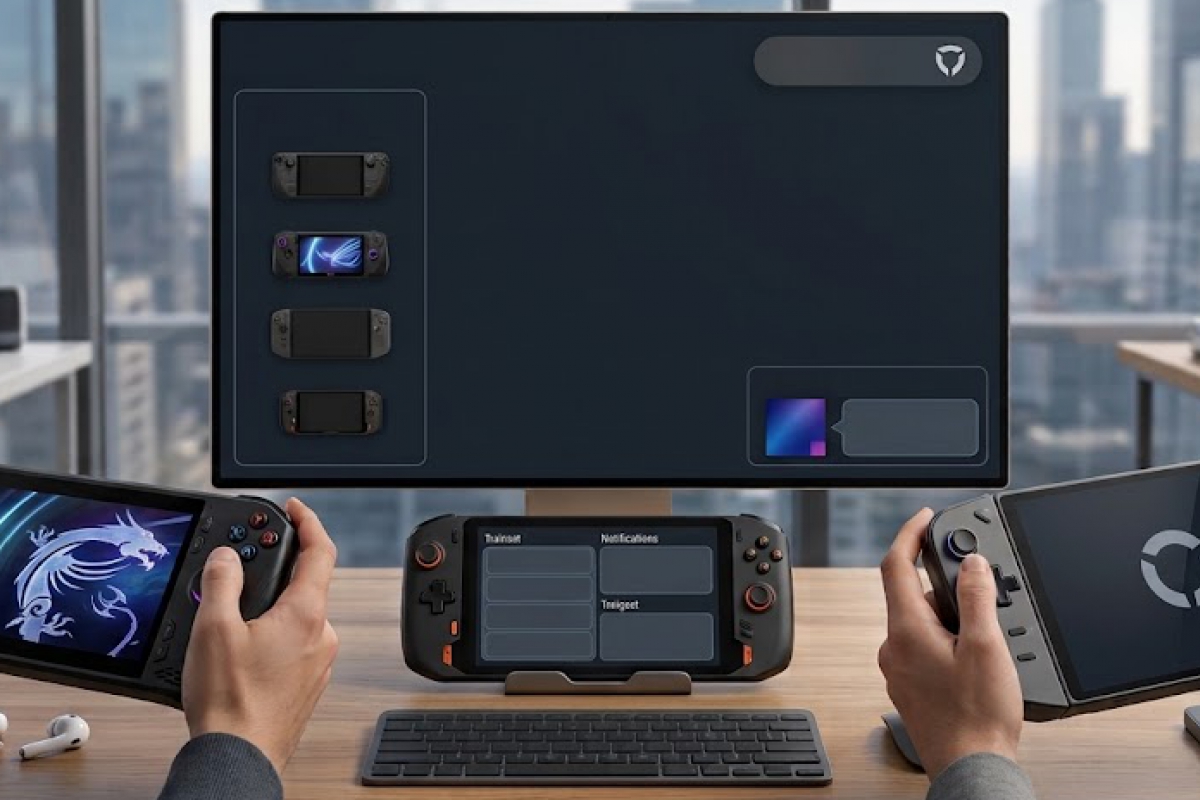
Steam OS continues to advance to reach more devices, far from the usual Steam Deck and hardware devices Valve. Recently we have seen how it has been added improved compatibility with other consoles like MSI Claw, Lenovo Legion Go and some models of OneXPlayer. The success of Steam OS is mostly in Proton and the work behind it, which now also becomes more compatible with games Direct3D older thanks to DXVK 3.0.1.
DXVK 3.0.1 improves Proton and expands support for older Direct3D games
This update DXVK 3.0.1 Fixed some bugs in Direct3D 8, 9, 10 and 11 translation layer what does he use Proton for Steam OS of Valve. Although it is a minor update on the 3.0 released just a couple of weeks ago, the version 3.0.1 has disabled the use of secondary command buffer in all desktop GPUsand correct a rendering error with Direct3D 9 which affected some older games.
Intel Alchemist GPUs also receive fixes to improve stability
The users of Intel with generation hardware Alchemist have also received an update, which fixes a error with ANV driver which caused some locks in games with Direct3D 9. At the moment there is a temporary solutionbut work is being done to offer a definitive solution in future updates.
Among other lots of corrections that have been added to improve the Direct3D supportalso this version has received specific improvements in some old games.
We leave you below the complete list of changes and news.
General fixes and improvements
- It has been disabled use of secondary command buffers on all desktop GPUs. This may slightly reduce performance in some games with higher resolution patterns. MSAA poorly optimized, but eliminates a common source of rendering errors and GPU crashes. Furthermore, its main advantages were only noticeable in GPUs with type architecture. tiling.
- Solved a rendering problem that affected numerous games based on Direct3D 9among them Black Table, Gothic 3 and GTA IVin certain graphics drivers.
- Corrected a bug that caused an unexpected shutdown when a game downloaded the libraries Direct3D while the graphics device was still active.
- Eliminated the stuttering that could appear with the NVIDIA 32-bit drivers when they were activated heaps descriptor.
- Improved the GPU synchronization during the use of stream outputa change that may benefit some older games developed with Unity Engine and Direct3D 11.
- Implemented a temporary solution for a Windows specific problem that prevented creating samplers correctly on some GPUs NVIDIA. The origin of the failure is still unknown, although it could be related to on-screen overlay applications (overlays).
- Added a solution for a error in Intel drivers for Windows which caused all games to crash shortly after running when the features were enabled. Graphics Pipeline Libraries.
Games with specific fixes
- Empire Earth 2: fixed an issue with certain fixed function graph pipeline configurations (fixed-function pipeline).
- Fallout 3: fixed rendering errors caused by compiler regression shaders when using MSAA.
- Fruit Ninja: Fixed a long-standing lighting issue.
- Kane & Lynch: Dead Men: eliminated a significant performance loss.
- King’s Bounty: The Legend: Fixed a regression that affected performance.
- manhunt: speed has been limited to 60FPS to avoid various operating problems.
- Splinter Cell 3: fixed a rendering crash when activating the mode Shader Model 3.0.
- Total War: Medieval II: Fixed a bug that affected the representation of water.
Known issue
- A has been detected Mesa ANV controller failure which can cause GPU crashes in some games Direct3D 9 when using Intel Arc Alchemist GPU and previous generations. As a temporary measure, DXVK activates by default buffers descriptor on these GPUs, although this may reduce performance. The developers recommend keeping the updated graphics drivers to minimize this problem.
Juan Antonio Soto
I am a Computer Engineer and my specialty is automation and robotics. My passion for hardware began at the age of 14 when I broke down my first computer: a 386 DX 40 with 4MB of RAM and 210MB of hard drive. I continue to give free rein to my passion in the technical articles I write for Geeknetic. I dedicate most of my free time to video games, contemporary and retro, on the more than 20 consoles I have, in addition to the PC.
